

 English
 中文简体
中文简体 русский
 Español
 عربى
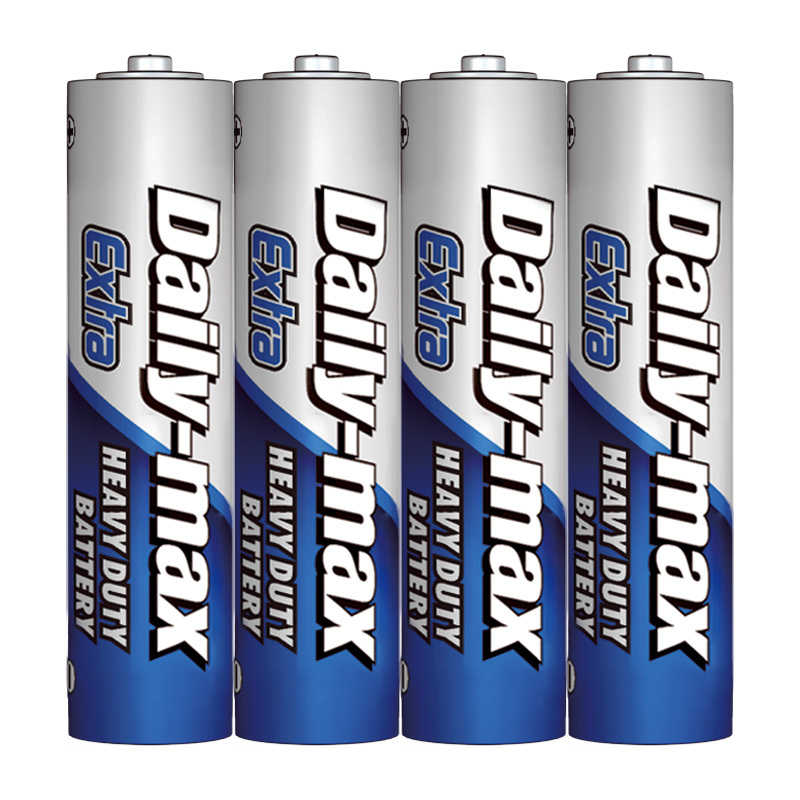
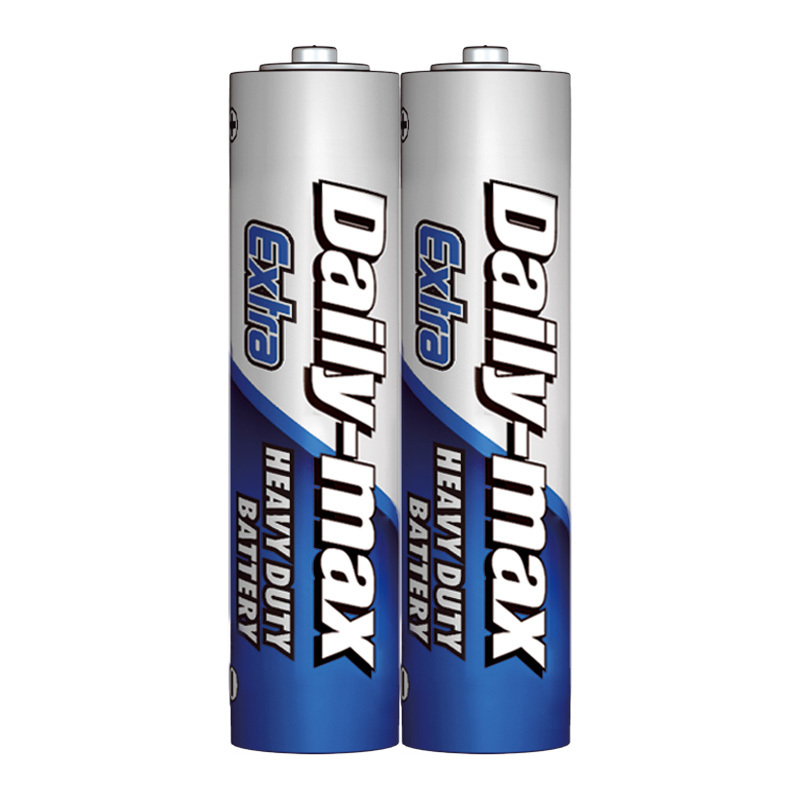
عربىPrimary battery chemistries vary considerably in cost, discharge behavior, and suitability for different device types. Among the most widely produced options is the AAA Carbon Battery, a zinc-carbon cell format that remains common in low-drain household electronics. This article reviews its chemistry, performance characteristics, technical specifications, and the factors that determine whether it is an appropriate choice for a given application.
Original schematic illustration of a cylindrical zinc-carbon cell structure, created for reference purposes.
01What Is an AAA Carbon Battery
A zinc-carbon cell in the AAA form factor is a non-rechargeable primary battery built around a zinc can that functions as the negative electrode and a carbon rod surrounded by a manganese dioxide paste that functions as the positive electrode. This chemistry, sometimes labeled Leclanche or heavy-duty depending on the electrolyte formulation, was among the earliest commercially produced dry cell technologies and remains in production due to its low manufacturing cost and adequate performance in devices that draw current intermittently and at low levels.
The AAA designation refers specifically to the cell's physical dimensions, standardized at approximately 10.5 millimeters in diameter and 44.5 millimeters in length under IEC and ANSI battery sizing conventions. This size is shared across multiple chemistries, including alkaline and lithium primary cells, which means the AAA label alone does not indicate internal chemistry. The distinguishing factor for a carbon variant is the zinc-carbon electrochemical system housed within that standardized shell.
Because the cell format is standardized, an AAA Carbon Battery is physically interchangeable with alkaline or lithium AAA cells in most device compartments. Interchangeability in size does not imply equivalent performance, however, since the underlying chemistry determines how the cell behaves under load, how its voltage declines over the discharge cycle, and how long it retains usable charge in storage.
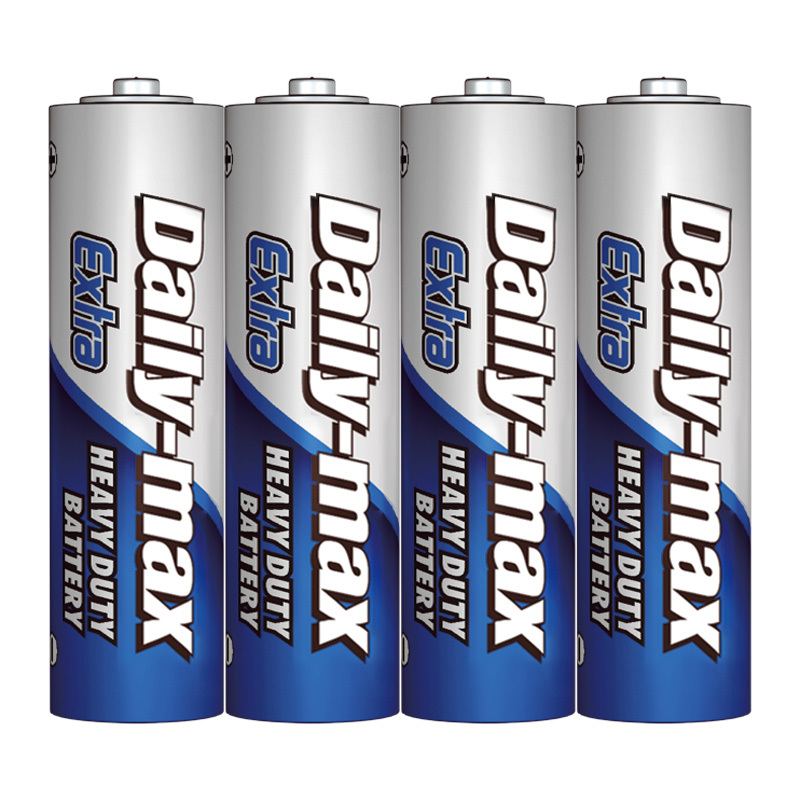
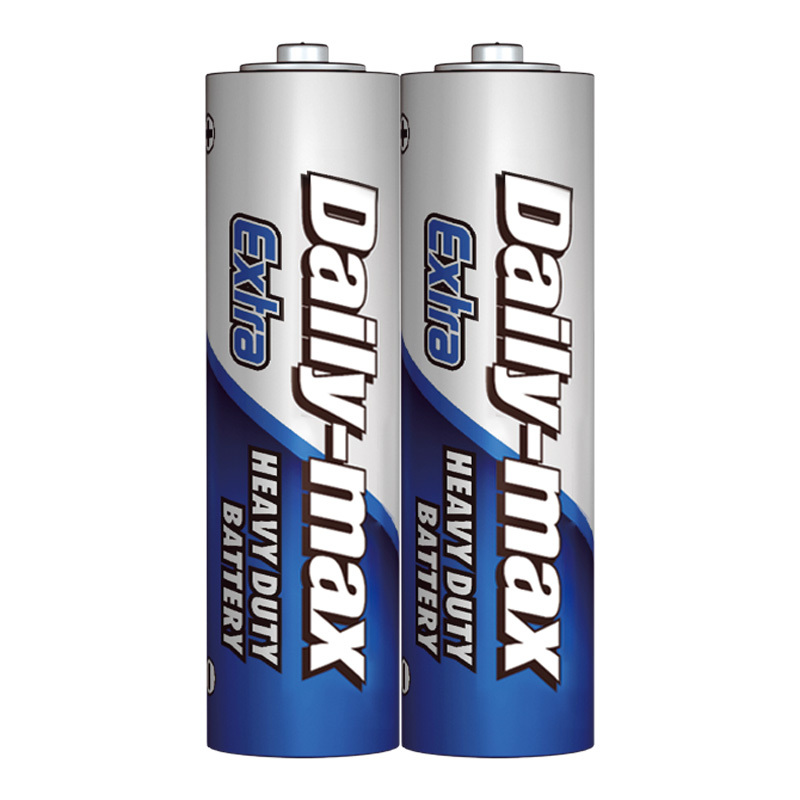
The broader zinc-carbon family includes several formulation variants, most commonly distinguished by their electrolyte composition. Standard zinc-carbon cells use an ammonium chloride electrolyte and are typically positioned as an economy-grade product. Heavy-duty variants substitute a zinc chloride electrolyte, which generally improves capacity and leakage resistance modestly compared with the standard formulation while remaining within the same general chemistry family and cost tier. Manufacturers sometimes label these heavy-duty variants with terms such as "extra heavy duty" or "super heavy duty" on packaging, though these labels are not governed by a single universal testing standard, so specification sheets remain the more reliable source for confirming actual performance characteristics of a given product line.
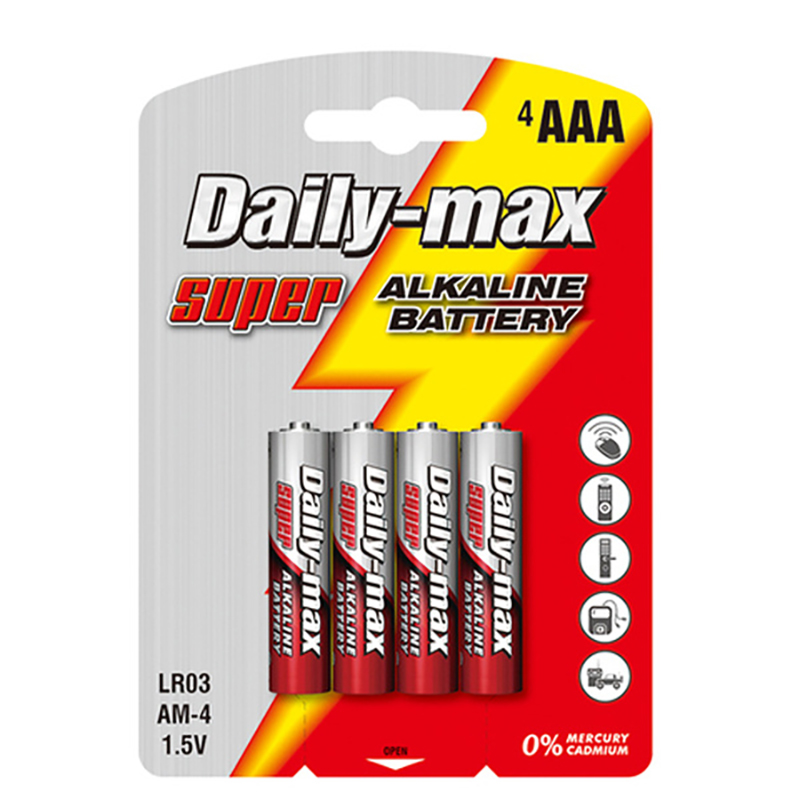
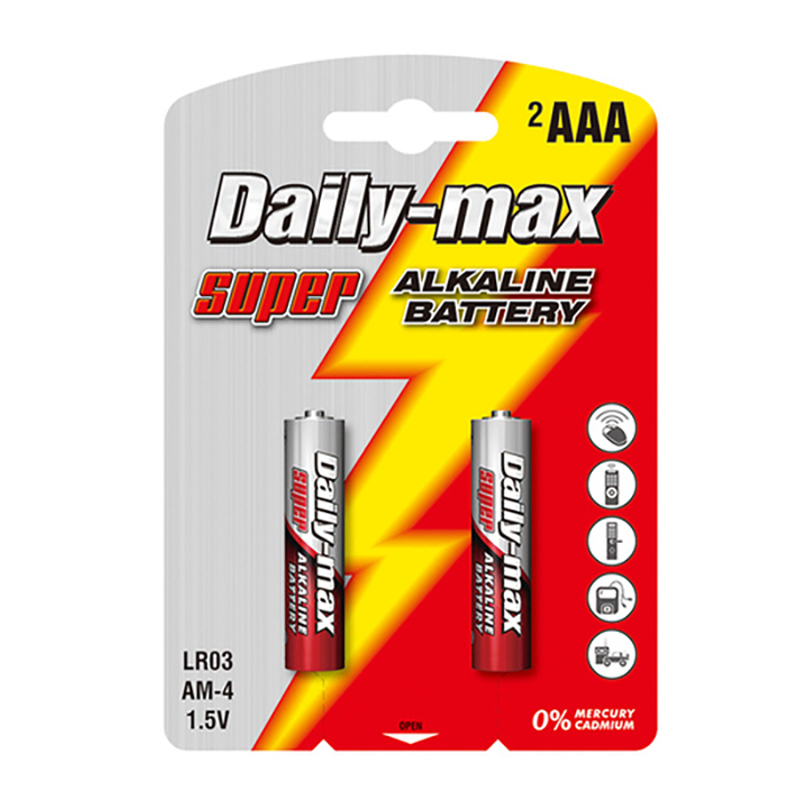
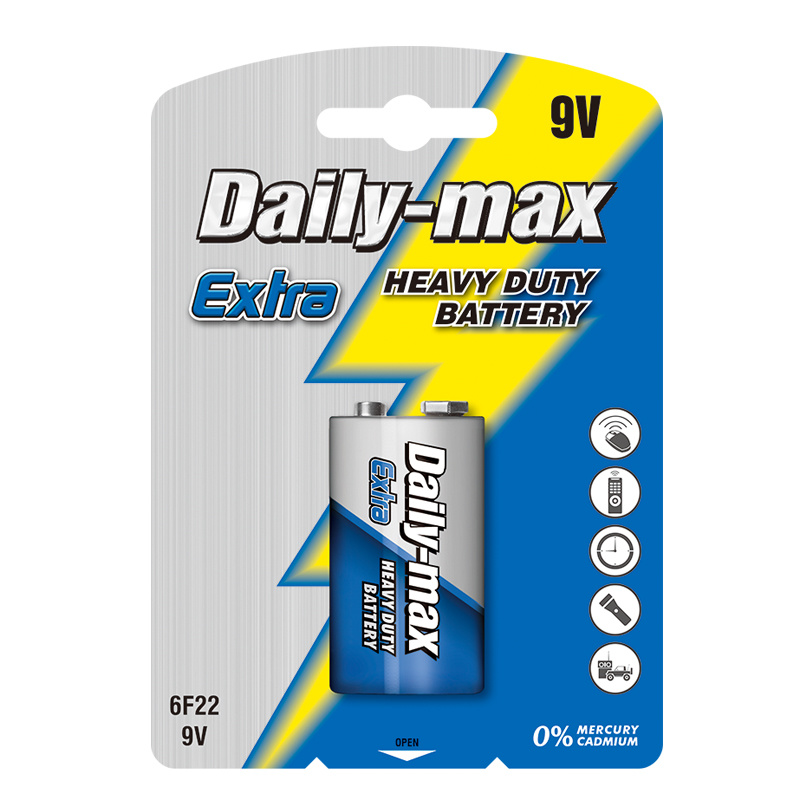
Packaging formats for this cell type also vary considerably depending on the intended distribution channel. Bulk packaging in trays or shrink-wrapped multi-packs is common for institutional or promotional use, while blister card packaging with printed specification information is more typical for retail environments. Selecting an appropriate packaging format is a separate consideration from cell chemistry itself, but it often factors into procurement decisions alongside technical specifications, particularly for programs involving private label branding or region-specific labeling requirements.
02How Carbon-Zinc Battery Chemistry Works
During discharge, the zinc can undergoes oxidation, releasing electrons that travel through the external circuit to power a connected device. At the carbon rod, manganese dioxide is reduced in a reaction facilitated by an ammonium chloride or zinc chloride electrolyte paste, which also serves to conduct ions between the electrodes internally. This reaction produces a nominal voltage of approximately 1.5 volts per cell when new, though the voltage under load is somewhat lower than the open-circuit reading due to internal resistance.
A defining characteristic of zinc-carbon chemistry is a comparatively steep and continuous voltage decline across the discharge curve, rather than the flatter discharge profile associated with alkaline cells. This means that a device powered by a carbon cell may show earlier signs of reduced performance, such as dimming light output or slower operation, well before the cell is fully depleted. For devices with simple on-off functionality and modest power requirements, this gradual decline is generally acceptable, whereas devices requiring stable voltage throughout their operating cycle are less well suited to this chemistry.
Internal resistance in zinc-carbon cells is also higher than in alkaline equivalents, which limits their ability to sustain higher current draws without a pronounced voltage drop. This property is central to understanding which applications are appropriate for the chemistry, since current draw compatibility is a more relevant selection factor than nominal voltage alone.
Physically, a cylindrical zinc-carbon cell is constructed with the zinc can serving a dual function as both the negative electrode and the outer structural container of the cell. A paper or fabric separator lines the interior of the can, preventing direct contact between the zinc surface and the manganese dioxide paste while still allowing ionic conduction through the electrolyte. The carbon rod sits at the center of the cell, extending to the positive terminal cap, and is surrounded by the manganese dioxide and conductive carbon black mixture that gives the chemistry its common name. A crimped seal at the open end of the can, combined with an insulating washer, contains the internal materials and forms the negative terminal contact point at the base of the cell.
This construction method, largely unchanged in its fundamental approach since the technology's early development, is part of why zinc-carbon cells remain comparatively inexpensive to manufacture. The materials involved, zinc, manganese dioxide, and carbon, are widely available, and the assembly process does not require the more complex sealing and pressure-management systems used in alkaline cell manufacturing, where a steel can and separately gelled zinc anode are used to support higher internal pressure tolerances.
This simpler construction also means that manufacturing tolerances and quality control practices can have a more noticeable effect on consistency between production batches compared with more heavily engineered alkaline designs, which is one reason technical documentation and sample verification are often worthwhile steps before committing to a given production source for volume orders.
03Key Characteristics and Performance Factors
Nominal Voltage
Approximately 1.5V when new, declining steadily across the discharge cycle rather than remaining flat.
Current Draw Suitability
Best suited to low and intermittent current draw applications rather than continuous high-drain use.
Shelf Life
Typically shorter than alkaline cells, with capacity gradually diminishing during storage even without use.
Temperature Sensitivity
Performance decreases more noticeably in cold conditions compared with alkaline or lithium alternatives.
Leakage Tendency
Historically more prone to electrolyte leakage after full discharge or extended storage than sealed alkaline designs, though modern manufacturing has reduced this risk.
Manufacturing Cost
Generally lower raw material and production cost relative to alkaline and lithium primary cells of the same size.
Taken together, these characteristics position the AAA carbon battery as a cost-oriented option for applications where occasional, low-power use is expected rather than continuous or high-current operation.
It is also worth noting that performance figures published for this chemistry are typically measured under controlled test conditions, such as a fixed discharge current down to a specified cutoff voltage. Real-world results can differ depending on ambient temperature, the actual current profile of the host device, and how the cell has been stored prior to use. For this reason, published capacity figures are best treated as comparative reference points between product options rather than precise predictions of runtime in every application.
04Technical Specifications
The table below summarizes typical specification ranges for AAA-format zinc-carbon cells. Individual manufacturers may report values that vary somewhat depending on the specific electrolyte formulation and construction method used.
| Specification | Typical Value |
|---|---|
| Chemistry | Zinc-Carbon (Leclanche / heavy-duty) |
| Nominal Voltage | 1.5V |
| Diameter | 10.5 mm |
| Length | 44.5 mm |
| Typical Capacity | 500 - 850 mAh (low-drain conditions) |
| Recommended Discharge Current | Low to moderate (light-drain devices) |
| Operating Temperature Range | 0C to 40C (reduced performance below 0C) |
| Typical Shelf Life | 2 - 3 years under recommended storage conditions |
| Rechargeable | No |
05Common Applications
The performance profile of zinc-carbon chemistry aligns with specific categories of household and low-power electronic devices rather than universal use across all battery-operated products.
- Remote Controls: Infrared remote controls draw current in brief pulses rather than continuously, which suits the intermittent discharge pattern of carbon cells well.
- Wall and Desk Clocks: Analog clock movements require minimal, steady low current, making them a common application for lower-cost primary cells.
- Basic Flashlights: Simple incandescent or low-output LED flashlights used infrequently can operate adequately on carbon cells, though runtime and brightness consistency are lower than with alkaline alternatives.
- Toys with Low Power Demand: Battery-operated toys with simple motors or light and sound features that are used occasionally rather than continuously.
- Household Novelty and Signal Devices: Doorbells, basic timers, and similar devices with minimal and infrequent current draw.
Devices with higher and more continuous current requirements, such as digital cameras, high-output flashlights, or motorized toys used for extended periods, are generally better matched to alkaline or lithium primary cells due to their flatter discharge curve and higher sustained current capability.
A useful way to evaluate application fit is to consider the duty cycle of the device rather than just its general category. A remote control, for example, draws current only for the fraction of a second during each button press, followed by extended periods of negligible draw while idle. This intermittent pattern allows the cell some recovery time between pulses, which partially offsets the higher internal resistance of zinc-carbon chemistry. A continuously running motor or a camera flash circuit, by contrast, draws current steadily or in high bursts without recovery intervals, which is where the performance gap between carbon-zinc and alkaline chemistry becomes most apparent to the end user.
06Carbon Battery vs Alkaline Battery
Selecting between zinc-carbon and alkaline chemistry in the AAA format depends on the balance between upfront cost and performance requirements. The comparison below outlines general tendencies across common evaluation criteria.
| Criteria | Carbon-Zinc (AAA) | Alkaline (AAA) |
|---|---|---|
| Typical Capacity | Lower | Higher |
| Discharge Curve | Steady decline | Relatively flat |
| High-Drain Performance | Weak | Good |
| Shelf Life | Shorter | Longer |
| Cold Weather Performance | Reduced | Moderate |
| Unit Cost | Lower | Higher |
| Best Suited Use Case | Low-drain, intermittent devices | Mixed and higher-drain devices |
Neither chemistry is universally preferable. Alkaline cells generally offer higher capacity and more consistent output across a wider range of devices, while carbon-zinc cells offer a lower per-unit cost that can be appropriate for applications where power demand is modest and predictable.
In practical terms, many households and organizations end up using both chemistries across their range of devices, reserving carbon-zinc cells for lower-priority, low-drain items and alkaline cells for devices where consistent output over a longer period matters more. Framing the decision around the specific device rather than a single blanket preference tends to produce more satisfactory results than standardizing on one chemistry across every use case.
07Selection Considerations and Purchasing Factors
Several factors are worth reviewing before specifying an AAA Carbon Battery for a particular device category or packaging program.
- Device current draw: Reviewing the typical operating current of the target device helps confirm whether carbon-zinc chemistry can support consistent performance without premature voltage drop.
- Expected storage duration: Products that may sit in inventory or on shelves for extended periods before use should account for the comparatively shorter shelf life of this chemistry relative to alkaline alternatives.
- Operating environment: Applications exposed to consistently low temperatures should factor in reduced performance under cold conditions.
- Packaging and labeling requirements: Regional labeling regulations for primary batteries, including chemistry disclosure and disposal guidance, should be confirmed for the target market.
- Cell construction quality: Reviewing seal integrity and construction standards from the intended production source helps reduce the likelihood of electrolyte leakage after discharge.
Device current draw is often the single most decisive factor in this evaluation. Reviewing a device's rated current consumption, when available from its documentation, against the discharge characteristics of the cell under consideration provides a more reliable basis for selection than relying on general assumptions about battery-operated devices as a uniform category. Devices that operate only briefly per use cycle, such as remote controls or simple timers, tend to be forgiving of the higher internal resistance associated with carbon-zinc chemistry, while devices with sustained or high-current draw are considerably less forgiving.
Expected storage duration is particularly relevant for organizations managing inventory across multiple distribution stages, since capacity loss during storage compounds with each additional stage a product passes through before reaching its point of use. Estimating total time from manufacture to expected end use, and comparing that estimate against typical shelf life figures for the chemistry, allows for more realistic performance expectations to be set for the finished product rather than relying solely on the capacity figures listed at the point of manufacture.
Packaging and labeling requirements can also vary meaningfully between regions, particularly regarding disclosure of cell chemistry, safety warnings, and disposal guidance printed on consumer packaging. Confirming these requirements against the regulations applicable in the target market before finalizing packaging artwork helps avoid the need for costly relabeling or repackaging after production.
08Usage, Storage, and Disposal Recommendations
Storing carbon-zinc cells in a cool, dry location away from direct heat sources helps preserve capacity, since elevated temperatures accelerate the internal chemical reactions responsible for gradual self-discharge. Extreme cold is not required or beneficial for storage and can introduce condensation-related risks if cells are moved between temperature zones without allowing them to acclimate.
Removing cells from devices that will not be used for extended periods reduces the likelihood of leakage-related damage to the device compartment, since a fully discharged or aged cell carries a higher risk of electrolyte seepage than a fresh one. Mixing new and partially used cells, or combining cells of different chemistries, within the same device is generally discouraged, as uneven discharge rates between cells can lead to one cell being driven into reverse polarity by the others.
Regarding disposal, zinc-carbon cells are commonly accepted through household battery recycling and collection programs in many regions, and in some jurisdictions may be permitted in general waste depending on local regulations. Because disposal rules vary by location, checking regional guidance before discarding used cells in bulk is a reasonable practice, particularly for organizations managing packaged battery products at volume.
For organizations handling larger quantities of used or damaged cells, such as returns processing or inventory clearance, additional handling precautions are worth observing. Damaged cells showing signs of case swelling, corrosion, or electrolyte residue should be isolated from undamaged stock and placed in a non-conductive container to reduce the risk of short-circuiting through contact with other metal objects or cells. Taping over the terminals of individual cells before bulk storage or transport is a straightforward precaution that reduces the likelihood of accidental short circuits when multiple loose cells are stored or shipped together.
09Common Mistakes and Overlooked Considerations
A frequent misjudgment is selecting carbon-zinc cells for devices with higher or more continuous current draw, resulting in noticeably shorter runtime and inconsistent performance compared with what the device is capable of on alkaline cells. Matching chemistry to the intended device category during specification avoids this mismatch before it becomes a recurring complaint from end users.
Another overlooked factor is shelf time between production and end use. Because zinc-carbon cells self-discharge more noticeably than alkaline alternatives during storage, products that pass through extended distribution chains before reaching a shelf may exhibit reduced capacity at the point of sale if storage duration is not factored into inventory planning.
Attempting to recharge zinc-carbon cells is also a common error, since this chemistry is not designed for reversible charge cycles. Applying a charging current to a standard carbon-zinc cell can cause internal gas buildup, leakage, or in some cases rupture of the cell casing, and should be avoided regardless of the charger type used.
Leaving depleted cells inside a device for extended periods after the device has stopped functioning normally is another commonly overlooked risk. Once a zinc-carbon cell is fully discharged, the zinc can is more susceptible to breach and electrolyte seepage, which can corrode contact points inside the device compartment and, in more severe cases, render the device unusable. Establishing a simple practice of removing exhausted cells promptly, particularly in devices used infrequently, reduces this risk at negligible cost or effort.
10Conclusion
The AAA carbon battery remains a relevant option within the broader category of primary cells, particularly for low-drain, intermittent-use devices where cost efficiency is a meaningful consideration. Understanding its discharge behavior, shelf life characteristics, and appropriate application range allows for more informed specification decisions compared with treating all AAA-format cells as functionally interchangeable regardless of internal chemistry.
11Frequently Asked Questions
Are carbon batteries any good?
They perform adequately in low-drain, intermittent-use devices such as remote controls and clocks, though they generally offer lower capacity and a steeper voltage decline than alkaline alternatives in higher-drain applications.
How long do carbon batteries last?
Runtime depends heavily on device current draw, but in appropriate low-drain applications, typical capacity falls in the range of 500 to 850 mAh, with shelf life under recommended storage conditions generally around two to three years.
Can you throw out carbon-zinc batteries?
In many regions, zinc-carbon cells can be disposed of through household battery recycling programs, and in some jurisdictions general waste disposal is permitted, though local regulations should be confirmed before discarding cells in volume.
Can you charge a carbon zinc battery?
No. Standard zinc-carbon cells are designed for single-use discharge and are not built to safely accept a recharging current, which can lead to internal gas buildup or casing failure if attempted.
Are there two types of AAA batteries?
The AAA designation describes cell size rather than chemistry, so multiple chemistries, including zinc-carbon, alkaline, and lithium, are produced in this same physical format, each with different performance characteristics.
Which AAA battery is best, alkaline or carbon zinc?
Neither is universally better; alkaline cells generally suit higher-drain and longer-storage applications, while carbon-zinc cells can be a cost-efficient choice for low-drain, intermittently used devices.
What is the difference between AA and AAA batteries?
AA and AAA refer to different standardized cell sizes, with AA cells being larger in diameter and length and generally offering higher capacity than AAA cells of the same chemistry, while both formats are available across zinc-carbon, alkaline, and lithium chemistries.
What are common applications for AAA batteries?
Typical applications include remote controls, clocks, small flashlights, toys, and other compact household devices, with the appropriate chemistry depending on whether the device requires low, intermittent current or higher, sustained current.