

 English
 中文简体
 русский
 Español
 عربى
An order for 400,000 AA cells is a rounding error against 5.5 billion annual alkaline capacity, and that gap is exactly where sourcing decisions go wrong. Buyers compare price per cell, then discover the volume sits on a line that runs that format twice a year, in a card size the plant has to tool from scratch.
The figure is not a marketing flourish. Changzhou Strengh (Anyida) Power Technology Co., Ltd., a primary-battery manufacturer in Changzhou, Jiangsu, lists 50,000 sq m of factory space on its About page next to a 120,000+ annual capacity figure with no stated unit. That omission illustrates the industry habit: capacity is quoted as a headline, while the calendar, the format mix and the packaging path behind it stay buried in the quotation sheet.
What 5.5 billion annual alkaline capacity actually means
5.5 billion annual alkaline capacity equals 5,500,000,000 finished, tested and packaged alkaline cells per year, which on a 330-day, 24-hour calendar is roughly 16.7 million cells a day and 694,000 cells an hour.
That hourly rate is what separates a campus from a workshop. A single high-speed cylindrical line running LR6 at 20,000 cells per hour produces about 158 million cells a year on a 330-day, 24-hour calendar. Reaching 5.5 billion therefore implies 35 such lines, plus the zinc and manganese-dioxide feed, the separators, the electrolyte handling, the sealing stations and the pallet flow behind them.
Definition: alkaline capacity is the number of finished, tested and packaged cells a plant can ship in a stated period on a stated calendar. It is not the theoretical output of its fastest machine, and it is never a number without a unit.
The hourly arithmetic behind the headline number
A 5.5 billion cell commitment requires 627,900 cells per hour if the plant runs 365 days a year around the clock, rising to 2,750,000 cells per hour if it only runs a single eight-hour shift on 250 days.
This is the first question to put to any supplier. The annual total is fixed by the buyer's forecast; the operating calendar is fixed by the plant. Changing the calendar changes the line count required to honour the same promise, and that is where delivery risk hides.
Cells per hour needed to reach 5.5 billion a year
All four figures are arithmetic on the same 5.5 billion total. Only the operating calendar changes.
| Calendar basis | Cells per day | Cells per hour | Lines at 20,000 cells per hour |
| 365 days x 24 hours | 15,068,000 | 627,900 | 32 |
| 330 days x 24 hours | 16,667,000 | 694,400 | 35 |
| 330 days x 16 hours | 16,667,000 | 1,041,700 | 53 |
| 250 days x 8 hours | 22,000,000 | 2,750,000 | 138 |
Why capacity scale changes sourcing risk, not just price
Multi-line capacity above one billion cells a year cuts allocation risk during a demand spike, because a plant with 35 lines can absorb a format changeover without stopping the whole order book.
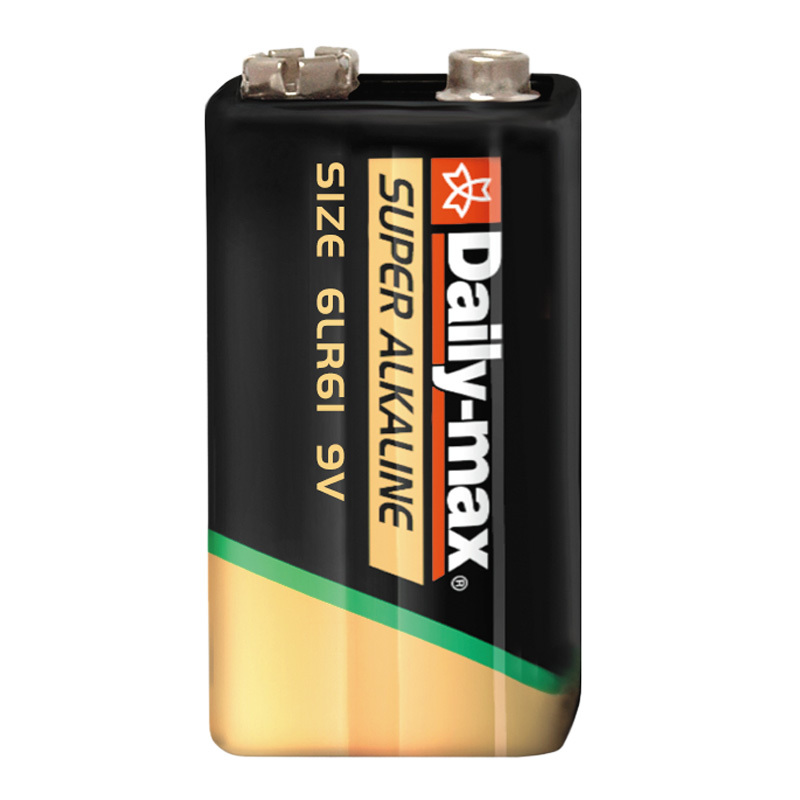
Scale buys three things a trading company cannot offer. First, format coverage: LR6, LR03, LR14, LR20 and 6LR61 tooling running in parallel rather than sequentially. Second, calendar flexibility, since the plant can shift volume between shifts instead of promising a single line's output. Third, packaging independence, because card, hanging card, shrink and black-gold formats can be scheduled against the same cell stock.
Single-line or trading supplier
- One format runs at a time, so mixed orders queue
- Allocation is negotiated case by case in a shortage
- Packaging changes are outsourced and add lead time
- Capacity claims are rarely tied to a calendar
Multi-line capacity at 5.5 billion scale
- Parallel lines keep five formats in production
- Volume is reallocated between shifts, not queued
- Card, shrink and industrial packs run in-house
- Calendar and format split can be audited on site
Buyers who want a structured checklist for this stage can work through the practical sourcing guide for B2B alkaline buyers, which covers quotation structure and supplier scoring in more detail.
Which packaging path fits a large-capacity order
Capacity is consumed by packaging, not by cells alone, so the packaging path decides how much of a 5.5 billion cell output is actually available to a given buyer.
Industrial outfit: black-gold and shrink
Industrial outfit runs use black-gold 2S and 4S sleeves or plain shrink wrap, aimed at equipment makers, maintenance contractors and distributors who do not need retail display. A plant running these formats converts cell stock to shippable units faster, which shortens the lead time between a line slot and a pallet.
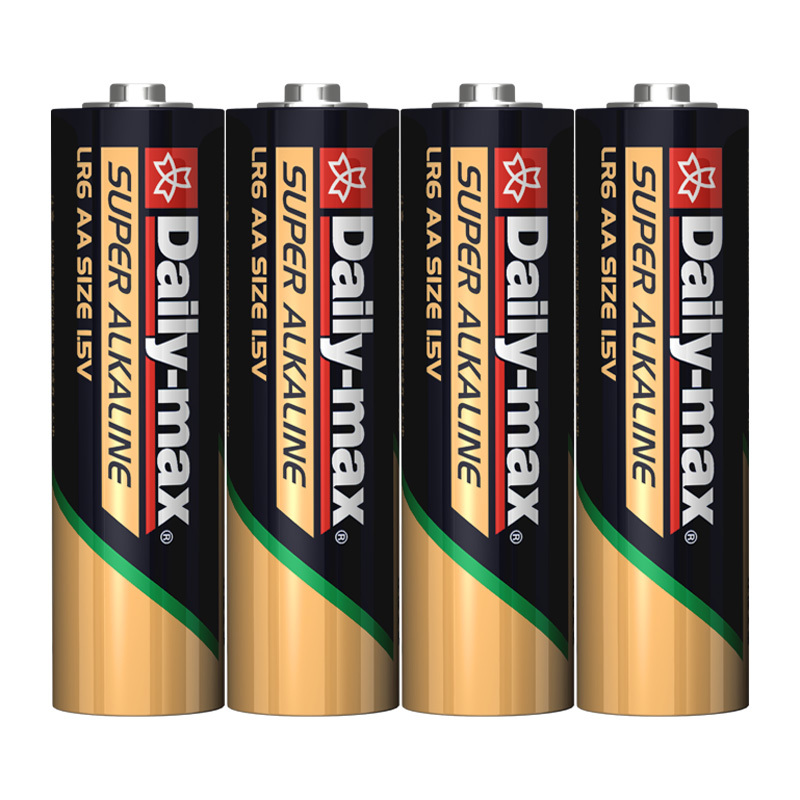 LR6 Black-Gold 4S Alkaline Battery for Industrial RunsCustom ODM/OEM AA alkaline cells in 4S black-gold shrink format, suited to industrial runs where fast conversion to shippable pallets matters.View Product →
The trade-off is presentation. Shrink and black-gold formats travel well and pack densely into a 40-foot container, but they cannot be placed on a retail peg without rework.
Business outfit: cards and hanging cards
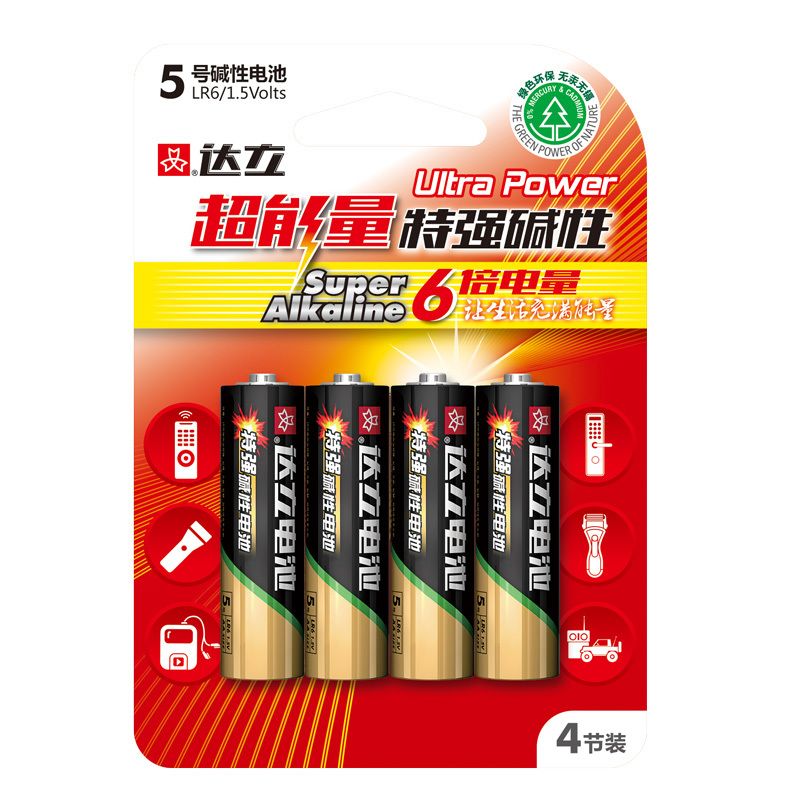
Business outfit runs use 2B and 4B blister cards or hanging cards, the format that retail chains, hardware distributors and private-label brands actually purchase. Card tooling is the hidden cost: each card size needs print plates, and a format change on the packing line costs more time than the cell run itself.
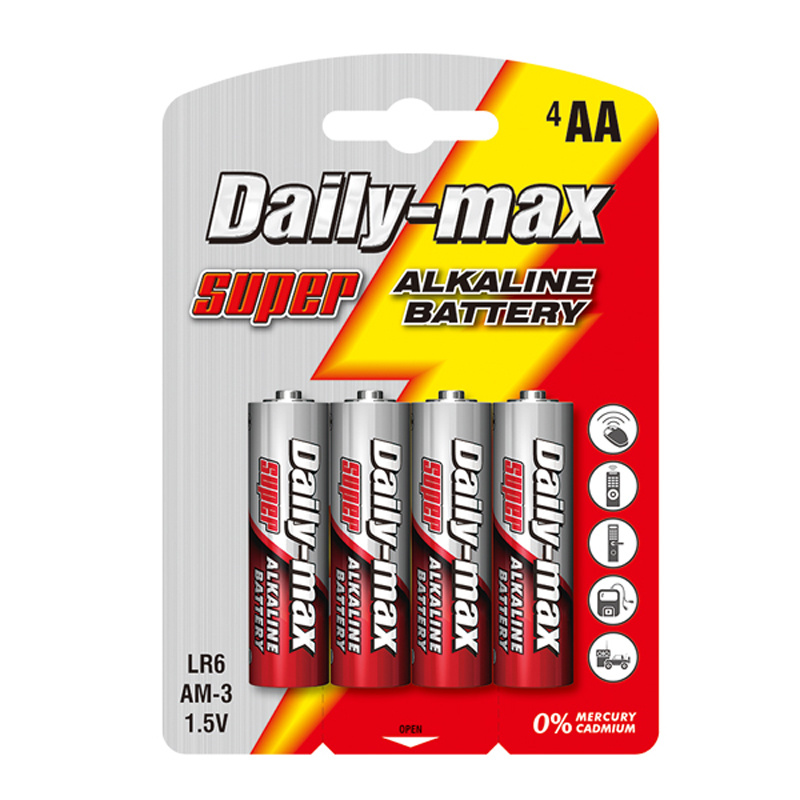 LR6-4B Business Alkaline Battery for Retail Card RunsCustom ODM/OEM 1.5V AA alkaline battery supplied in shrink or hang-card packaging for business and retail runs needing dependable high-drain performance.View Product →
For a buyer placing volume across AA, AAA, C, D and 9V, the practical move is to standardise on as few card sizes as possible, then negotiate the schedule around those plates.
Special formats and the long tail of capacity
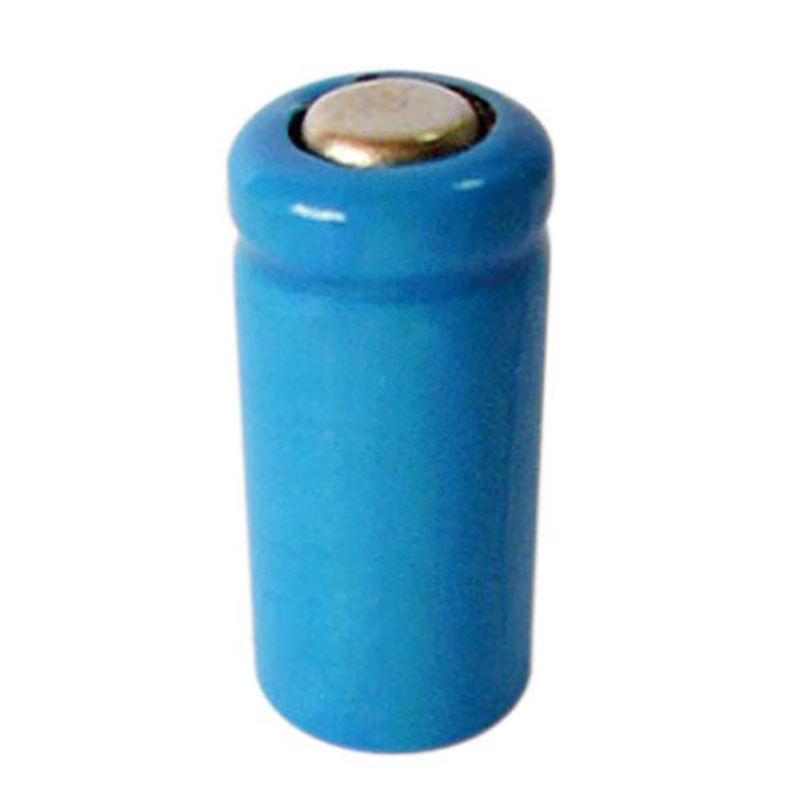
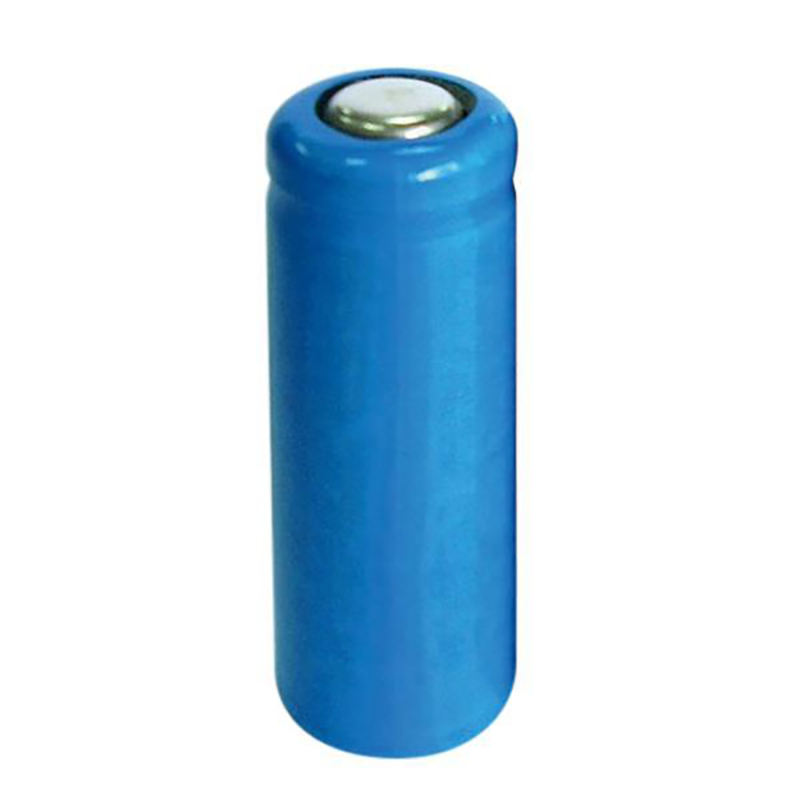
Specialty sizes such as 1-2 AAAA and the LR8D190, LR8D250 and LR8D425 references sit outside the standard AA and AAA tooling, and they absorb capacity disproportionately because runs are short and changeovers are frequent.
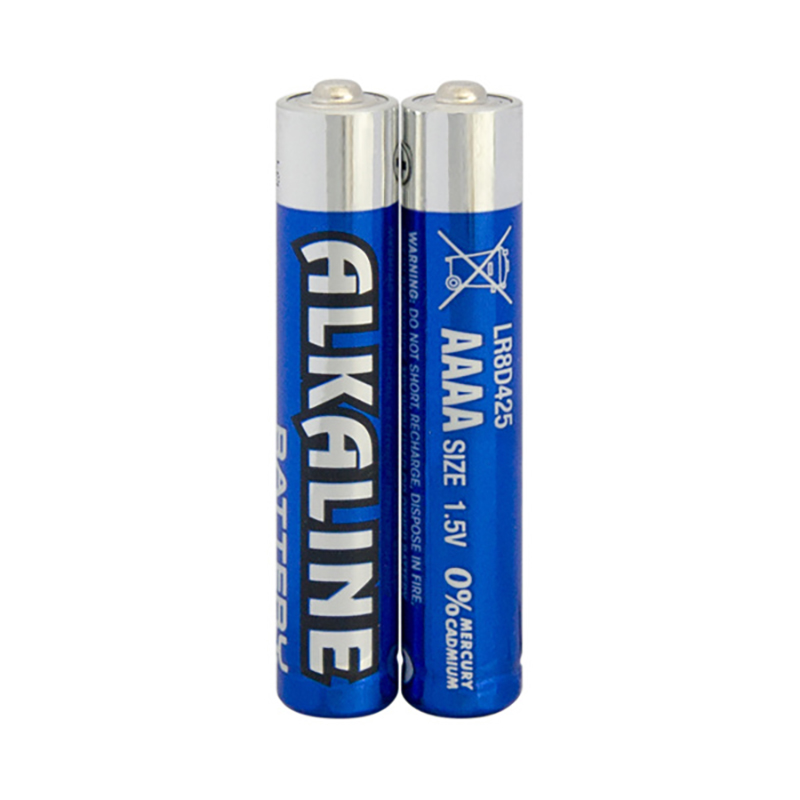 LR8D425 Special Alkaline Battery for Specialty DevicesCustom ODM/OEM 1.5V alkaline cell for specialized gadgets and equipment, available in shrink or hang-card packaging for short specialty runs.View Product →
The audit sequence before you accept a capacity claim
Five checks separate a verified capacity figure from a brochure number, and each one can be completed in a single plant visit or video walkthrough.
- Ask for the calendar basis in writing: days per year, shifts per day, planned downtime and maintenance windows.
- Request the line list with rated speed per line, then multiply by the calendar to see whether the total reconciles.
- Ask for the format split over the last 12 months, expressed as a share of total output per size.
- Confirm packaging capacity separately, since card and shrink lines usually run at a different rate from cell assembly.
- Check which quality marks are covered and by whom: ISO 9001, ISO 14001, UL, CE, RoHS, SGS and REACH are all listed by Strengh (Anyida) as part of its own published certification set.
A capacity number that cannot be broken down into lines, hours and formats is a marketing statement. A number that can be reconciled to the line list is a production plan you can schedule against.
Documentation that must ship with the cells
Every alkaline shipment should arrive with a declaration referencing IEC 60086-1 and IEC 60086-2, the international standards that fix cell dimensions and the discharge test regimes for LR6, LR03, LR14, LR20 and 6LR61.
- IEC 60086-1 for terminology and general requirements, IEC 60086-2 for dimensional and electrical specifications by size.
- Mercury declaration against Regulation (EU) 2023/1542, which retains the 0.0005 percent by weight limit for cells placed on the EU market.
- Transport classification under UN 3028 for dry alkaline batteries, Class 8, plus a current safety data sheet.
- Declared shelf life stated with its test conditions, because shelf life is a supplier declaration rather than a fixed IEC value.
A worked example helps here: a downloadable LR6 specification sheet should state nominal voltage of 1.5 V, cut-off voltage, discharge regime and storage conditions, and it should match the cells inside the carton.
Questions buyers ask about large-scale alkaline capacity
How many cells per hour does 5.5 billion a year require?
694,000 cells per hour on a 330-day, 24-hour calendar, or 627,900 cells per hour if the plant runs 365 days around the clock. Both figures assume zero unplanned downtime, so a realistic plan adds 8 to 12 percent headroom.
Does higher capacity guarantee a shorter lead time?
No. Lead time depends on which format is scheduled, not on the annual total. A plant with 35 lines can still quote long lead times for a special format that only runs twice a year, while a smaller plant may deliver a standard LR6 order faster.
Which standards should a purchase order reference?
Reference IEC 60086-1 and IEC 60086-2 for dimensions and discharge performance, Regulation (EU) 2023/1542 for mercury content, UN 3028 for transport, and ISO 9001 for the quality system. Naming the standard numbers in the purchase order removes ambiguity at inspection.
How should a buyer verify a quoted capacity figure?
Ask for the line list, the operating calendar, the 12-month format split and a sample shipping record. If the three reconcile to the headline number within 10 percent, the capacity claim is traceable to production rather than to a slide.