

 English
 中文简体
 русский
 Español
 عربى
The difference is not in the cell. It sits in eight or nine line items that a per-cell FOB sheet never itemizes: packaging configuration, cell grading, compliance documentation, tooling and minimum runs, freight classification, payment financing, and the claim reserve behind the warranty. Ultra alkaline chemistry, the premium zinc-manganese dioxide formulation sold as high-drain or premium alkaline, is rarely the variable that separates a profitable OEM programme from a loss-making one.
Working definition
Landed cost per sellable cell is total order cash outlay divided by cells that pass incoming inspection and reach the shelf. It equals the FOB price plus packaging, grading, compliance, tooling amortization, freight and duty, payment financing, and the reserve set aside for claims.
Why the Per-Cell FOB Price Explains Only Part of Landed Cost
The FOB cell price is the largest single cost layer in an ultra alkaline OEM order, but on mid-volume programmes it typically accounts for less than three quarters of what the buyer actually pays per sellable cell.
That holds because packaging, grading, documentation and freight do not scale with cell price. They scale with order structure: the number of retail SKUs, the number of destination markets, and the number of certificate portfolios the supplier must keep current.
The split above is illustrative rather than a published cost model. What stays constant across programmes is the shape: three layers outside the cell price, namely packaging, grading and compliance, are the ones a buyer can still negotiate before the purchase order is signed. Freight and financing are largely fixed by route and by the buyer's own payment terms.
Packaging Format Moves Landed Cost More Than Cell Chemistry Does
Packaging configuration changes delivered cost per cell by a wider margin than the choice between economy and premium alkaline chemistry, and it changes cost in ways the per-cell quotation never reveals.
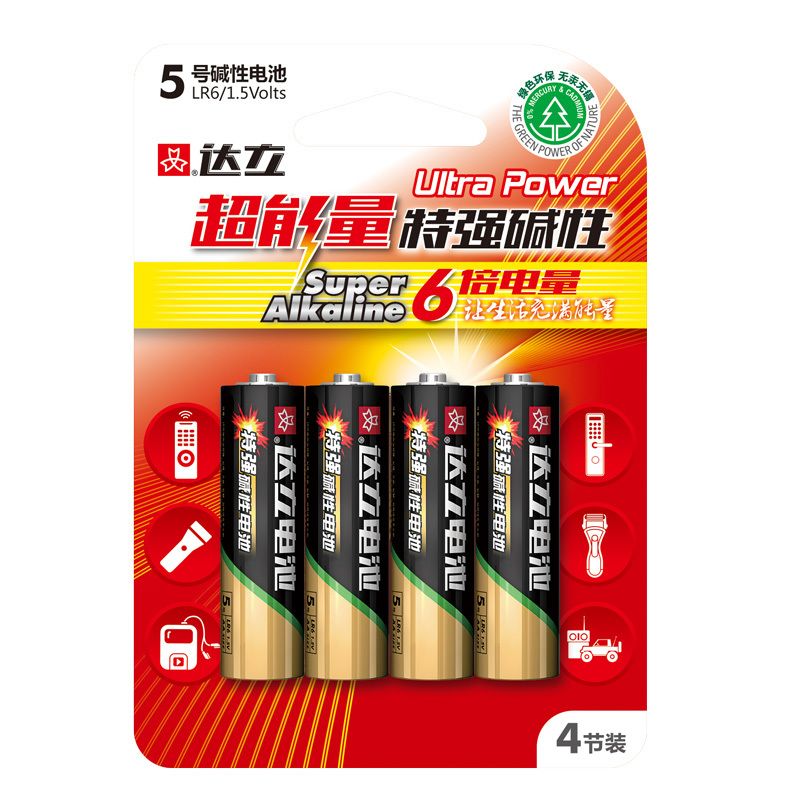
An LR6 cell in a 4-pack blister card carries a coated card, a formed blister, a print plate, a cartoner setup and a retail hang feature. The same cell in a 4S black-gold shrink pack carries film, a printed band and a bulk carton. The cell is identical; the cost structure is not.
| Format | Cells per unit | Cost elements added | Volume sensitivity |
| 2-pack blister card (LR6 2B) | 2 | Coated card, formed blister, print plate, cartoner setup | High |
| 4-pack blister card (LR6 4B) | 4 | Larger card, deeper blister, second plate, retail compliance text | High |
| Hanging card (LR6 2B hanging card) | 2 | Reinforced header, hang-hole punching, euro-slot die | Medium |
| Shrink film 2S (LR6 2S) | 2 | Film, printed wrap, tunnel setup | Low |
| Black-gold shrink 4S (LR6 4S) | 4 | Film, printed band, bulk outer carton | Low |
| Bulk carton, no retail unit | 100 to 500 | Carton, divider, pallet pattern | Very low |
Changzhou Strengh (Anyida) Power Technology Co., Ltd. splits its alkaline catalogue along exactly this line. The commercial retail range covers AA, AAA, C, D and 9V formats in 2-pack and 4-pack card and hanging-card presentations.
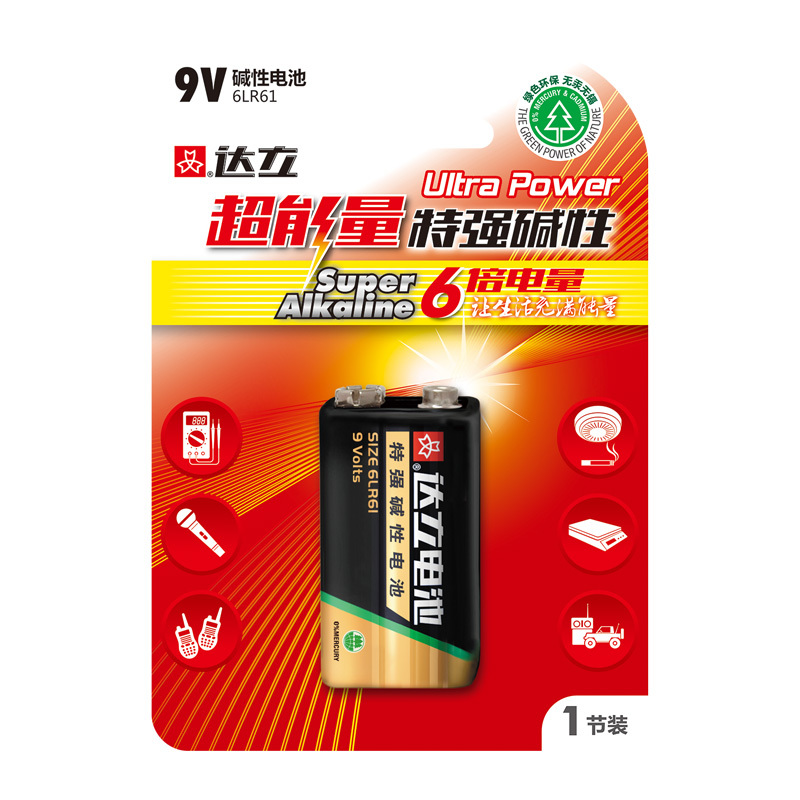 Business-Grade Alkaline Batteries in Retail Pack FormatsWholesale business-grade alkaline batteries in AA, AAA, C, D and 9V formats with 2- or 4-pack and hanging-card options.View Product →
The industrial range covers the same cell sizes in black-gold and shrink configurations built for bulk handling rather than shelf display.
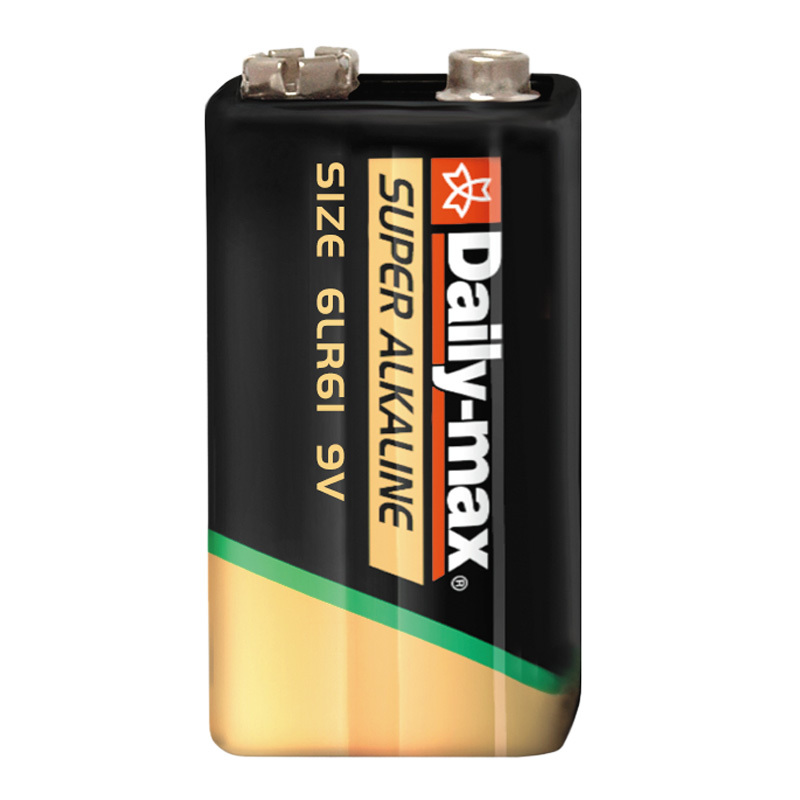 Industrial Alkaline Batteries in Black-Gold and Shrink PacksBulk-oriented industrial alkaline cells in 9V, AA, AAA, C and D sizes, available in black-gold or shrink configurations for equipment and emergency power.View Product →
Buyers who treat packaging as a single line item usually discover the opposite during the second order, when a second retail SKU triggers a second plate charge and a second carton setup.
Every retail SKU is a separate artwork file, a separate plate and a separate carton setup. Four SKUs across three destination markets produce twelve registration combinations, not four.
For a broader view of how these factors combine at supplier selection stage, this practical sourcing guide for B2B buyers walks through the same decision sequence.
Cell Grading and Dimensional Tolerance Are Priced Into the Order, Not the Cell
Two cells that both satisfy IEC 60086-2 can still fail the same device, because the standard defines an envelope rather than a single dimension.
IEC 60086-2 permits an LR6 cell with a jacket diameter anywhere from 13.5 mm to 14.5 mm and an overall height from 49.5 mm to 50.5 mm. That is a 1.0 mm diameter window on a nominal 14.5 mm cell. A battery compartment designed to 0.1 mm clearance will accept some production lots and reject others, and the rejection surfaces as a retail return rather than a supplier invoice.
Grading covers more than dimensions. A supplier running a tight grading protocol bins cells by open-circuit voltage and internal resistance, then discards or re-labels the tails. That activity consumes labour, floor space and yield, and it appears in the quotation as a slightly higher per-cell price with no visible explanation.
- Open-circuit voltage spread and the labour cost of binning
- Internal resistance screening for high-drain device loads
- Jacket print alignment and lot-code legibility checks
- Shelf-life hold time before the shipment leaves the warehouse
ISO 2859-1, the attribute sampling standard also published as GB/T 2828.1, converts incoming inspection into a defined risk. A buyer who sets AQL 0.65 on critical defects and AQL 2.5 on major defects has already fixed the rejection rate the supplier will price into the order.
Compliance Documentation Is a Recurring Cash Cost
Compliance paperwork for an ultra alkaline OEM order is a recurring annual cost carried by the supplier and recovered in the per-cell price, not a one-time filing.
The EU Battery Regulation (EU) 2023/1542 replaced Directive 2006/66/EC and applies obligations in stages. Labelling and CE marking duties under Article 13 apply from 18 August 2025, and performance and durability documentation duties apply from 18 August 2026. A supplier maintaining a portfolio across several markets carries that cost all year, whether or not a given buyer places an order.
Documents an ultra alkaline OEM order normally requires
- IEC 60086-2 test report covering dimensions and discharge performance
- UN 38.3 transport test summary for any lithium button cells in the same shipment
- REACH SVHC declaration, with the candidate list now above 240 substances
- EU Battery Regulation conformity file and CE technical documentation
- ISO 9001 and ISO 14001 certificates with current validity dates
- Safety data sheet plus multilingual warning text for each market
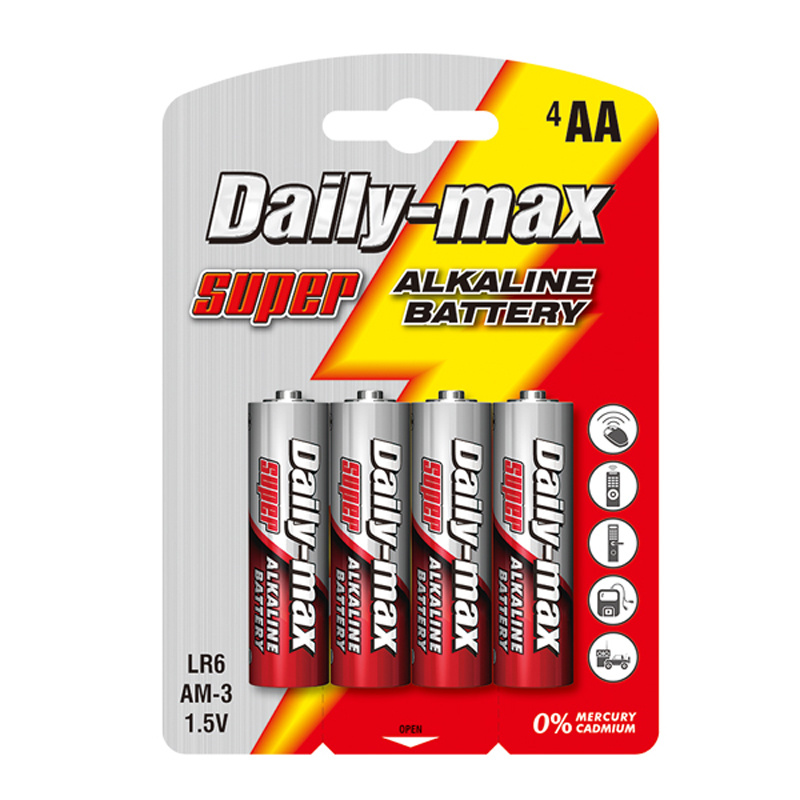
The cost per cell of that portfolio depends entirely on volume. A certificate set that costs a supplier USD 12,000 a year to maintain adds roughly USD 0.024 per cell to a 500,000-cell programme and roughly USD 0.0024 per cell to a 5,000,000-cell programme. Two buyers holding identical certificates at a tenfold volume difference do not face the same price. Published discharge data, such as this LR6 test sheet from Dailymax, is the evidence behind those files.
Tooling, Minimum Runs and Special Formats
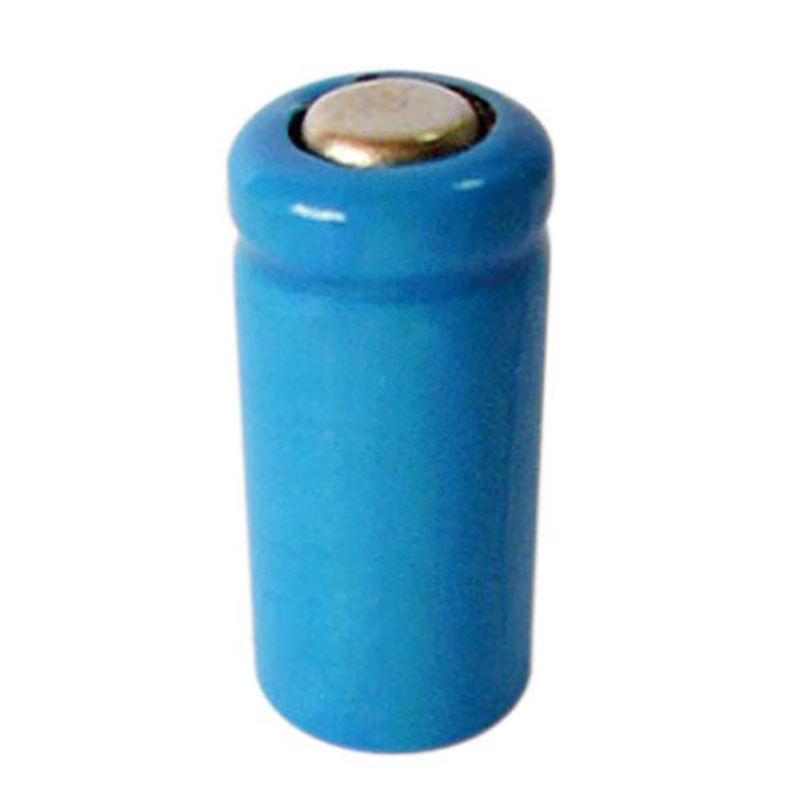
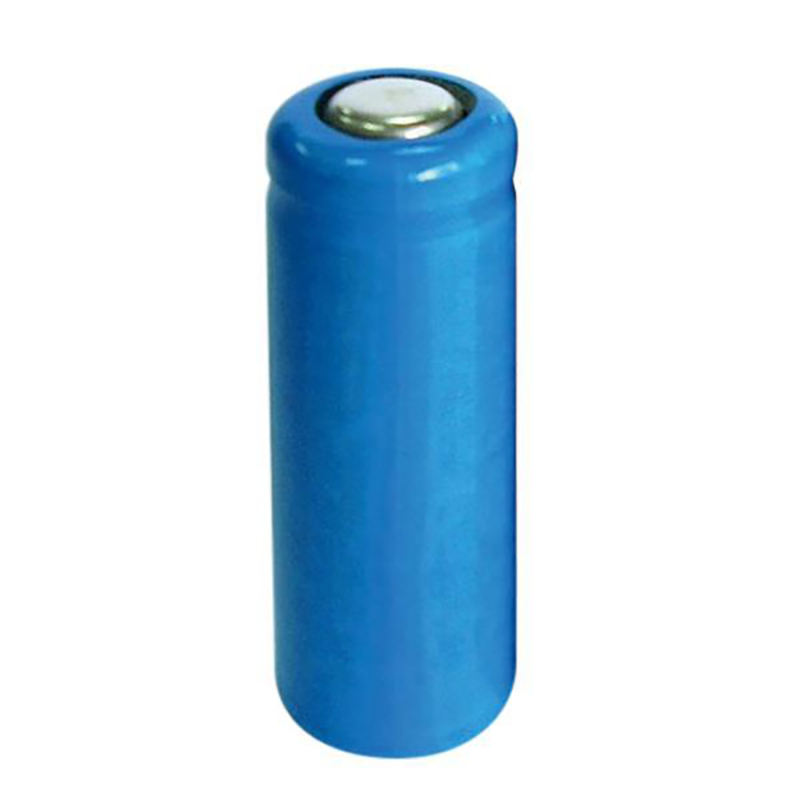
Specialty alkaline formats such as the 1-2 AAAA and the LR8D425 cylindrical cell carry tooling and minimum-run costs that a standard LR6 request for quotation never exposes.
Standard format
- Existing can and seal tooling already amortized
- Wrapper print shared with other orders in the plant
- Changeover measured in hours, not days
- Minimum run set by carton quantity
Special format
- Dedicated can or seal ring may be required
- Separate wrapper plate and proof cycle
- Changeover absorbed inside the quoted price
- Minimum run set by the winding line
Anyida's special alkaline range covers the 1-2 AAAA cell alongside the LR8D190, LR8D250 and LR8D425 sizes, which is the format tier where this cost driver concentrates.
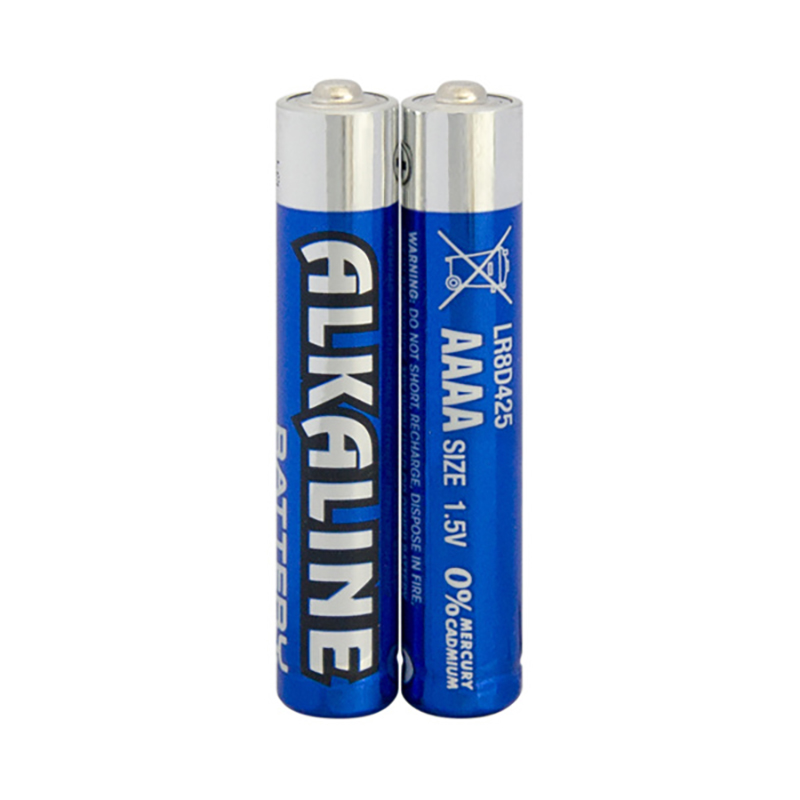 LR8D425 1.5V Special Alkaline BatteryA 1.5V special-format alkaline cell for scientific gadgets and data loggers, with shrink-pack or hang-card packaging and custom ODM/OEM support.View Product →
The practical consequence is that a special format is cheapest when it rides alongside a standard order on the same line. A buyer who needs 50,000 specialty cells should ask whether the run can be scheduled behind an existing LR6 campaign, because sequencing, not negotiation, decides most of that cost.
Freight, Payment Terms and the Claim Reserve
Freight and financing add a layer that scales with order value rather than cell count, which is why small OEM orders carry a disproportionate burden per cell.
- Alkaline cells move as non-restricted dry batteries under normal conditions, but lithium button cells in the same container require UN 38.3 evidence and Class 9 documentation
- Carton compression strength and pallet pattern determine how much of the container the buyer actually pays for
- Telegraphic transfer at 30/70 and a documentary letter of credit differ by issuing bank fees and the supplier's financing charge
- A warranty clause permitting 1 percent replacement on a 500,000-cell order reserves 5,000 cells before the first shipment
A 1 percent claim reserve on a 500,000-cell order is 5,000 cells. At USD 0.084 that is USD 420 of product, plus the freight, inspection time and paperwork needed to settle each claim.
Practical Questions From Buyers Comparing Ultra Alkaline Quotations
These four questions cover the gaps that appear most often when two quotations at the same per-cell price are converted into comparable landed cost.
Which hidden cost driver grows fastest as order size falls?
Compliance documentation. A fixed certificate portfolio spread across a small order dominates the per-cell price, and below roughly 200,000 cells a year, documentation plus tooling amortization can exceed the entire packaging layer.
How should two ultra alkaline OEM quotations be compared?
Convert both to landed cost per sellable cell: FOB price plus packaging, grading, freight, duty, financing and claim reserve, divided by cells that pass incoming inspection at the agreed AQL of 0.65 for critical defects.
Does the retail format change the compliance burden?
Yes. Each destination market and each retail SKU generates a separate packaging and labelling file, so four SKUs across three markets produce twelve registration combinations rather than four.
What is the most reliable lever for reducing landed cost?
Consolidating retail SKUs and committing annual volume to one format. Packaging plates, carton setups and certificate maintenance are all fixed per SKU, so a 30 percent SKU reduction removes cost that no per-cell negotiation can reach.
The per-cell FOB price is a useful negotiation anchor and a poor purchasing decision tool. Convert every offer to landed cost per sellable cell, list packaging configuration, grading protocol, certificate portfolio, tooling sequence and claim reserve as separate lines, and the two quotations that looked identical on the first morning stop looking identical by the afternoon.