

 English
 中文简体
中文简体 русский
 Español
 عربى
عربىWhen a sourcing manager starts evaluating alkaline battery manufacturers, the first instinct is usually to compare consumer brands. That instinct rarely leads to a good procurement decision. Duracell, Energizer, and Panasonic dominate retail shelves, but most of these companies do not supply private-label or bulk industrial customers directly. The real question is not which brand is the most famous; it is which factory can deliver consistent discharge performance, controlled leakage rates, the packaging your channel needs, and the export documentation your market requires. A manufacturer with decades of production history and flexible packaging options will usually serve a B2B buyer better than a famous brand selling through regional distributors.
What to Verify Before You Qualify Any Alkaline Battery Manufacturer
Start with the chemistry and the process behind it. An alkaline cell combines a zinc anode, a manganese dioxide cathode, and a potassium hydroxide electrolyte. The general working principle of alkaline batteries is simple on paper, but holding that chemistry stable across millions of cells is what separates a genuine manufacturer from a re-labeling operation. Electrolyte concentration, manganese dioxide purity, separator thickness, and crimping pressure all influence leakage and shelf life — and leakage is the failure mode that damages buyer confidence fastest.
The relevant technical standards are IEC 60086-2 for dimensions and discharge performance and ANSI C18.1M for North American markets. Compliance marks such as ISO 9001, ISO 14001, CE, UL, RoHS, and REACH are common in the industry, but the certificate scope matters more than the logo. Two ISO 9001 certificates can cover completely different processes, so ask to see the actual scope before treating a certification as proof of quality management. A reliable factory will provide certificates, test reports, and discharge curves without hesitation.
Consumer Brands Versus Export-Oriented Factories
Where Household Names Fit
Duracell, Energizer, and Panasonic are genuinely authoritative players in the alkaline battery industry, and their market positions are well deserved. They compete for retail shelf space, consumer trust, and advertising visibility — not for OEM contracts. If you are a distributor or a private-label buyer, approaching them usually means negotiating through regional distributors and paying retail-channel margins, which makes it hard to build a competitive own-brand product.
Where Private-Label and Bulk Supply Actually Comes From
The majority of alkaline cells sold under supermarket own brands, hardware-store labels, and industrial catalogs come from specialized manufacturing bases. Companies such as GP Batteries and Nanfu, plus a broad network of export factories in Jiangsu, Zhejiang, and Guangdong, supply these channels. This is why packaging capability and export experience are more meaningful selection criteria than brand recognition. A buyer who wants to place a private label on the cell needs a factory that can handle carded packs, hanging cards, shrink film, and custom face printing on the same production line that makes standard AA, AAA, C, D, and 9V cells.
What Production Experience Says About a Manufacturer
A useful example is Changzhou Strengh (Anyida) Power Technology Co., Ltd., a Jiangsu-based manufacturer whose own history goes back to 1956. The company reports a factory area above 50,000 square meters, annual output in the six-figure range, and exports to more than 30 countries. Figures like these are only a starting point, but the structure behind them matters: in-house mixing and assembly, dedicated business and industrial packaging lines, and a product catalog organized around real order patterns rather than a single best-selling size.
What should you actually verify during an inquiry? First, production history — a decade of continuous operation is easier to claim than fifty years of accumulated process knowledge. Second, testing capability: any credible manufacturer can show open-circuit voltage testing, load voltage testing, and leak-test records from its own laboratory. Third, export records. A factory that has shipped to Europe, North America, and Southeast Asia has already dealt with the customs, labeling, and documentation requirements you will face in those markets.
Packaging Formats Decide Which Catalog Fits Your Channel
Alkaline AA, AAA, C, D, and 9V cells contain the same electrochemistry regardless of destination. The buying process, however, is completely different between retail and industrial channels, which is why experienced manufacturers organize their catalog into business outfits and industrial outfits.
Business Outfit for Retail and E-Commerce
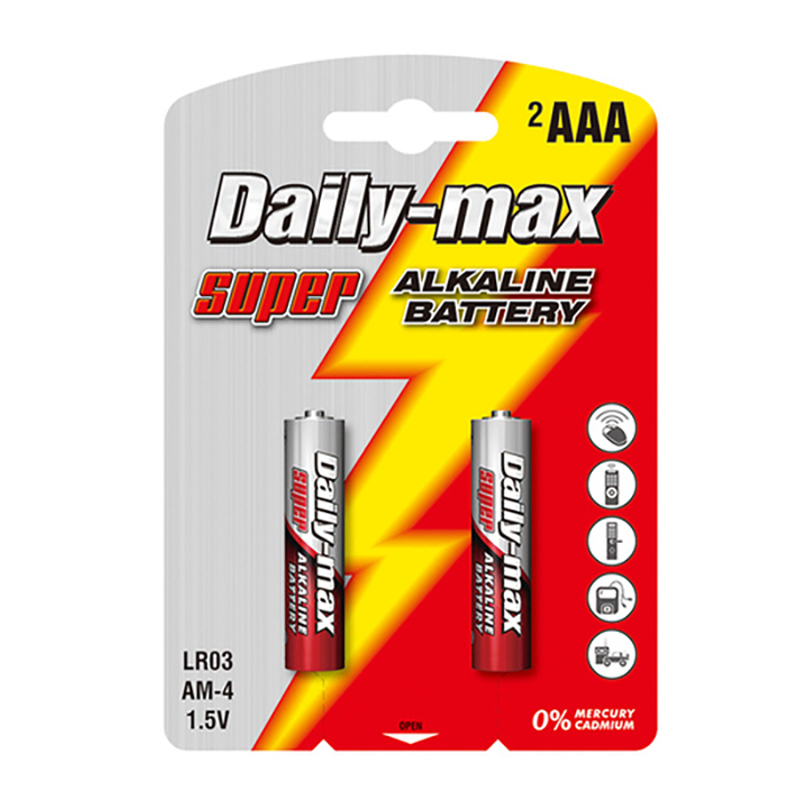
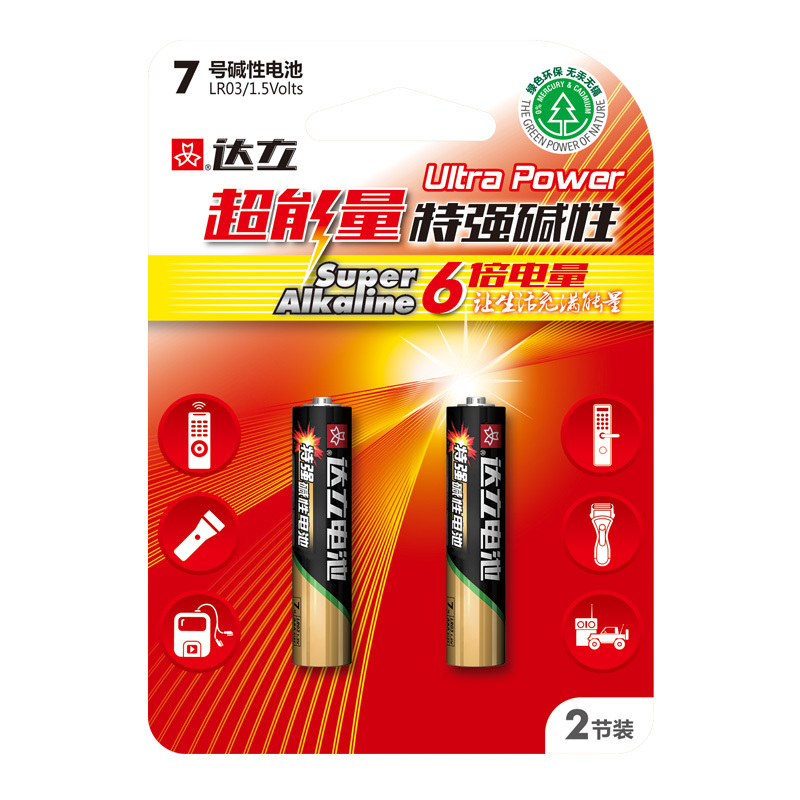
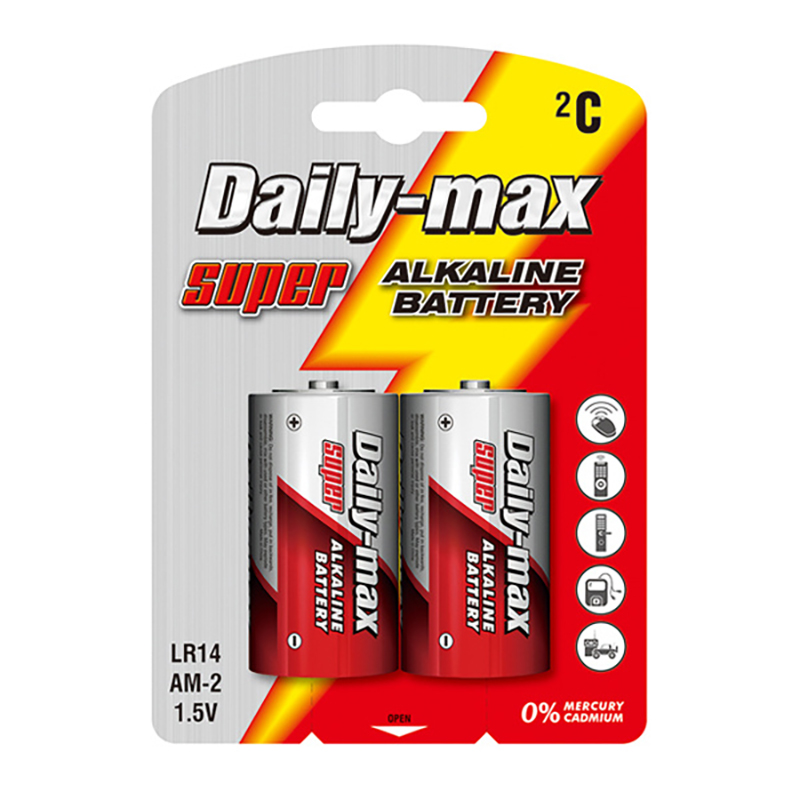
Business outfit means retail-ready packaging. Hanging cards, carded multipacks, and blister-backed displays are the main forms. A typical SKU is an AA LR6 two-pack business alkaline battery, which fits supermarket shelves and online marketplace listings equally well. The same format extends through four-packs and covers AAA, C, D, and 9V sizes. If you sell to consumers, the packaging design is part of the product, and the manufacturer must be able to reproduce your artwork consistently across thousands of cards.
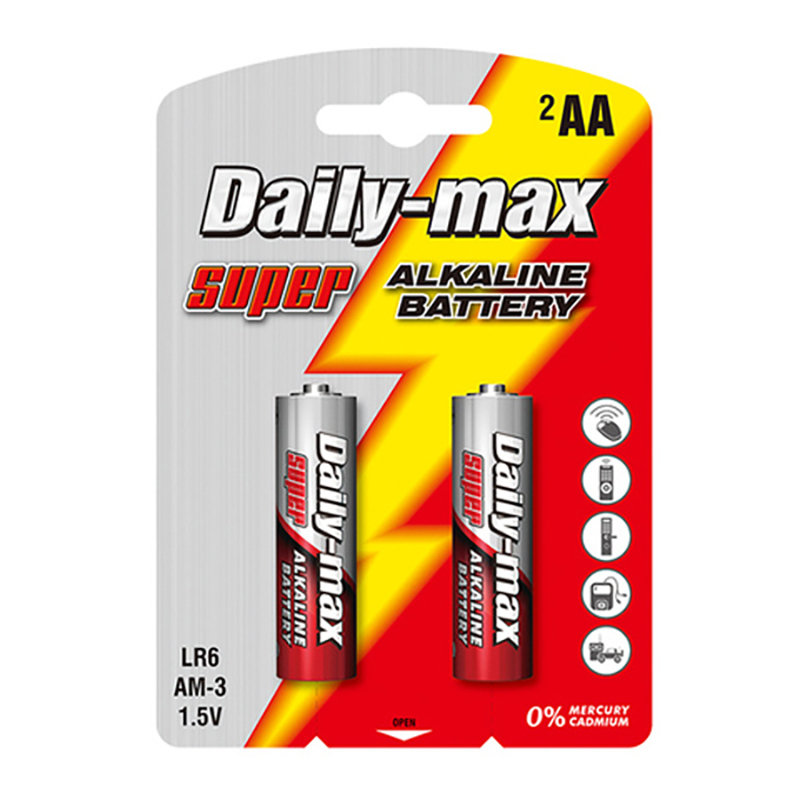 Custom ODM/OEM AA LR6-2B Business Alkaline Battery Manufacturers, FactoryChangzhou Strengh (Anyida) Power Technology Co., Ltd. Is China Custom ODM/OEM AA LR6-2B Business Alkaline Battery Manufacturers, Factory,...View Product →
Industrial Outfit for OEM and Warehouse Distribution
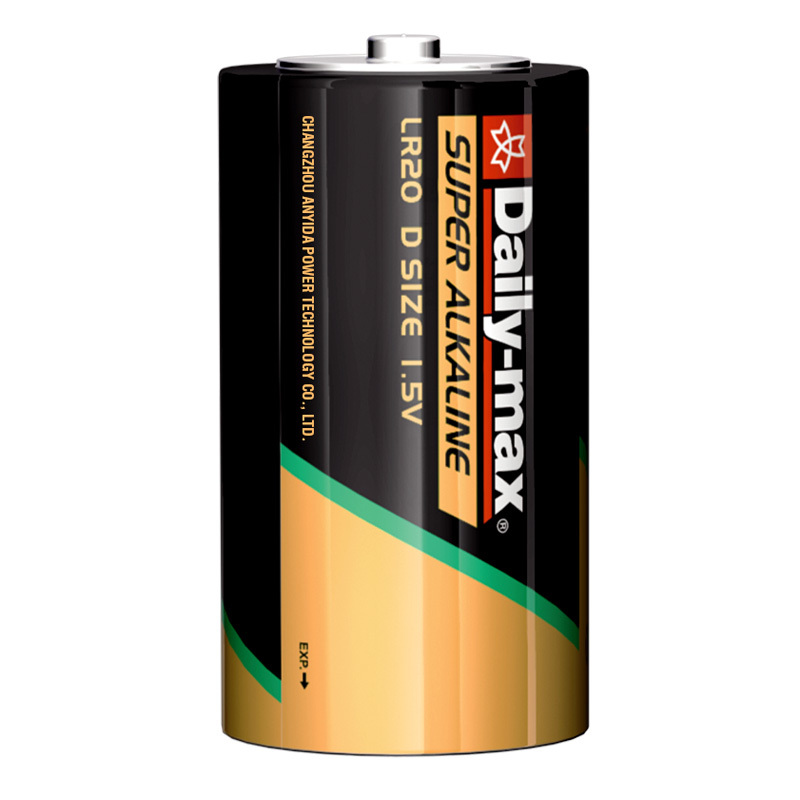
Industrial outfit uses shrink film and simplified labels, often named by wrapper design — black-gold or shrink, with 2S and 4S counts. These packs are not meant for display; they are meant to be stored, stacked, and dispensed by maintenance teams or device assemblers. An LR6 black-gold two-pack industrial alkaline battery is the kind of SKU a security-system installer or an instrument manufacturer keeps in bulk. Putting that same cell in a retail card would add cost without adding value.
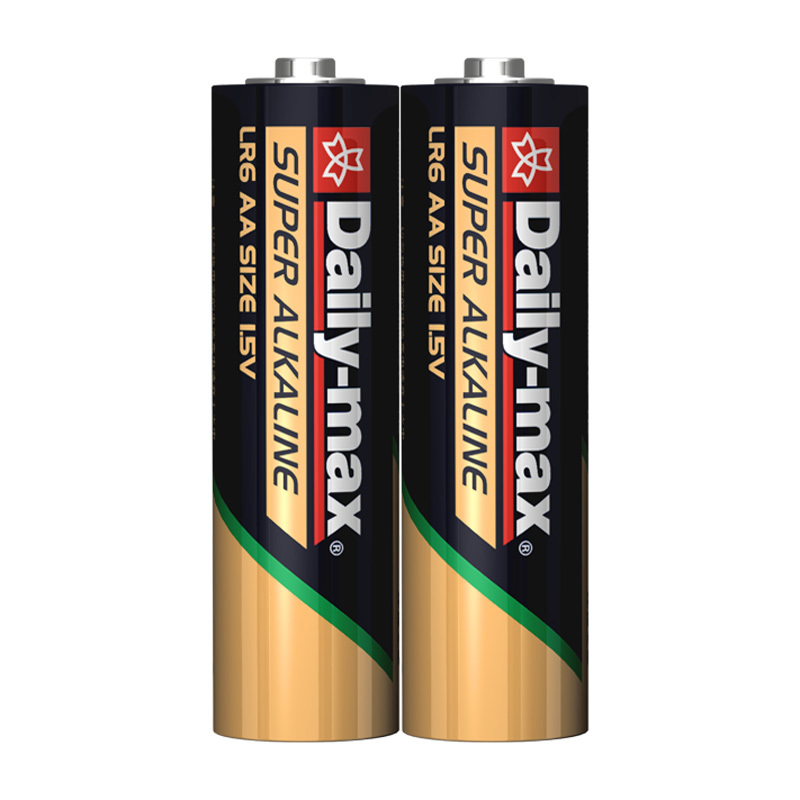 Custom ODM/OEM LR6 Black Gold-2S Industrial Outfit Alkaline Battery ManufacturerChangzhou Strengh (Anyida) Power Technology Co., Ltd. Is China Custom ODM/OEM LR6 Black Gold-2S Industrial Outfit Alkaline Battery Manufa...View Product →
| Selection Criterion | Business Outfit (Retail) | Industrial Outfit (Bulk/OEM) |
|---|---|---|
| Primary pack | Hanging card or carded multipack | Shrink film, simplified wrapper |
| Typical sizes | AA, AAA, C, D, 9V | AA, AAA, C, D, 9V |
| Best suited for | Supermarkets, e-commerce, own-brand retail | Device manufacturers, maintenance, export traders |
| Labeling | Full retail face design, consumer messaging | Batch codes, basic identification |
Special Formats Reveal True Manufacturing Capability
Standard sizes dominate the market, but special formats are a better test of a factory's skill. The 1-2 AAAA cell and the LR8D series (LR8D190, LR8D250, LR8D425) are long, thin alkaline cells designed for compact electronic devices. Producing them requires different tooling, adjusted electrolyte dosing, and careful handling of a longer cell body. A manufacturer that offers an LR8D250 special alkaline battery as a catalog item, rather than a one-off custom job, has already solved the tooling and quality problems that catch smaller assemblers off guard.
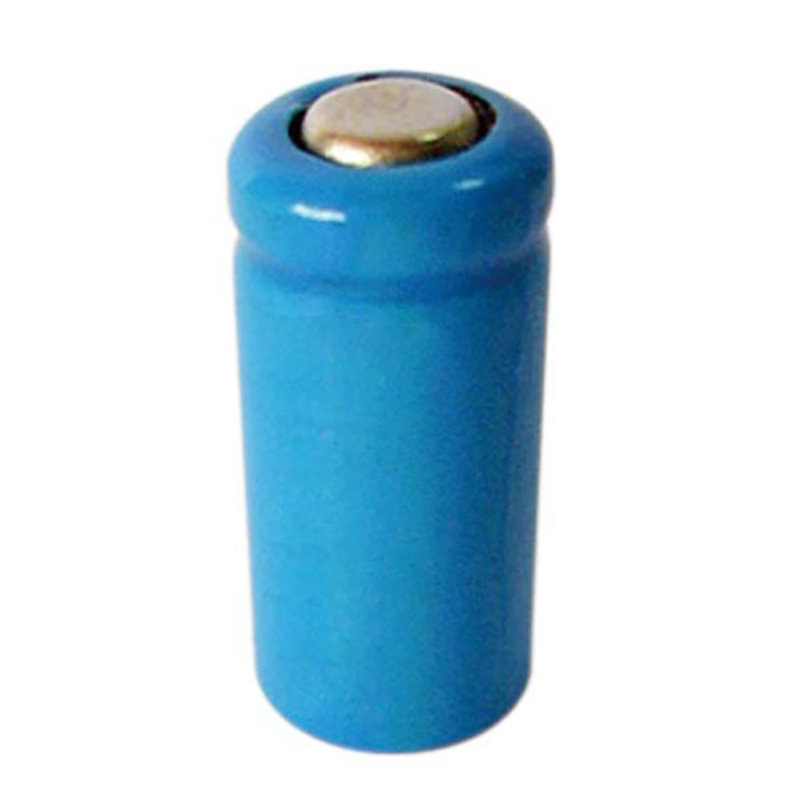 Custom ODM/OEM LR8D250 Special Alkaline Battery Manufacturers, FactoryChangzhou Strengh (Anyida) Power Technology Co., Ltd. Is China Custom ODM/OEM LR8D250 Special Alkaline Battery Manufacturers, Factory, Th...View Product →
Shelf life varies with format, storage temperature, and drain rate. A reputable manufacturer publishes discharge curves and storage expectations rather than leaving buyers to guess. Our shelf life and discharge guide for standard alkaline batteries explains how temperature and load affect usable life. If a factory cannot provide discharge data at several load levels, treat that as a red flag during qualification.
A Six-Point Sourcing Checklist
- Request the full datasheet, including discharge curves at low, medium, and high drain rates.
- Ask about leakage warranty and storage limits. Most alkaline cells hold usable charge for five to seven years at room temperature.
- Confirm the packaging format — card, blister, shrink, or bulk — and whether printing of your artwork is included in the unit price.
- Review the certification scope of ISO 9001, ISO 14001, CE, RoHS, and REACH documents, not just the certificate names.
- Require batch traceability, meaning a lot number on every pack so you can isolate any field complaint to a specific production run.
- Verify MOQ, lead time, and Incoterms before sampling, because a good sample from a factory that cannot meet your delivery schedule is worthless.
A factory that answers these six points with documents rather than promises is a factory worth auditing.
The Bottom Line
The strongest reason to buy from a qualified alkaline battery manufacturer is predictable field performance. Leakage and early failure are the two complaints that damage a private-label brand fastest, and both trace back to process control at the factory. Industry rankings and brand recognition describe the past, not your next shipment. Focus on chemistry control, packaging fit, certification scope, and export familiarity. If you want to understand the fundamentals behind the technology, our technical notes explain why primary alkaline batteries remain a dependable power source. Choose the manufacturer that can prove its process — and let the famous names keep their shelves.