

 English
 中文简体
中文简体 русский
 Español
 عربى
عربىMost battery drawers contain cells that look identical but behave very differently. When someone searches for "alkaline lithium batteries," they are really asking a practical question: should I buy alkaline or lithium for this device? The short answer is that alkaline batteries are the right default for most indoor, low- and medium-drain electronics, while non-rechargeable lithium cells earn their higher price in cold conditions, high-drain bursts, and equipment that must sit on standby for years.
What "Alkaline Lithium Batteries" Actually Means
The phrase is not a single product category. It is shorthand for a comparison between two primary battery chemistries that share the same physical sizes. Alkaline batteries such as AA (LR6), AAA (LR03), C (LR14), D (LR20), and 9V (6LR61) use a zinc anode, a manganese dioxide cathode, and an alkaline electrolyte to produce a nominal 1.5 volts. They have been the workhorse of disposable power for decades because they are cheap, widely available, and dependable at normal indoor temperatures.
Alkaline chemistry in everyday devices
Alkaline cells give the best value in devices that draw a steady, modest current: remote controls, wall clocks, radios, toys, and occasional-use flashlights. Voltage stays near 1.5 volts for most of the discharge, then falls as the cell is exhausted. The general working principle of alkaline batteries is explained in our technical article, but the practical point is simple: for low-drain indoor use, alkaline is the least-cost option.
How lithium primary differs
Non-rechargeable lithium batteries in AA and AAA sizes are usually lithium-iron disulfide (Li-FeS2). They are rated at 1.5 volts as well, although a fresh cell can read about 1.7 volts open-circuit, which most devices tolerate without trouble. The real differences are energy density and discharge behavior: a lithium AA holds a flatter voltage under heavy load and stores roughly double the energy of an alkaline AA. Cylindrical lithium and alkaline cells are generally interchangeable, but confirming compatibility in the device manual is still safer than assuming it.
Button cells and other formats
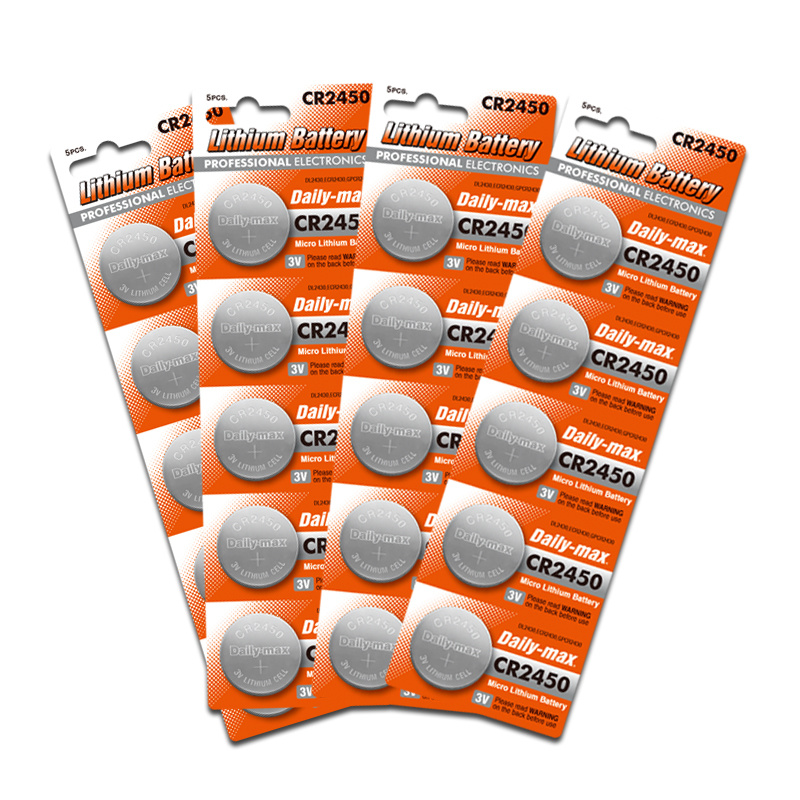
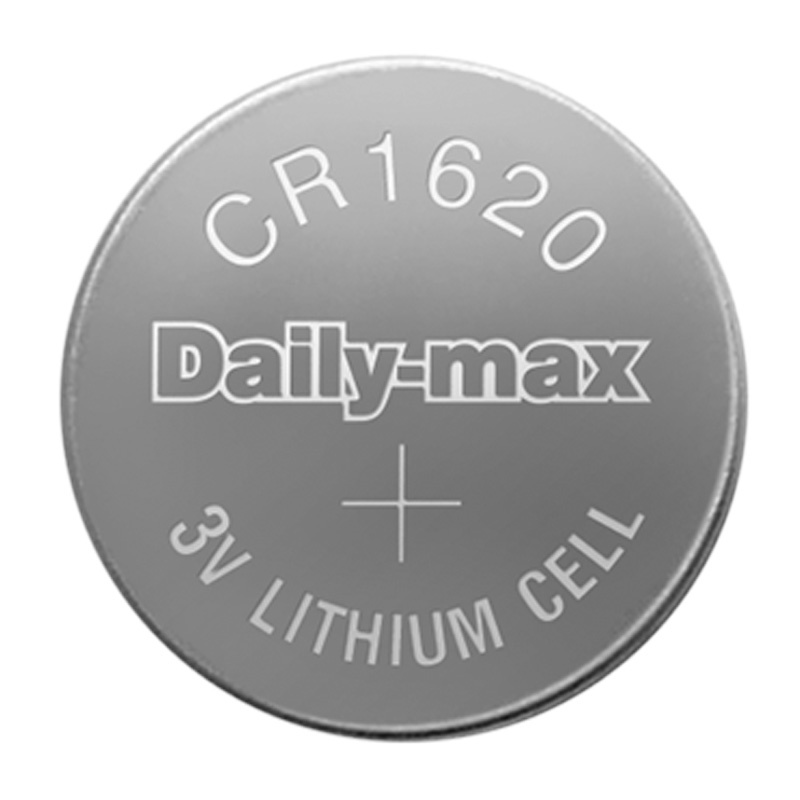
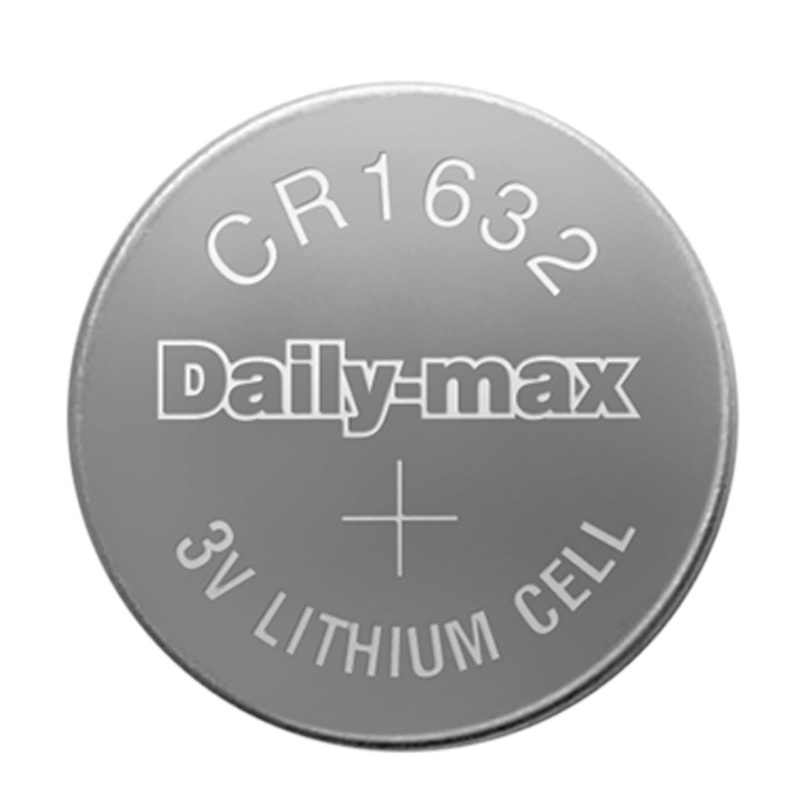
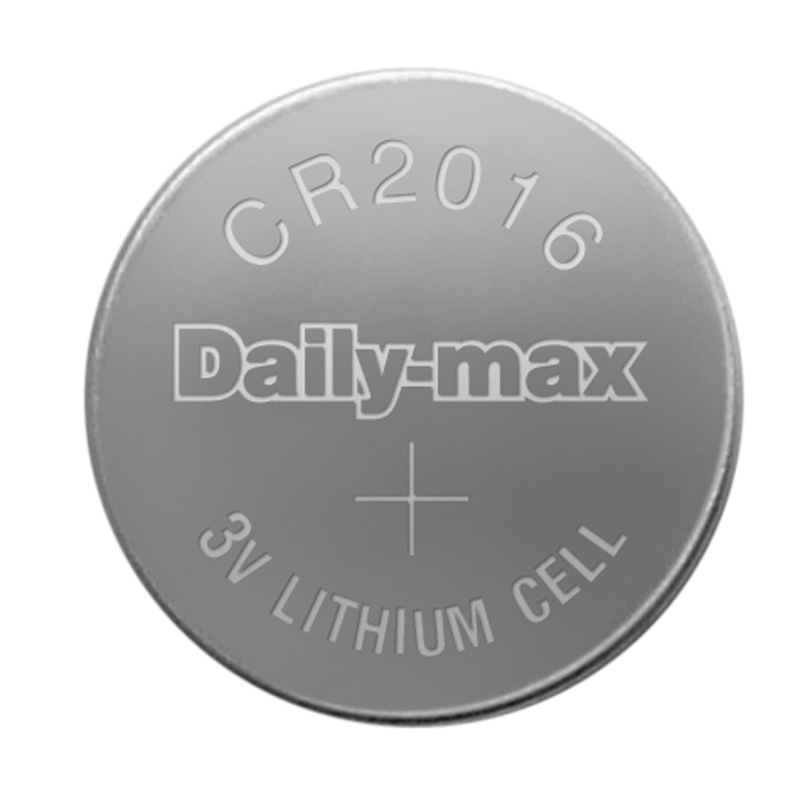
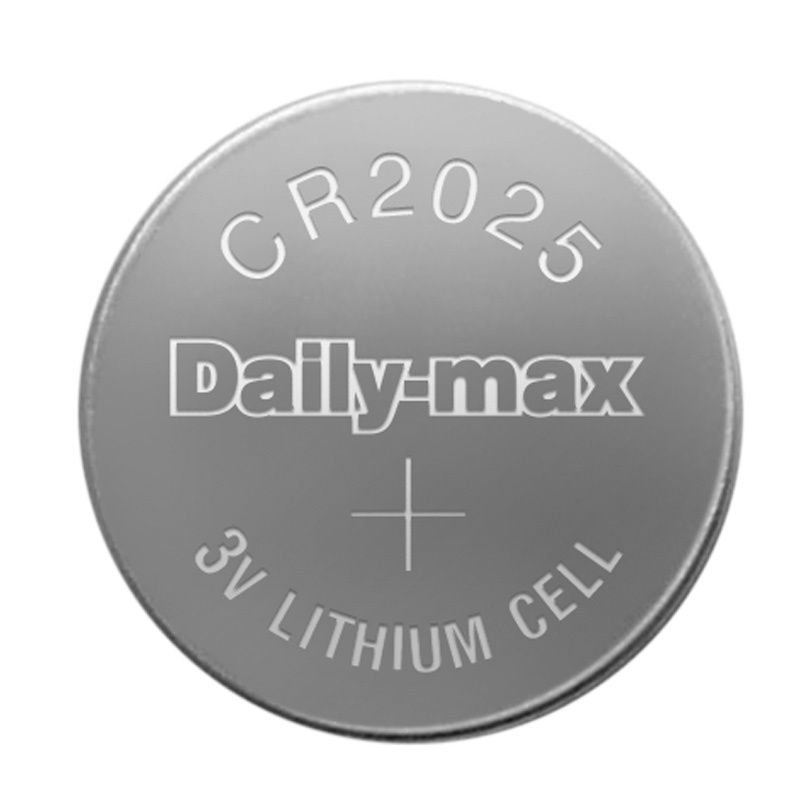
Lithium also appears as button-type lithium manganese dioxide cells - CR1616, CR1620, CR1632, CR2016, CR2025, CR2032, CR2430, and CR2450 - at 3 volts. These are not interchangeable with cylindrical cells; they power watches, key fobs, computer motherboards, medical devices, and industrial sensors. A device built for a CR2032 will not accept an AA, so button cells belong on a separate part of the procurement list.
Performance Comparison: Voltage, Drain, and Temperature
The table below summarizes the differences that actually affect device performance.
| Property | Alkaline AA (LR6) | Lithium primary AA (Li-FeS2) |
|---|---|---|
| Nominal voltage | 1.5 V | 1.5 V |
| Open-circuit voltage when fresh | approximately 1.5-1.6 V | approximately 1.7-1.8 V |
| Capacity at moderate load | approximately 1,800-2,800 mAh | approximately 3,000-3,500 mAh |
| Voltage under high drain | drops earlier | stays flat for longer |
| Typical operating temperature | about -18 C to +55 C | about -40 C to +60 C |
| Shelf life | 5-10 years | 15-20 years |
| Relative price per cell | low | roughly 2-5 times higher |
Two conclusions follow. First, in a low-drain device such as a remote control or a desk clock, the alkaline cell's capacity is more than sufficient, and the small voltage difference will not affect operation. Second, in a high-drain burst such as a photo flash, a spotlight, or a portable medical instrument, lithium maintains a higher working voltage for longer, so the device performs at full level instead of fading early.
Temperature is where the two chemistries separate most clearly. Alkaline cells become sluggish in freezing weather because the internal reaction slows down, with effective capacity dropping sharply below about -10 C. Lithium primary cells hold up to about -40 C, which is why outdoor sensors, GPS trackers, emergency kits, and cold-chain equipment are usually specified with lithium. Indoors at ordinary room temperature, that premium buys little.
Shelf Life, Storage, and Leakage Risk
Both are primary cells, used once and discarded, and both lose charge slowly during storage, but lithium loses less. A modern alkaline cell typically stores for 5 to 10 years; a lithium primary cell can remain usable for 15 to 20 years because of lower self-discharge. That is why smoke alarms, emergency beacons, and industrial sensors pick lithium when a battery must work after years of idling.
Leakage is the other consideration. An exhausted alkaline cell left in a device can eventually leak potassium hydroxide electrolyte and corrode the contacts; the risk grows after deep discharge, in heat, or after long storage. Lithium primary cells are far less prone to leaking in normal use, although no battery is completely immune. The rule for both is the same: remove spent cells promptly, store batteries dry and at moderate temperature, and keep them in original packaging until needed. Our standard alkaline battery shelf life and discharge guide covers storage and end-of-life handling in more detail.
Cost and Total Cost of Ownership
Price still governs most purchases. An alkaline AA costs a small fraction of a lithium AA, and in a device that runs for months on one cell, the savings are real. Lithium only becomes economical when its performance is actually used: severe cold, high-drain devices, or situations where a dead battery triggers an expensive service call. For a household, a mixed strategy works best.
- Keep alkaline for remotes, clocks, toys, radios, and other low-drain indoor devices.
- Use lithium for outdoor sensors, cameras, high-drain tools, and emergency equipment.
- Choose lithium for long-term standby roles such as alarms and beacons.
- Match the purchase to the device's drain profile instead of buying one type for everything.
Choosing the Right Battery Format and Packaging
After the chemistry decision comes size, packaging, and order volume. A consumer buying two AA cells for a flashlight wants something different from a distributor filling a warehouse or an OEM sourcing cells for a production line. Battery manufacturers organize their ranges around exactly this split.
Retail and consumer packaging
For supermarket shelves, hardware chains, and e-commerce sellers, carded and blister packs matter as much as the cell inside. A two-pack or four-pack in a hanging card is the standard retail presentation and the simplest way to keep batteries fresh at home. The AA alkaline battery retail card pack in our business line is produced for this channel, with consistent discharge performance and clean printing that accepts private-label branding.
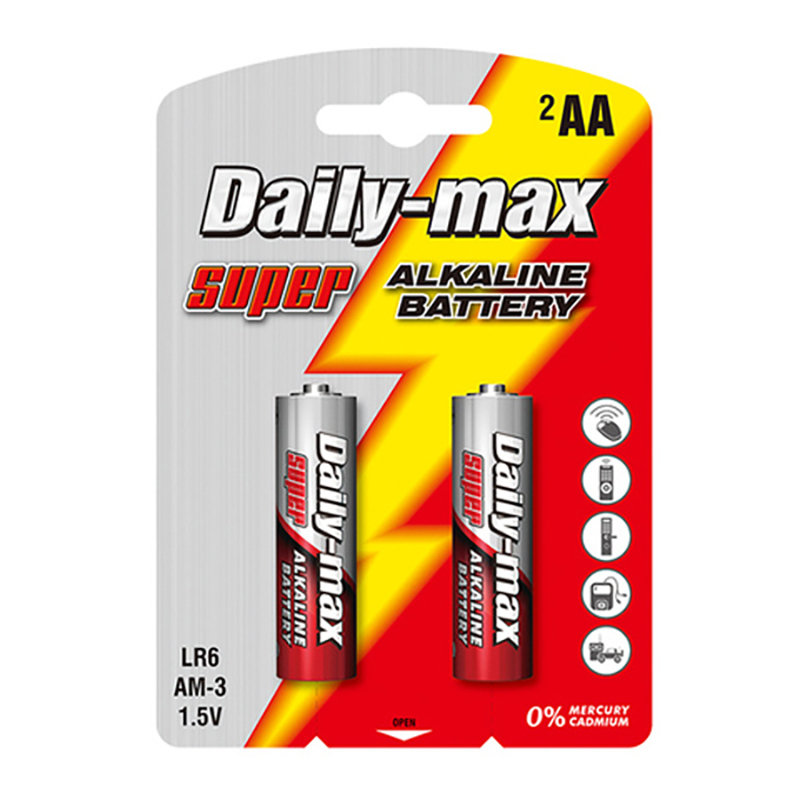 Custom ODM/OEM AA LR6-2B Business Alkaline Battery Manufacturers, FactoryChangzhou Strengh (Anyida) Power Technology Co., Ltd. Is China Custom ODM/OEM AA LR6-2B Business Alkaline Battery Manufacturers, Factory,...View Product →
Industrial and bulk packaging
Maintenance departments, OEM buyers, and trade partners usually prefer dense, simple packaging: shrink-wrapped trays, bulk cartons, or black-gold industrial wraps that reduce waste and handling time. The black-gold AA alkaline battery in industrial shrink packaging, for example, delivers the same LR6 cell in a format suited to maintenance stockrooms and assembly lines that issue thousands of cells per year.
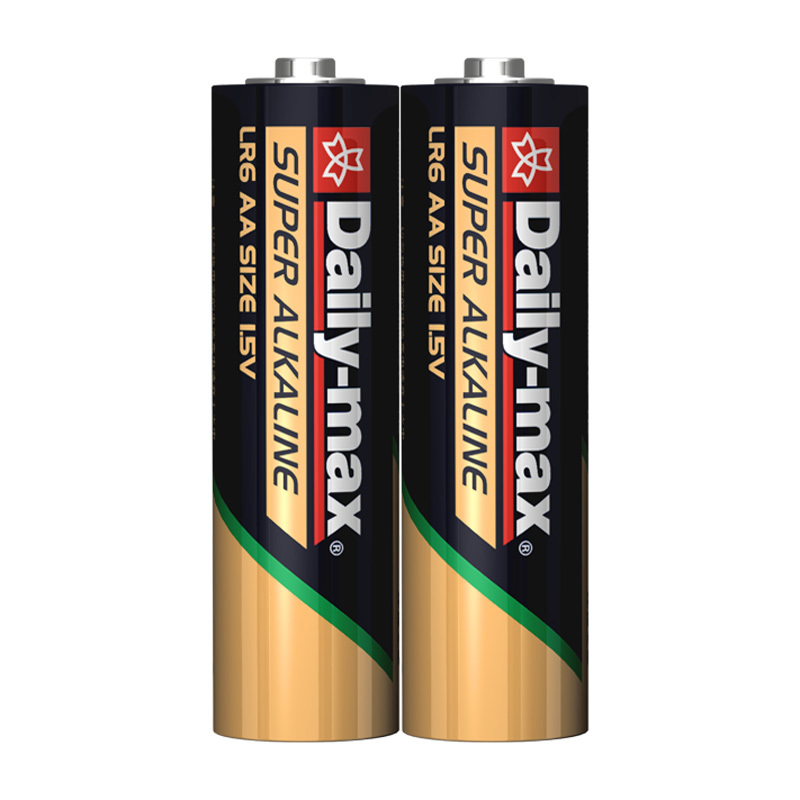 Custom ODM/OEM LR6 Black Gold-2S Industrial Outfit Alkaline Battery ManufacturerChangzhou Strengh (Anyida) Power Technology Co., Ltd. Is China Custom ODM/OEM LR6 Black Gold-2S Industrial Outfit Alkaline Battery Manufa...View Product →
Button cells and special sizes
Buying teams often overlook smaller formats until a device goes out of service. CR series button cells complete a procurement list that also includes AAAA (LR8D425 and related codes) and other special alkaline sizes. The industrial CR2032 lithium manganese button cell is a common replacement in meters, remotes, and medical hardware. Checking the device specification sheet before ordering remains the fastest way to avoid mismatched purchases.
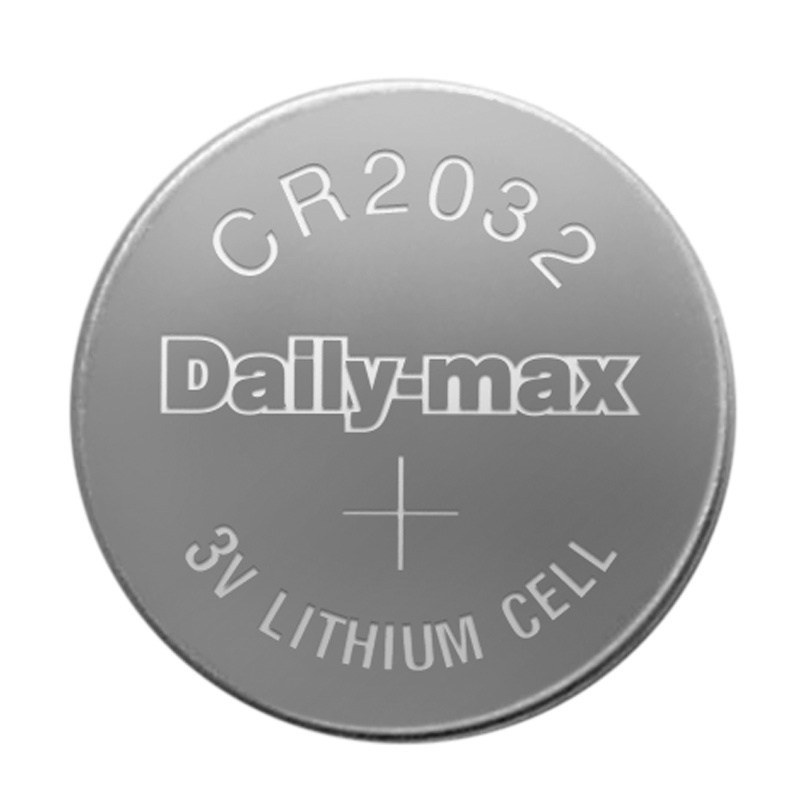 Custom ODM/OEM CR2032 Button Type Lithium Manganese Battery Manufacturers, FactoChangzhou Strengh (Anyida) Power Technology Co., Ltd. Is China Custom ODM/OEM CR2032 Button Type Lithium Manganese Battery Manufacturers,...View Product →
What to Look for When Sourcing Primary Batteries for Business
Alkaline and lithium primary batteries follow standardized dimensions under IEC 60086 and ANSI, so a code such as LR6 or CR2032 guarantees mechanical interchangeability between suppliers. The real differences show up in quality control, testing, documentation, and packaging consistency. When we evaluate a supplier, five points matter most.
- Certifications and declarations: ISO 9001, ISO 14001, UL, CE, RoHS, and REACH documents should clearly apply to the battery factory and the specific product, not only to a trading office.
- Lot-to-lot consistency: capacity, discharge curve, and internal resistance should stay stable; request test reports and compare them with published datasheets.
- Packaging condition: the cartons, labels, and seals must survive shipping and storage without humidity damage.
- Lead time and minimum order quantities: a supplier's batch size should match your inventory turnover, not force you to overstock.
- Technical support: the manufacturer should help you match chemistry and packaging to the device, not simply sell you the cheapest cell.
Changzhou Strengh (Anyida) Power Technology Co., Ltd., where this guide is published, traces its battery manufacturing history to 1956 and exports primary batteries to more than 30 countries. According to the company profile, its factory in Changzhou covers roughly 50,000 square meters, and engineering and technical staff make up more than 25 percent of the workforce. The company's published quality documentation references ISO 9001, ISO 14001, UL, CE, RoHS, SGS, and REACH. Buyers can browse the complete alkaline battery product range across AA, AAA, C, D, and 9V in both retail and industrial packaging, beside carbon zinc, CR button cells, and special sizes such as AAAA.
Conclusion: Most Devices Do Not Need Lithium
The honest conclusion is that alkaline batteries handle the majority of indoor, low-to-medium-drain jobs at a lower cost and with acceptable shelf life. Lithium primary cells justify their premium when temperatures fall below freezing, when a device draws high current, or when standby reliability over years is non-negotiable. Households should keep both on hand; businesses should verify certificates, test samples, and match the packaging format to the channel. If you are sourcing AA, AAA, C, D, or 9V primary batteries in either chemistry, the team behind this article can provide specifications, samples, and a tailored quote.