

 English
 中文简体
中文简体 русский
 Español
 عربى
عربىWhat an Industrial Carbon Battery Actually Is
An industrial carbon battery is a zinc-carbon primary cell supplied in bulk packaging for commercial, maintenance, and OEM use rather than for retail display. That distinction drives nearly every decision in this buying category: the same IEC sizes, R20P, R14P, R6P, and R03P, reach customers in two very different forms. Consumer packs carry blister cards designed for store hooks, while industrial versions arrive in shrink-wrapped sleeves, labeled in plain production style, and packed by the carton for buyers who care about unit cost, freshness, and consistency.
The term needs one clarification before we go further. In the energy-storage industry, "industrial carbon battery" is sometimes applied to large rechargeable lead-carbon batteries used in UPS systems and grid installations. That is a different chemistry, a different supplier base, and a different purchasing process. This guide covers zinc-carbon primary batteries, the product family most battery makers mean when they say carbon batteries, and focuses on what industrial buyers need to verify before placing a bulk order.
What "Industrial" Means in a Carbon Battery Product Line
Manufacturers use "industrial" to describe more than durability. In a carbon battery line, it signals packaging, quality management, and an order profile built for professionals.
Industrial Packaging: Built for the Back Room, Not the Display Hook
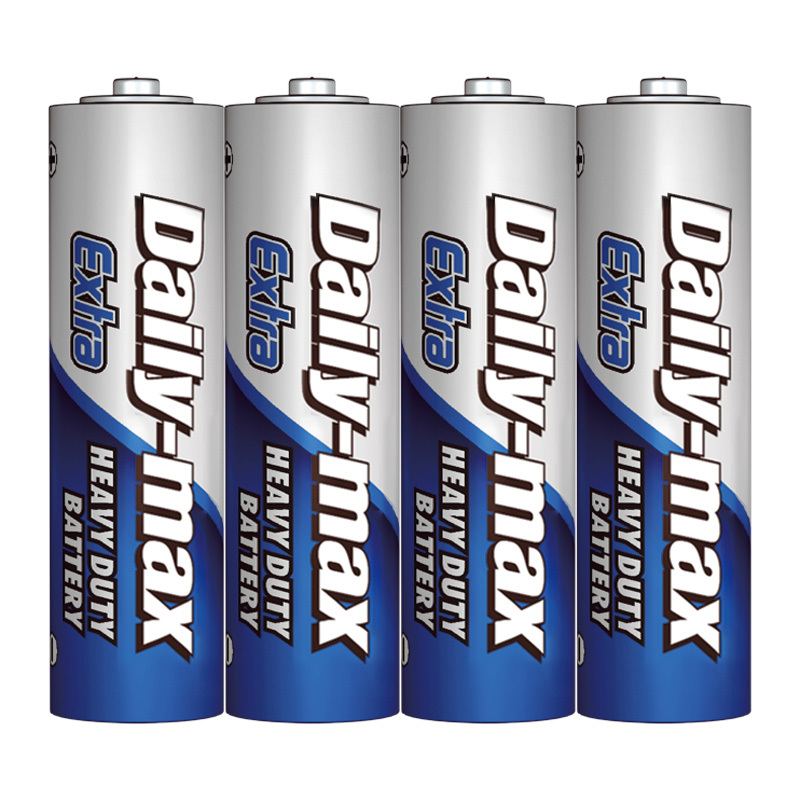
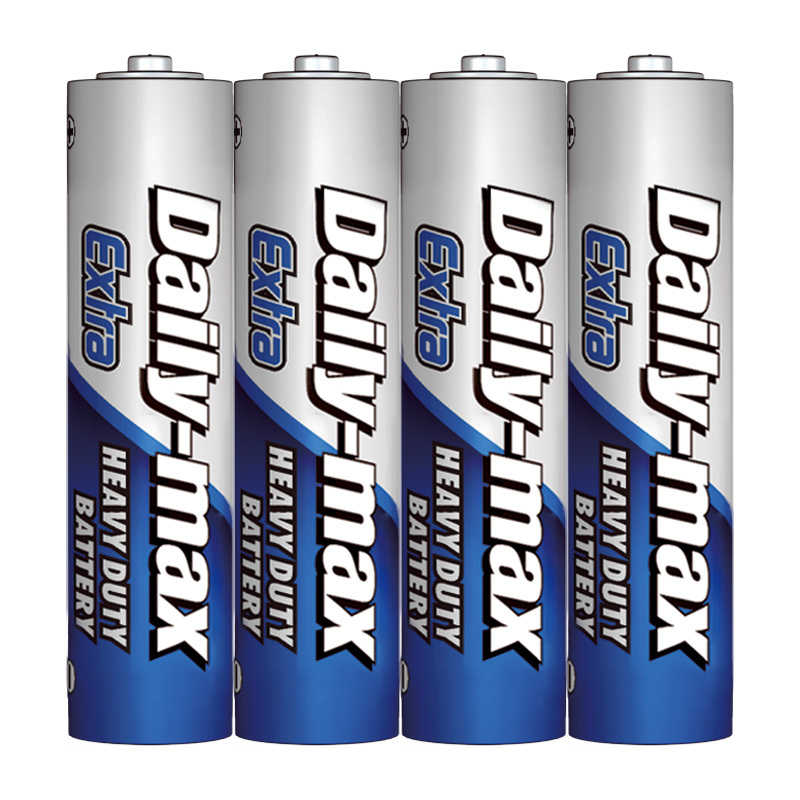
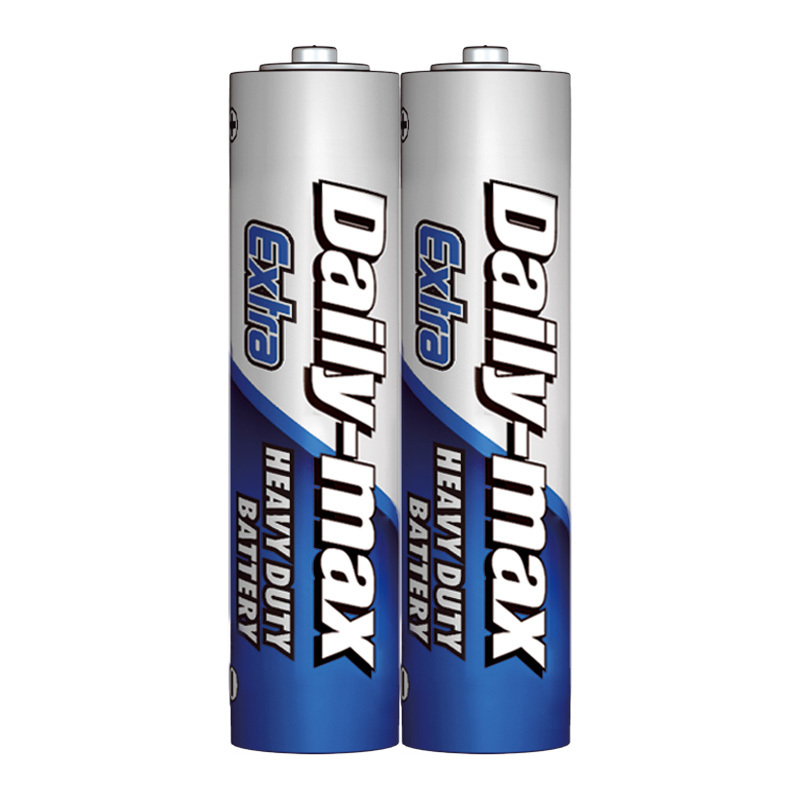
Industrial zinc-carbon cells are typically shrink-wrapped in sleeves marked 2S or 4S, meaning two or four pieces per sleeve, then loaded into cartons without retail graphics. The silver-blue industrial labeling used on our R6P and R03P cells is production-level identification rather than consumer branding. This form factor suits a technician's service vehicle, a maintenance storeroom, or a distributor's pick-and-pack operation where loose cells would otherwise be counted by hand.
Traceability and Compliance in Industrial Grades
An industrial grade also implies stricter control of the supply chain: lot numbers printed on sleeves or cartons, readable manufacturing dates, controlled storage before dispatch, and documented compliance with CE, RoHS, and REACH requirements. When you buy industrial carbon batteries, you are paying for packaging discipline and traceability, not shelf appeal. That is why the same cell model can cost less in industrial form than its carded retail version while still meeting a tighter procurement standard.
Common Industrial Carbon Battery Sizes and Typical Performance
Carbon batteries provide 1.5 volts per cell across all common sizes, but capacity and discharge behavior differ by cell construction. The P in R20P, R14P, R6P, and R03P denotes a heavy-duty paper-lined grade that sustains discharge better than basic zinc-carbon cells.
| IEC code | Common name | Nominal voltage | Typical capacity range | Typical low-drain use |
|---|---|---|---|---|
| R20P | D | 1.5 V | 4,000-8,500 mAh | Lanterns, radios, equipment standby |
| R14P | C | 1.5 V | 1,500-2,800 mAh | Toys, torches, small instruments |
| R6P | AA | 1.5 V | 600-1,200 mAh | Remote controls, wall clocks |
| R03P | AAA | 1.5 V | 300-500 mAh | Compact remotes and devices |
These ranges reflect moderate, intermittent discharge at room temperature. Under continuous high current, delivered capacity falls significantly, because zinc-carbon chemistry cannot hold its voltage as steadily as alkaline. That is why the load profile of your actual device matters more than the number printed on the battery. For AA-sized compartments in equipment service programs, the R6P silver-blue 2S industrial carbon battery remains a common first choice because the two-piece sleeve matches how technicians refill kits without exposing loose cells.
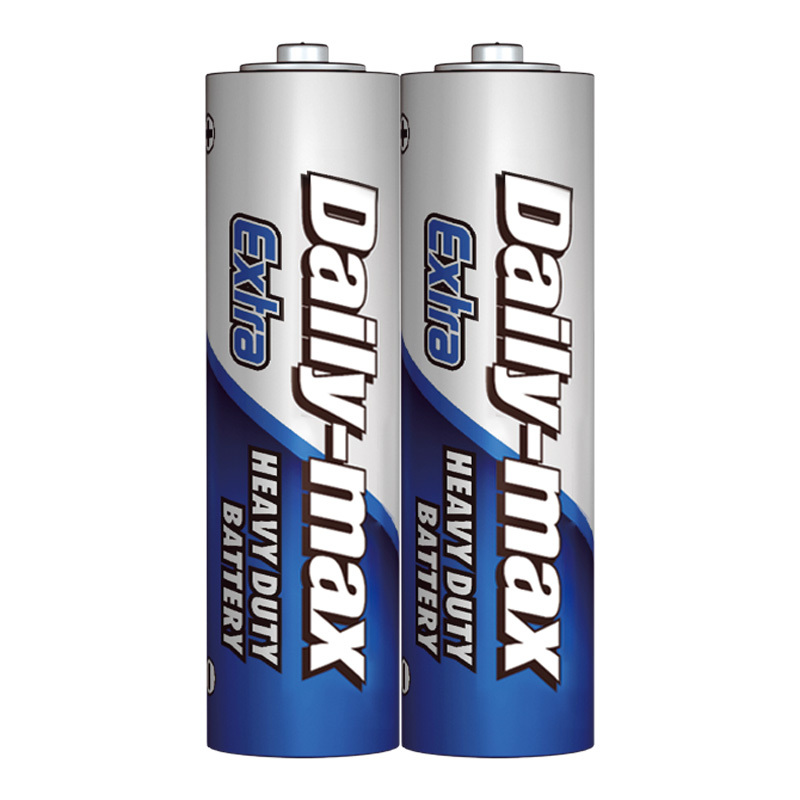 Custom ODM/OEM R6P Silver Blue-2S Carbon Battery Manufacturers, FactoryChangzhou Strengh (Anyida) Power Technology Co., Ltd. Is China Custom ODM/OEM R6P Silver Blue-2S Carbon Battery Manufacturers, Factory, T...View Product →
Where Industrial Carbon Batteries Make Financial Sense
Zinc-carbon is still the most economical primary battery chemistry for devices that draw small currents in short bursts. Applications include wall clocks, thermostats, remote controls, doorbells, toys, simple test instruments, and backup devices that sit idle for long periods. In these roles, an R20P or R6P cell can last months or even years, and the cost advantage over alkaline is difficult to justify spending against.
The boundary is easy to state: when average current stays low and the device is not exposed to heat, humidity, or severe cold, industrial carbon batteries are usually the correct purchase. When a device demands sustained current, such as an electric motor, a bright flashlight, or audio equipment, alkaline should win the order. For a closer look at how carbon chemistry behaves in the smallest common format, our review of AAA carbon-battery chemistry and best uses covers real discharge patterns in compact electronics.
In D-size applications such as lanterns, radios, and standby circuits, the R20P industrial carbon battery remains the standard bulk purchase because its larger electrode area handles moderate loads better than smaller cells in the same chemistry.
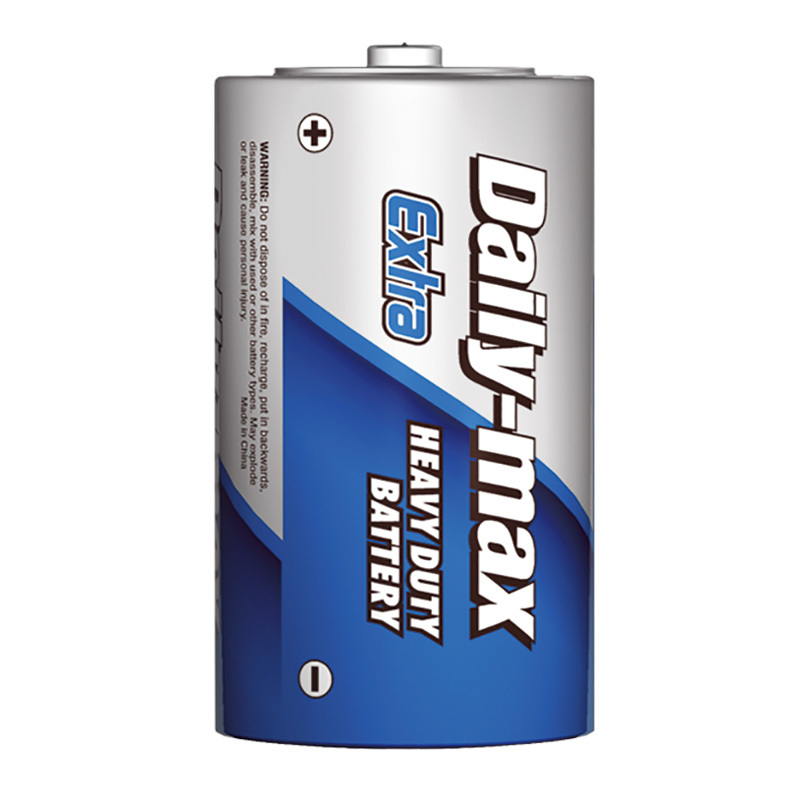 Custom ODM/OEM R20P Industrial Carbon Battery Manufacturers, FactoryChangzhou Strengh (Anyida) Power Technology Co., Ltd. Is China Custom ODM/OEM R20P Industrial Carbon Battery Manufacturers, Factory, The ...View Product →
Zinc-Carbon vs. Alkaline: Reading the Numbers for Bulk Buying
Buyers often compare industrial carbon and industrial alkaline batteries on the same datasheet. The comparison is useful as long as you evaluate the attributes that actually drive cost, not just the nominal voltage.
| Attribute | Industrial zinc-carbon (R-series) | Industrial alkaline (LR-series) |
|---|---|---|
| Unit cost | Lower | Higher |
| Capacity at low drain | Adequate for intermittent use | Roughly 2 to 5 times higher in many sizes |
| High-drain performance | Voltage sags quickly | Steadier under sustained load |
| Shelf life, unopened | Typically 2 to 3 years | Typically 5 to 10 years |
| Leakage resistance | Moderate; replace before deep discharge | Better on modern cell construction |
| Best fit | Cost-sensitive bulk and maintenance programs | Performance-sensitive equipment |
Why Buyers Step Up to Alkaline
Once a device consistently pulls more than a few hundred milliamps, the zinc-carbon cost advantage shrinks. The battery must be replaced more often, labor and downtime become part of the calculation, and the lower per-unit price no longer looks attractive. Alkaline cells use a similar zinc-manganese dioxide couple but with a different electrolyte and construction, which keeps voltage flatter under load. Our overview of the key advantages of alkaline primary batteries explains those electrical differences in practical terms.
Checklist Before You Commit to a Bulk Carbon Battery Order
Bulk carbon battery programs rarely fail because of chemistry; they fail because of storage, age, or packaging mismatch. Work through this checklist before signing an order:
- Manufacturing date and lot code. Carbon batteries self-discharge faster than alkaline, so request fresh production and verify the code on the carton or sleeve.
- Storage plan. Keep cells cool, dry, and away from humidity; prolonged heat exposure accelerates aging and increases leakage risk.
- Capacity at your actual load. Ask for discharge curves at the current your device draws, not just a capacity number measured at a laboratory-friendly rate.
- Compliance documents. Confirm CE, RoHS, and REACH status in writing for the markets you serve.
- Sleeve and carton configuration. Verify the 2S or 4S sleeve count, carton quantity, labeling, and whether custom marking is available.
- Samples and pilot lot. Run a pilot lot through your real device before scaling up.
Shelf-life expectations differ between the two chemistries, and teams that manage stock across multiple facilities should compare aging behavior side by side. Our alkaline battery shelf-life and discharge guide explains how long cells can be stored and which conditions accelerate degradation.
Sourcing Industrial Carbon Batteries Direct from a Manufacturer
Purchasing direct from a primary battery manufacturer removes a layer of uncertainty in packaging, labeling, and traceability. Changzhou Strengh (Anyida) Power Technology Co., Ltd. is a primary battery manufacturer in Jiangsu, China, with a production history the company traces back to 1956. Its stated operations include more than 50,000 square meters of factory space, exports to more than 30 countries, and certifications that include ISO9001, ISO14001, CE, RoHS, SGS, and REACH. As with any supplier claim, verify these points through your own audit criteria before scaling up.
The carbon battery range covers both consumer carded formats and industrial sleeves, so a single supplier can handle retail SKUs and bulk distribution programs under one quality system. For C-size compartments, the R14P industrial carbon battery offers the same economy of the R-series chemistry in a smaller footprint than a D cell, which makes it useful for equipment that specifies C-size holders.
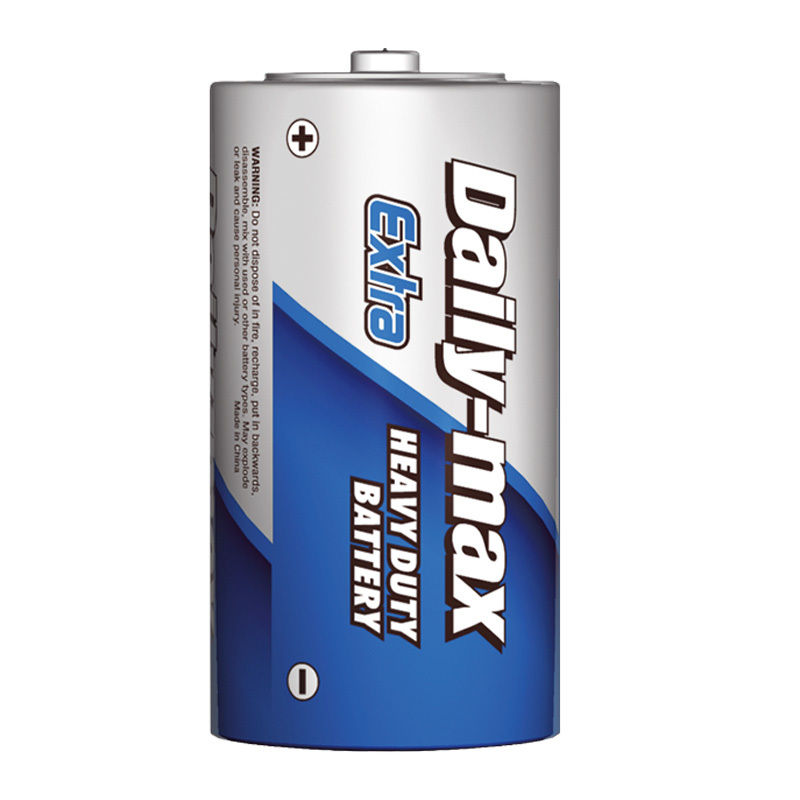 Custom ODM/OEM R14P Industrial Carbon Battery Manufacturers, FactoryChangzhou Strengh (Anyida) Power Technology Co., Ltd. Is China Custom ODM/OEM R14P Industrial Carbon Battery Manufacturers, Factory, The ...View Product →
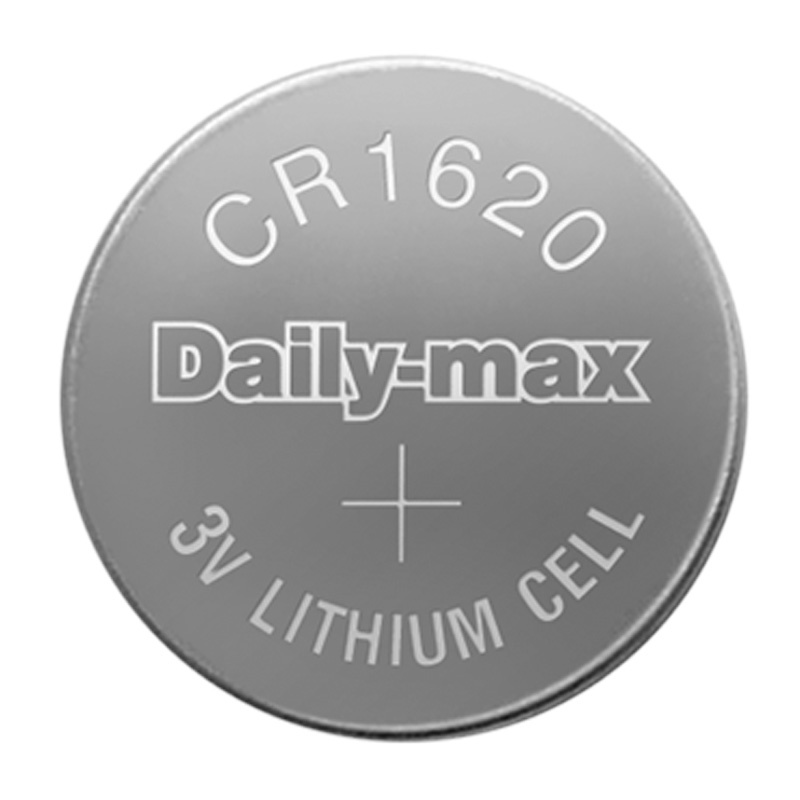
The same factory also runs industrial alkaline and button-type lithium-manganese lines, which helps when a product portfolio spans low-drain carbon cells, high-drain alkaline devices, and compact electronics that require coin batteries. A supplier with all three chemistries can consolidate purchasing and quality audits rather than forcing you to manage multiple vendors.
The short version is this: industrial carbon batteries still make sense for cost-sensitive, low-drain applications. Buy fresh stock, confirm discharge behavior under your real load, and choose the IEC size that fits the device. When performance demands move beyond zinc-carbon, the upgrade path to industrial alkaline is straightforward and worth the price difference.