

 English
 中文简体
中文简体 русский
 Español
 عربى
عربىWhen a retail chain starts processing more battery returns than it did a year ago, the first suspect is usually the cheapest cell in the assortment. When a medical device manufacturer sees field failures caused by a leaking AA battery, the root cause is rarely a design flaw in the device. Both situations trace back to the same purchasing decision: choosing a battery on price alone instead of the characteristics that determine whether it performs safely over its full service life.
A premium alkaline battery is not a marketing label. It is a set of measurable engineering choices, from material purity and electrolyte control to sealing quality and production testing, that decide how a cell behaves in your product, on your shelf, and inside your customer's device. Understanding those choices makes it much easier to buy alkaline batteries with confidence, whether you are filling retail racks or supplying field equipment.
What "Premium" Means in an Alkaline Cell
Start with the conclusion: a premium alkaline battery delivers consistent voltage under load, resists leakage across a wide temperature range, holds its charge for years, and does all of this within tight dimensional tolerances so it fits reliably in the devices it powers.
The underlying chemistry is the same in every alkaline cell: a zinc anode, a manganese dioxide cathode, and a potassium hydroxide electrolyte. What separates a premium cell from a budget cell is how precisely that chemistry is executed. A premium battery begins with high-purity manganese dioxide and a zinc anode formulation designed to minimize hydrogen gassing. Gas buildup is the main driver of internal pressure, and internal pressure is what eventually leads to leakage, bulging, and, in extreme cases, rupture. The separator, the thin barrier between the anode and cathode, must be uniform in thickness and porosity. Small defects there create self-discharge hotspots that shorten shelf life and raise leak risk. The brass current collector, the pin in the center of the cell, is easy to overlook, but its surface quality affects internal resistance and voltage stability. None of these components appear on the packaging, yet all of them show up in field performance.
The other structural difference is the seal. A premium cell uses a multi-component sealing system, typically a nylon or polyamide seal combined with a plated steel can, designed to stay gas-tight for a decade or more. Cheaper cells use thinner cans, simpler seals, and less tightly controlled assembly, which is why they are the ones that leak when left in a low-drain device for years.
Measurable Performance Markers
Rather than relying on brand reputation alone, you can evaluate alkaline cells with a small set of concrete, testable markers.
Capacity and Discharge Consistency
Capacity, expressed in milliamp-hours (mAh), says how long a cell will power a given load, but the number alone is not enough. The shape of the discharge curve matters just as much. A premium battery maintains a flatter voltage curve under moderate and high loads. A flashlight stays bright, and a motor keeps spinning near its rated speed until the cell is nearly exhausted. A standard cell may show the same open-circuit voltage but sag earlier under load, making devices feel weak long before the battery is empty.
Leak Resistance
Leakage is the failure mode that does the most damage. A leaking alkaline cell can ruin a remote control, corrode battery contacts, or destroy the battery compartment of a digital camera. Leak resistance comes from seal quality, vent design, and zinc purity. Premium production lines add strict process controls: humidity management, precise electrolyte dosing, and automated seal inspection after crimping. Standardized test methods, such as those aligned with IEC 60086-2, can quantify leak behavior under elevated temperature and humidity.
Shelf Life and Storage Stability
Alkaline cells slowly lose charge through self-discharge. The rate depends on materials, temperature, and the integrity of the seal. A premium alkaline battery typically retains about 80 percent of its original capacity after ten years of storage at room temperature. Lower-grade cells may reach the same state after only three to five years. For buyers who stock inventory or ship products that sit in warehouses, that gap translates directly into fewer dead-on-arrival units and fewer customer complaints. Our standard alkaline battery shelf life and discharge guide explains the interaction between storage conditions and self-discharge rate in more detail.
Dimensional Consistency
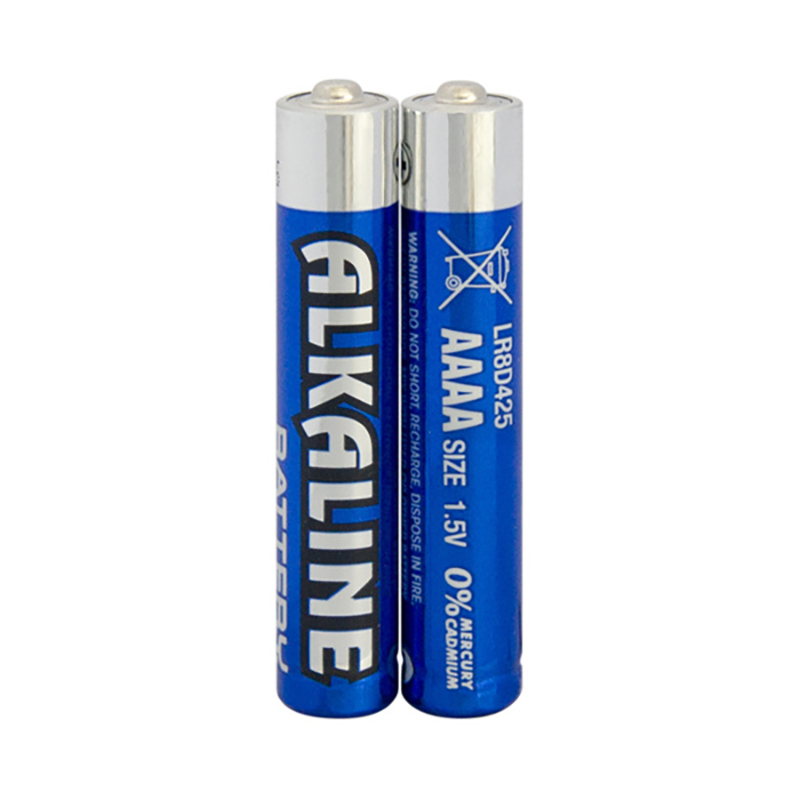
The most underrated marker is dimensional consistency. AA and AAA cells look identical, but diameter, length, and terminal geometry can vary subtly between batches. In a device with tight battery contacts, an oversize cell jams; an undersize one loses contact under vibration. Premium manufacturing uses automated gauging to hold tight tolerances across millions of cells.
| Characteristic | Standard Grade | Premium Grade |
|---|---|---|
| Typical AA capacity (25 mA load) | 1,800-2,200 mAh | 2,400-2,800 mAh |
| Voltage under 1 A load | Drops below 1.1 V early | Holds about 1.2 V through most of life |
| Capacity retained after 10 years at 21°C | Often 60-70 percent | Typically about 80 percent |
| Leak risk after long-term low-drain use | Moderate | Low |
| Dimensional tolerance | ±0.3 mm typical | ±0.1 mm typical |
| Production inspection | Sample testing | 100 percent inline testing |
Standard or Premium: Match the Grade to the Application
A premium alkaline battery is not always the right commercial choice. A television remote control draws a few milliamps and runs a few minutes a day; even a standard alkaline cell will last years in that duty, and the extra cost of a premium cell may not be justified. In a digital camera, a wireless game controller, or portable medical equipment, the load is higher and the consequences of failure are more serious. Here, a flatter discharge curve, stronger leak resistance, and longer shelf life translate directly into fewer replacements, fewer returns, and fewer support calls. The key advantages of alkaline primary batteries in demanding applications are well documented, and they are worth reviewing before you lock your specification.
For retail, presentation matters almost as much as chemistry. A clean card, a properly sealed blister, and accurately printed labels shape how customers perceive a brand at the point of sale. A premium retail-grade alkaline cell should arrive without shifted cards or misaligned artwork. The AA LR6 4B business alkaline battery, for example, is a standard choice for retail assortments because the four-pack balances consumer value with healthy margin.
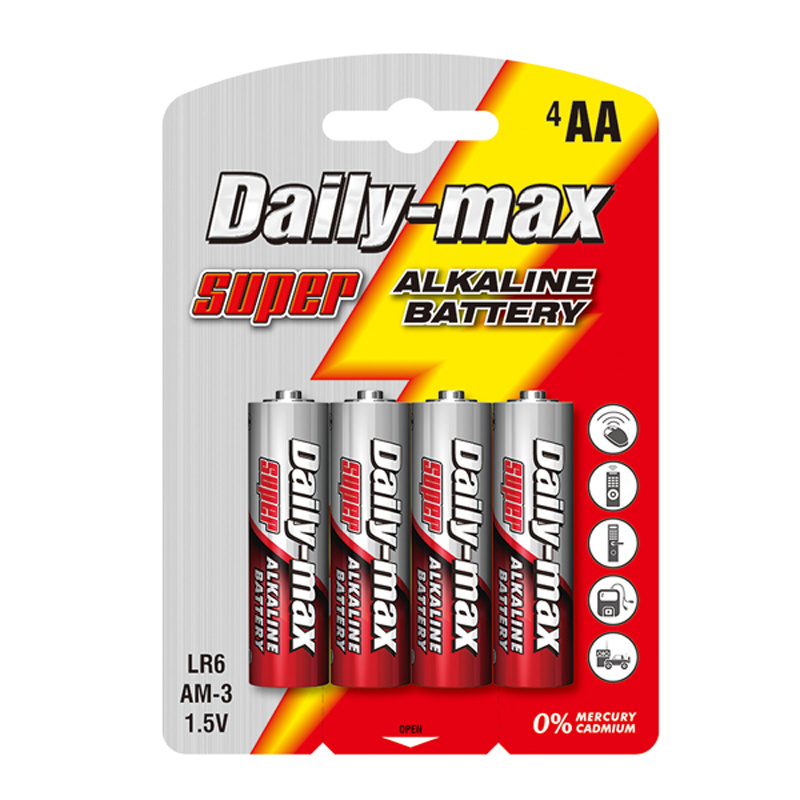 Custom ODM/OEM AA LR6-4B Business Alkaline Battery Manufacturers, FactoryChangzhou Strengh (Anyida) Power Technology Co., Ltd. Is China Custom ODM/OEM AA LR6-4B Business Alkaline Battery Manufacturers, Factory,...View Product →
Industrial buyers have a different set of priorities. Batch-coded shrink wraps, bulk cartons, and clear marking on the cell itself help warehouses track stock and separate production lots. The LR6 black-gold 4S industrial alkaline battery uses a shrink-sleeve format made for volume handling, with visible batch identification for quality tracing.
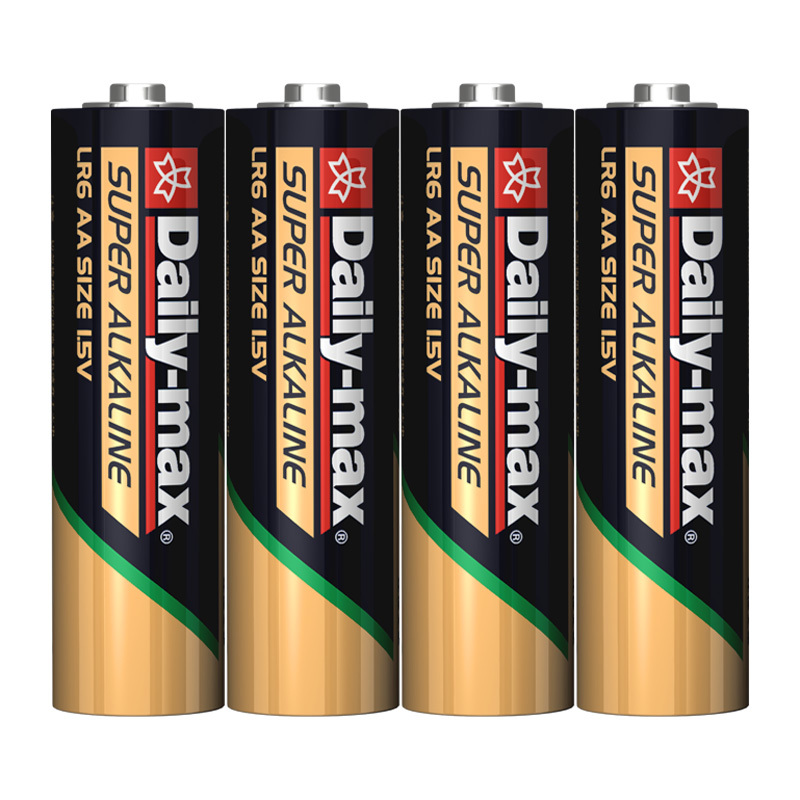 Custom ODM/OEM LR6 Black Gold-4S Alkaline Battery Manufacturers, FactoryChangzhou Strengh (Anyida) Power Technology Co., Ltd. Is China Custom ODM/OEM LR6 Black Gold-4S Alkaline Battery Manufacturers, Factory, ...View Product →
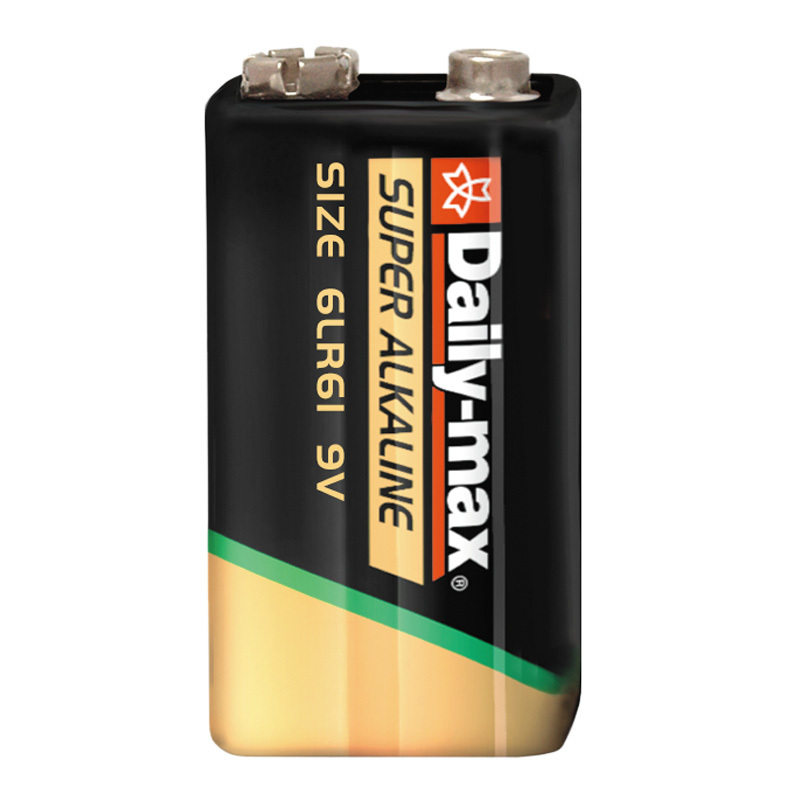
The 9V format deserves special attention because it stacks six small cells inside one prismatic housing, so internal connection quality is critical. A premium 9V alkaline battery holds its rated voltage under the moderate loads typical of smoke detectors, test instruments, and portable audio equipment. For replacement sales, the 9V 6LR61 business alkaline battery is the reference retail format, with stable terminals that work across different brands of equipment.
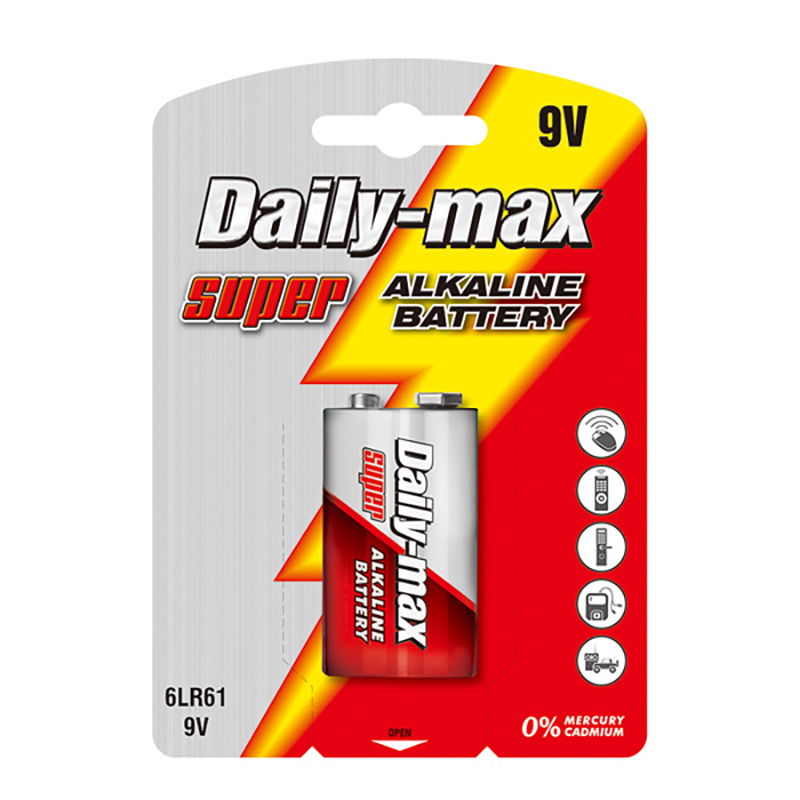 Custom ODM/OEM 9V 6LR61-B Business Alkaline Battery Manufacturers, FactoryChangzhou Strengh (Anyida) Power Technology Co., Ltd. Is China Custom ODM/OEM 9V 6LR61-B Business Alkaline Battery Manufacturers, Factory...View Product →
How to Evaluate a Premium Alkaline Battery Supplier
Buyers often ask how to tell whether a manufacturer can actually deliver premium quality. A few practical checks are worth the time.
- Inspect production and testing. Premium alkaline production runs continuously, with automated filling, sealing, and inline voltage testing. Ask whether every cell is functionally tested or only a sample.
- Check certifications against your destination market. ISO 9001, ISO 14001, UL, CE, RoHS, and REACH statements are common minimum requirements. A factory that exports regularly will produce these documents quickly.
- Run samples in your own devices. Datasheet values are a starting point, not a promise. Measure runtime, voltage at cutoff, and end-of-life behavior using a realistic load profile.
- Audit the supply chain. Raw material sourcing, warehouse conditions, and manufacturing date all affect field performance. A manufacturer with a long production history, one that traces its operations back to 1956, tends to have fewer surprises in process control.
Understanding the general working principle of alkaline batteries also helps. When you can interpret discharge curves and failure data, you will ask sharper questions in a factory audit and leave with a more confident decision.
Practical Buying Considerations
Compare total cost, not unit price. A premium alkaline battery can cost 30 to 50 percent more per cell than a budget battery. If it doubles service life in a high-drain device, reduces warranty returns, or prevents a single leakage incident that damages customer equipment, the premium is quickly repaid. In low-drain, low-consequence applications, a standard cell remains a legitimate choice.
Ask for data. A serious manufacturer will share discharge curves at several loads, and 100 mA, 500 mA, and 1 A are reasonable reference points. Storage test results and dimensional tolerance ranges take minutes to prepare and are surprisingly rare from trading companies.
Plan for shelf time. Batteries age in distribution. If your product sits in a warehouse for months between manufacturing and installation, a fresh manufacturing date and a lower self-discharge rate are real engineering advantages, not paperwork details.
The practical takeaway is simple. Premium alkaline batteries earn their name through measured performance: higher capacity, flatter discharge, stronger leak resistance, longer shelf life, and tighter tolerances. Match the grade to the application, verify the supplier with data, and test in your own devices. Do that consistently, and the battery becomes a dependable part of your product's reputation instead of its weakest component.