

 English
 中文简体
中文简体 русский
 Español
 عربى
عربىThis guide compares the two chemistries on voltage behavior, runtime, shelf life, leakage and total cost, then maps each to real device categories. The framing follows daily practice at Changzhou Strengh (Anyida) Power Technology Co., Ltd., a primary battery manufacturer in Changzhou, Jiangsu, producing alkaline, carbon zinc and lithium manganese button cells. Each section below leads with the conclusion, then the numbers behind it.
Alkaline vs Lithium Battery Chemistry: What Actually Differs Inside the Cell
The two cells share almost nothing except the outer can. An alkaline cell generates current from zinc reacting with manganese dioxide in a potassium hydroxide electrolyte. A lithium primary cell swaps the zinc for lithium metal and pairs it with a cathode chosen for the format: iron disulfide in AA and AAA sizes, manganese dioxide in coin cells. Because lithium is lighter and far more reactive per gram, the finished cell stores roughly twice the energy per kilogram and holds its voltage under load much better.
Three of those differences reach straight into purchasing decisions:
- Weight: a lithium AA weighs about 15 g against roughly 23 g for alkaline, which matters in handheld meters, drones and portable test gear.
- Voltage platform: lithium holds a flat plateau close to its nominal value, so equipment runs at full strength until the cell is nearly empty.
- Recharge status: neither chemistry is rechargeable. Lithium-ion is a separate 3.7 V system and must never replace a 1.5 V primary in the same device.
Runtime and the Discharge Curve: Why High-Drain Devices Empty Alkaline Cells Fast
Under heavy load, the runtime gap is not 10 or 20 percent, it can exceed a factor of two. At a gentle 25 mA drain, a quality alkaline AA delivers roughly 2,500 to 2,900 mAh. Push the draw to about 1,000 mA, typical of a camera flash or a motorized toy, and usable capacity can fall below 1,000 mAh because the zinc-manganese reaction cannot keep pace at the electrode surface. A lithium AA carries 3,000 to 3,500 mAh and keeps most of it under the same load thanks to much lower internal resistance.
Curve shape matters as much as total capacity. Alkaline voltage slides downward from the first hour, so devices with a strict low-voltage cutoff, such as GPS trackers, blood pressure monitors and professional meters, hit that cutoff while usable charge still remains inside the cell. Lithium stays near 1.5 V until it is almost spent, and that plateau converts directly into longer real-world runtime.
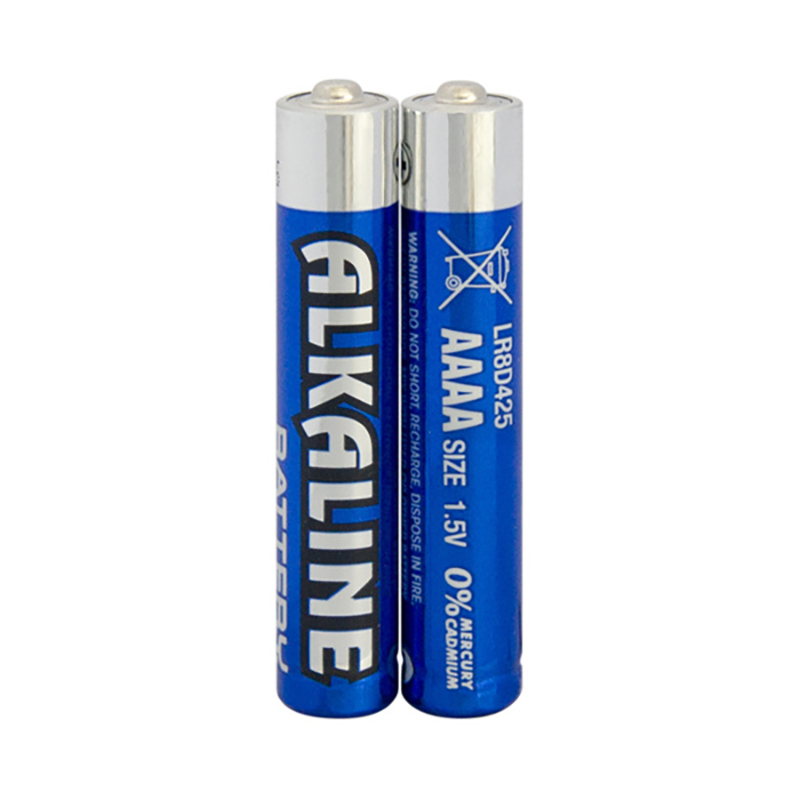
None of this makes alkaline obsolete. For remotes, clocks and other light continuous loads, alkaline remains the value pick by a wide margin, which is why it anchors our AA LR6 business outfit range.
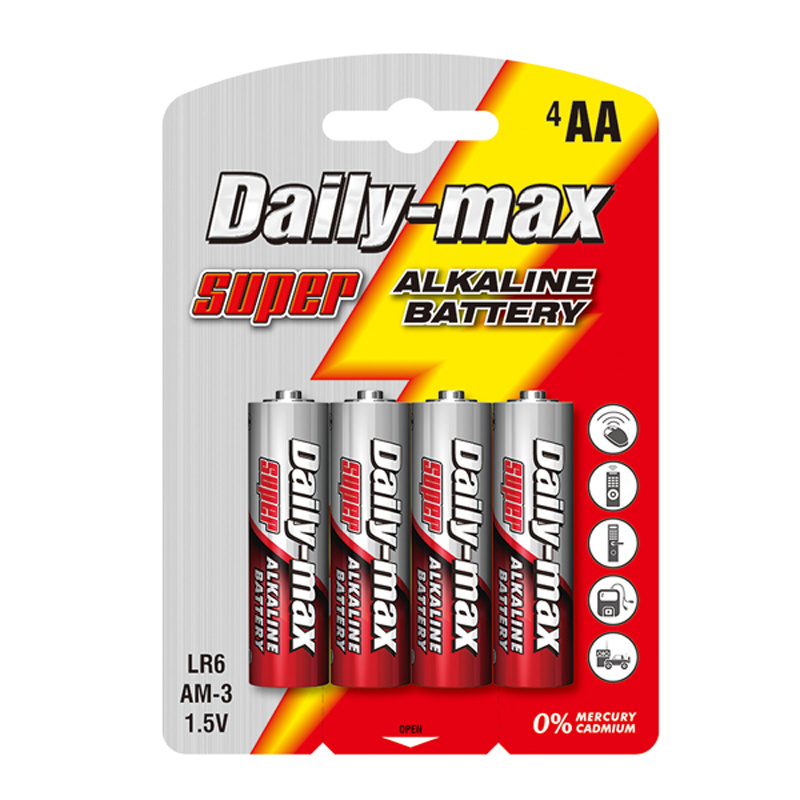 AA LR6-4B Business Alkaline BatteryDetailed DescriptionView Product →
Shelf Life and Leakage: The Specs That Decide Your Spare-Stock Policy
Shelf life is where lithium primaries pull furthest ahead: 15 to 20 years of rated storage against 5 to 10 years for premium alkaline. Annual self-discharge runs near 1 percent or less for lithium versus 2 to 3 percent for alkaline. For a distributor, that difference decides how often stock must rotate; for an OEM, it decides how long a device can sit in a warehouse before the factory-fitted cell is already weakened.
Leakage is the second driver. A deeply discharged alkaline cell generates gas inside the can, and the pressure pushes potassium hydroxide paste past the seal. The resulting crust corrodes contacts and is a familiar root cause of warranty returns in clocks, remotes and toys stored idle for months. Lithium primary construction resists seepage far better, which is why instrument makers standardize on it for devices that must survive years without service. Store both chemistries at 10 to 25 C, because every 10 C rise in storage temperature noticeably shortens alkaline life.
Alkaline vs Lithium Battery Cost: When the Cheaper Cell Ends Up Expensive
Alkaline wins the price tag, and lithium often wins the total cost. A wholesale alkaline AA commonly costs two to four times less than its lithium equivalent, so in a TV remote that sips current, alkaline delivers years of service for pennies and nothing else competes on economics. In high-drain or cold-weather applications the calculation flips: the extra usable capacity, fewer change-outs and lower leakage-related returns of lithium can more than repay the higher unit price, especially once the labor of swapping batteries across a deployed fleet is counted.
- Devices draw above roughly 500 mA or run pulse loads
- Equipment works below freezing or above 45 C
- Cells must stay installed for years without service
- Weight matters: handheld meters, drones, emergency gear
- Loads are light and continuous: remotes, clocks, scales
- Devices run daily and drain within a few months
- Purchase budget outweighs service-interval savings
- Stock rotates quickly at room temperature
Application Map: Matching the Chemistry Before You Place the Order
The fastest route to a correct order is to classify the device by drain rate, operating environment and required format, then let those three answers select the chemistry. The summary below is the mapping we apply when advising distributors and OEM buyers.
| Device category | Drain profile | Deciding factor | Better fit |
| Remotes, wall clocks, scales | Very low, continuous | Lowest cost per cell | Alkaline |
| Toys, camera flash, motorized gadgets | High pulse drain | Internal resistance under load | Lithium AA |
| Trail cameras, GPS trackers, outdoor sensors | Medium, all seasons | Cold-weather capacity | Lithium AA |
| Smoke and security alarms | Standby, rare pulses | Service interval, leak risk | Lithium for sealed long-life units |
| Key fobs, motherboards, medical meters | Micro drain, coin format | 3.0 V platform, compact size | Lithium coin CR series |
| Facility maintenance, OEM packing | Mixed fleets | Bulk packaging, rotation | Industrial alkaline |
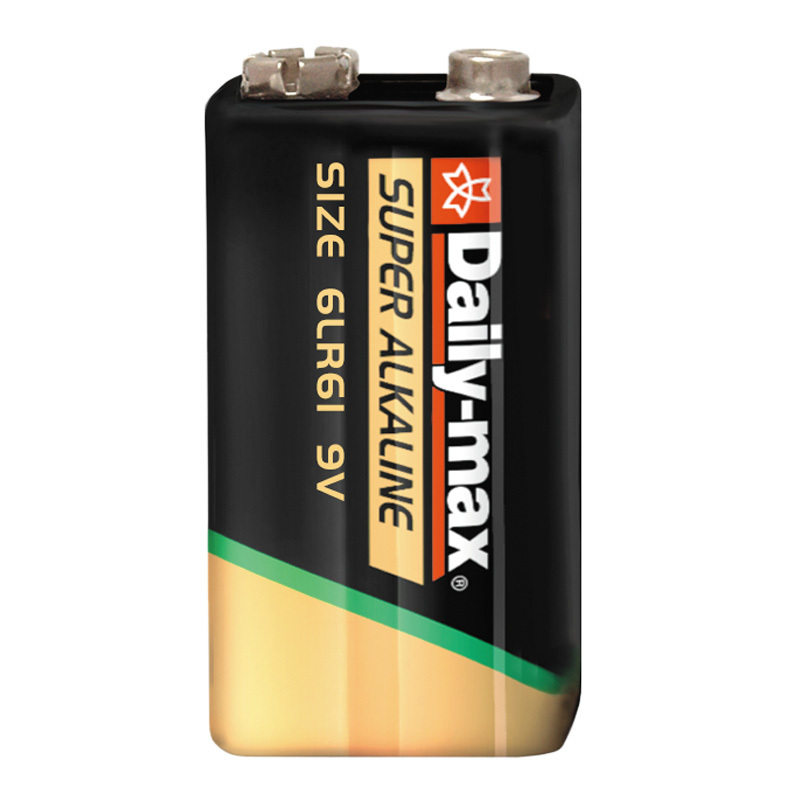
For industrial maintenance programs, the industrial outfit alkaline range in AA through D and 9V, supplied in black-gold and shrink-wrapped bulk packs, covers the scheduled bulk-swap profile at the lowest cost per cell.
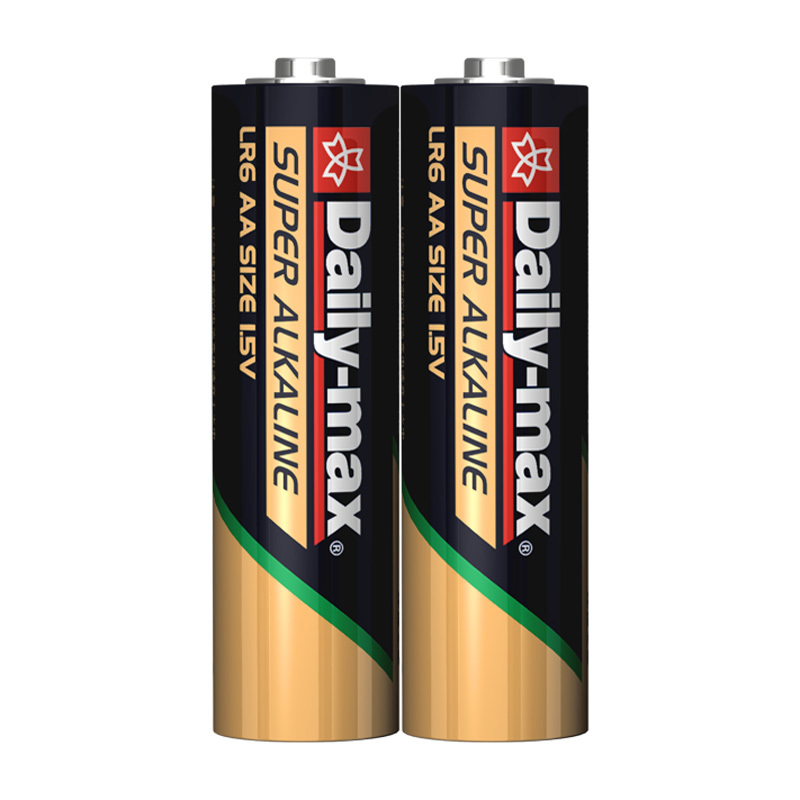 LR6 Black Gold-2S Industrial Outfit Alkaline BatteryThe LR6 Black Gold-2S Industrial Outfit Alkaline Battery is a splendid energy solution designed for business use. With its robust construction and advanced era, this b...View Product →
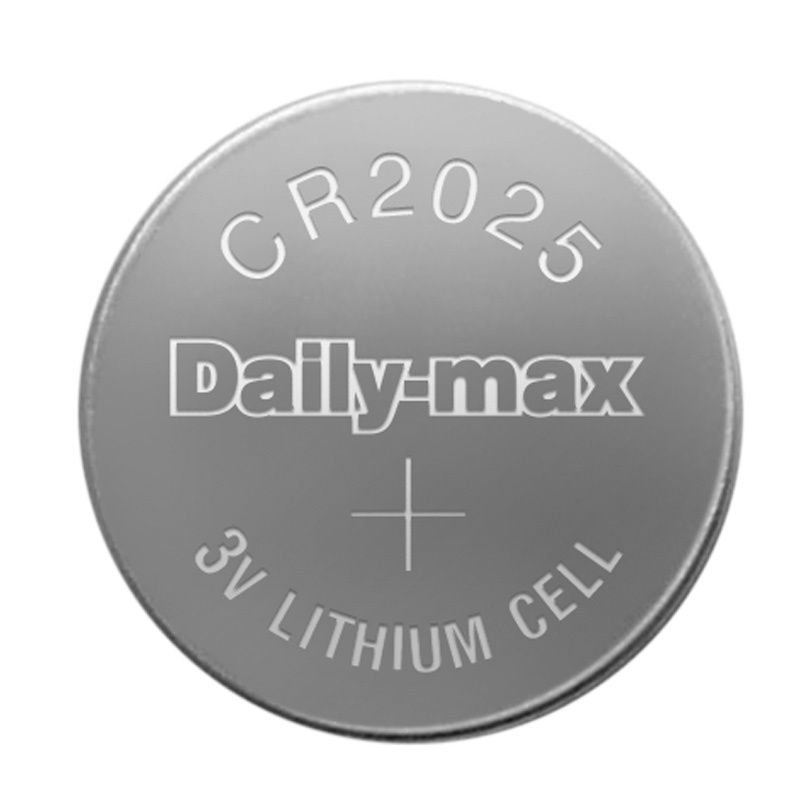
Where the product is coin-format, meaning key fobs, PC motherboards, kitchen scales and medical meters, the 3 V lithium manganese CR series is the only practical fit, offering 220 to 240 mAh in a CR2032 with 8 to 10 years of shelf life.
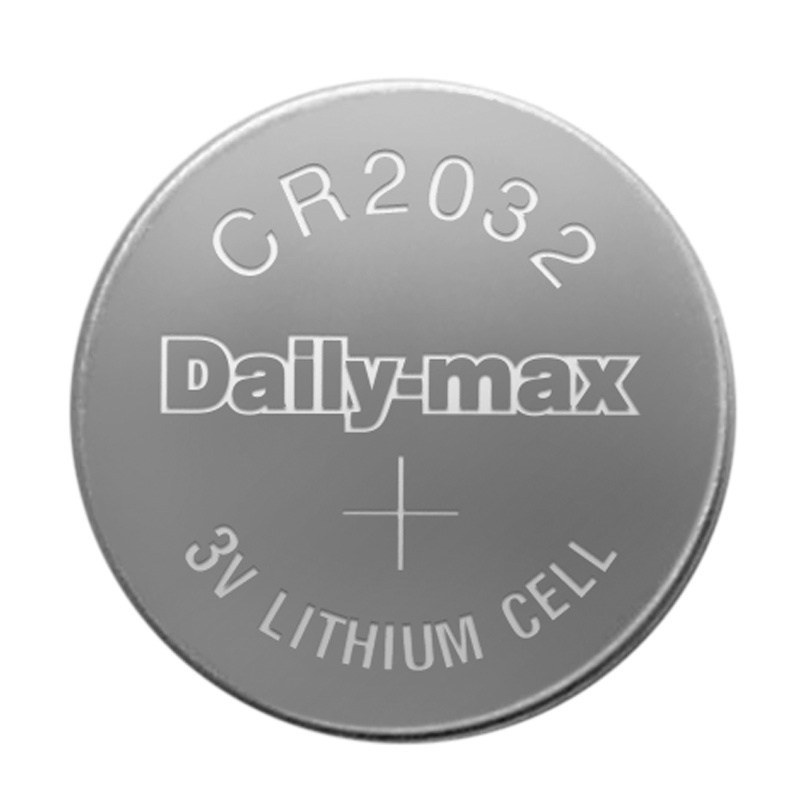 CR2032 Button Type Lithium Manganese BatteryThe CR2032 Button Type Lithium Manganese Battery is a flexible and efficient electricity source appropriate for a extensive variety of programs. Its compact button sha...View Product →
Frequently Asked Questions
Can I mix alkaline and lithium batteries in the same device?
No. The two chemistries have different discharge curves and internal resistance, so the weaker cell is driven into reverse while the stronger one still holds charge. That accelerates leakage in the alkaline cell and can damage the device. Replace all cells in a device with one chemistry at the same time.
Are lithium AA batteries rechargeable?
Standard lithium iron disulfide AA cells are primary cells and must not be recharged; charging can cause rupture or fire. Rechargeable 14500 lithium-ion cells look similar but deliver 3.7 V nominal, which overloads most 1.5 V devices. Keep the three systems separate in storage and labeling.
Which battery type performs better in cold weather?
Lithium primaries. They are rated to operate down to about -40 C and retain most of their capacity in deep cold, while an alkaline AA can lose roughly half its capacity below freezing. For winter trail cameras, outdoor sensors and vehicles parked outside, lithium is the dependable choice.
Why do alkaline batteries leak, and how do I prevent it?
Leakage follows deep discharge: gas builds inside the cell and forces potassium hydroxide paste past the seal. Remove alkaline cells from devices that will sit unused for months, store spares at 10 to 25 C, and rotate stock so no cell is discharged to exhaustion inside a device.