

 English
 中文简体
 русский
 Español
 عربى
An LR6 alkaline AA and an FR6 lithium AA are the same size, fit the same holder, and both print 1.5 V on the label. Put them under a 500 mA load at minus 10 degrees Celsius and the difference stops being academic: the lithium cell keeps the device running long after the alkaline has slid toward its 0.9 V cut-off.
That single test is why the lithium vs alkaline question keeps returning to procurement reviews. The two chemistries are interchangeable in shape and mostly compatible in voltage, but they behave very differently once current demand, temperature and storage time enter the picture.
Four numbers decide the specification: nominal voltage, the current the device draws, the temperature it operates in, and the landed cost per usable hour. This guide works through all four, then covers the sourcing side, because most buyers end up needing both chemistries rather than picking one forever.
Lithium vs Alkaline: What Actually Differs Inside the Cell
Alkaline and lithium primary cells differ in chemistry, not in format, and the practical difference shows up as internal resistance and discharge curve shape rather than as a different voltage printed on the can.
Alkaline cell
A zinc-manganese dioxide primary battery that uses potassium hydroxide as its electrolyte and delivers a nominal 1.5 V per cell. Its internal resistance climbs steadily as it discharges, so usable capacity shrinks faster under heavy loads.
Lithium cell
A primary cell that uses lithium metal as the anode. Two constructions dominate the market: lithium-iron disulfide at a nominal 1.5 V, which drops into standard AA and AAA holders, and lithium-manganese dioxide at a nominal 3.0 V, the chemistry behind CR-series button cells.
Internal resistance is the first consequence. A fresh LR6 alkaline AA typically measures 150 to 300 milliohms, while a fresh FR6 lithium AA measures closer to 80 to 150 milliohms. Lower resistance means less energy is burned as heat inside the cell when the load pulls hard, so more of the stored capacity actually reaches the device.
Discharge profile is the second. Alkaline voltage declines along a long slope, which is why devices that need a stable rail start to misbehave at around 1.2 V even though the cell still holds charge. Lithium chemistries hold a flatter plateau until close to end of life, so a device that needs 1.4 V keeps working for a much larger share of the discharge.
| Parameter | Alkaline AA (LR6) | Lithium AA (FR6) | Lithium button (CR2032) |
| Nominal voltage | 1.5 V | 1.5 V | 3.0 V |
| Chemistry | Zinc / manganese dioxide | Lithium / iron disulfide | Lithium / manganese dioxide |
| Typical rated capacity | 2,850 mAh | 3,000 mAh | 225 mAh |
| Fresh internal resistance | 150 to 300 milliohms | 80 to 150 milliohms | 10 to 20 milliohms |
| Self-discharge per year | 2 to 3 percent | Under 1 percent | Under 1 percent |
| Operating temperature | Minus 20 to 55 degrees Celsius | Minus 40 to 60 degrees Celsius | Minus 30 to 60 degrees Celsius |
| Typical sweet spot | Low drain, cost driven | High drain, cold, long storage | Compact electronics, memory backup |
Where Lithium Wins: Drain Rate, Cold Weather and Shelf Life
Lithium wins in three measurable situations: continuous high drain, sub-zero operating temperatures, and long storage before first use.
Energy density explains most of it. Gravimetric energy density, meaning the energy stored per kilogram of cell material, is roughly two and a half times higher for lithium chemistries than for alkaline, which is why the same AA envelope can hold so much more usable energy.
Typical gravimetric energy density by chemistry
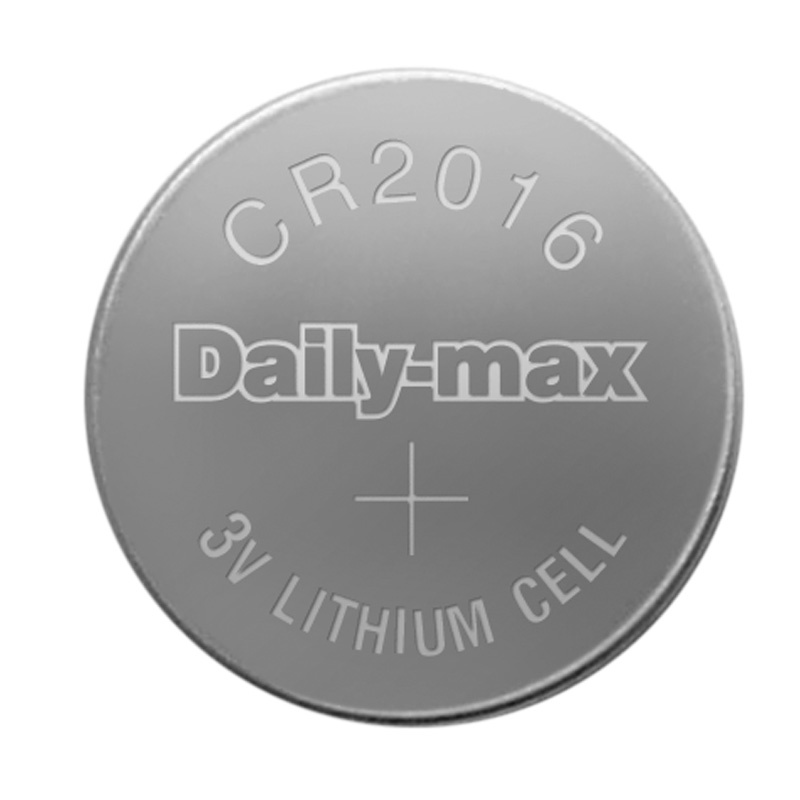
Load current decides how much of that gap a buyer can capture. Under a 200 mA continuous load at 20 degrees Celsius, an FR6 lithium AA typically delivers 50 to 80 percent more service time than an LR6 alkaline AA. Drop the temperature to minus 20 degrees Celsius and the gap widens, because alkaline electrolyte conductivity falls away while lithium chemistry holds most of its capacity. For compact 3.0 V designs, the CR2032 datasheet lists rated capacity, cut-off voltage and temperature limits for that format.
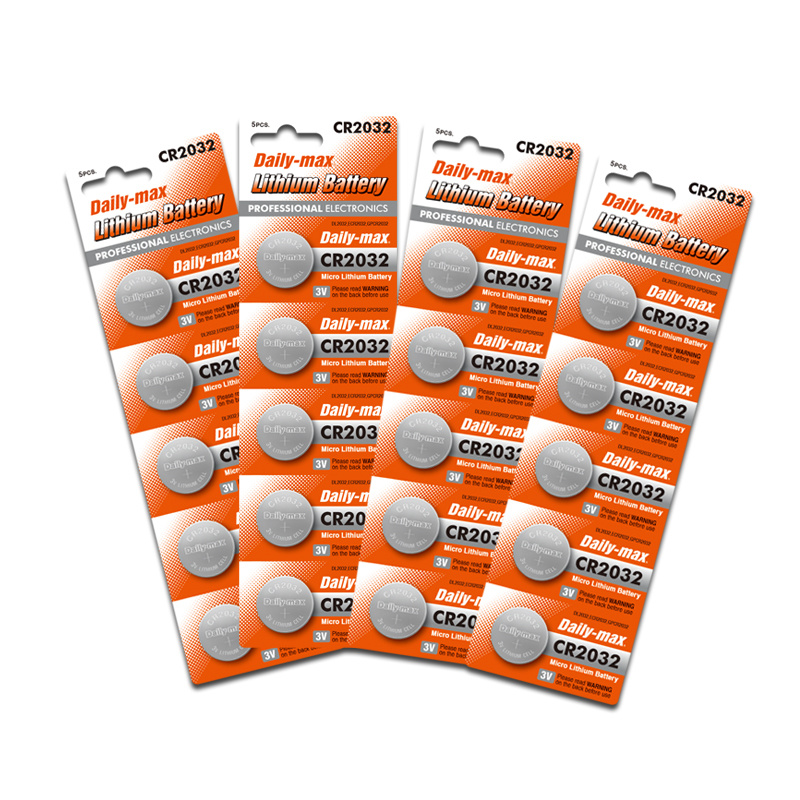 CR2032-5B Lithium Manganese Dioxide Button Battery for Compact DevicesCompact 3 V CR2032 coin cell with 210 mAh capacity and -20°C to 70°C range, suited to space-limited commercial, medical, and security electronics.View Product →
Lithium vs Alkaline Cost: Per Hour, Not Per Cell
On shelf price, an alkaline AA usually costs one third to one half of a lithium AA. Measured per hour of service, that ranking can reverse completely.
Rule of thumb
Below roughly 50 mA average drain, alkaline almost always costs less per hour. Above 200 mA, lithium cells usually win within the first battery change, and the gap grows with every replacement avoided.
Two device classes show how the arithmetic works. A wireless door lock drawing a 5 mA pulse every few seconds will run three to five years on a single alkaline AA, so shelf price dominates and lithium buys nothing except a longer storage window. A handheld light drawing 700 mA will flatten an alkaline AA in about an hour and a half, while a lithium AA of the same size runs closer to four hours.
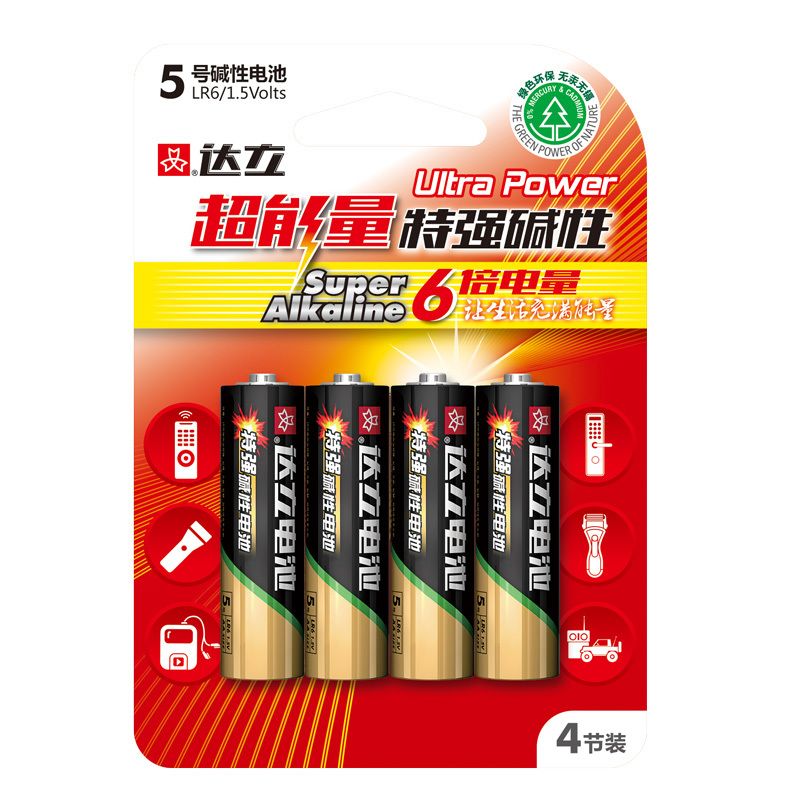
That second case is where the shelf-price comparison breaks down. If a device needs four battery changes a year on alkaline and one on lithium, the lithium cell can cost twice as much at the counter and still be the cheaper specification across a twelve-month service window. Carded retail packs such as a two-pack LR6 are the format most importers specify for this kind of replacement traffic.
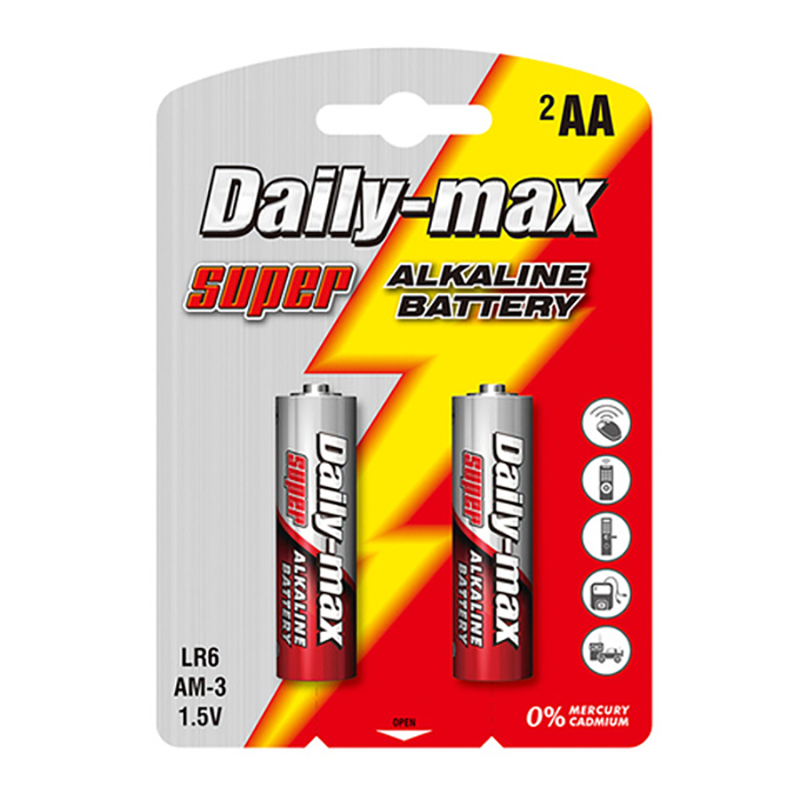 LR6-2B AA Business Alkaline Battery for Retail Replacement PacksCarded two-pack AA alkaline battery for remote controls and wireless mice, offering 1.5 V output and 2200 mAh at 43Ω discharge.View Product →
Alkaline or Lithium: Matching the Chemistry to the Device
The decision comes down to a short list of device conditions, and most products fall clearly on one side of it.
Choose alkaline when
- Average drain stays below 50 mA
- The device is replaced on a fixed service schedule and cost per pack matters
- Storage before first use stays under two years
- Operating temperatures stay above minus 10 degrees Celsius
- Retail multipacks are the sales format, so shelf price triggers the purchase
Choose lithium when
- Continuous drain exceeds 200 mA
- The device is sealed, hard to service or mounted remotely
- Five years or more of storage life is required
- Operating temperatures fall below minus 10 degrees Celsius
- The format is a 3.0 V button cell, as in CR2032 memory backup circuits
Neither column is universal. A sealed industrial sensor and a discount retail flashlight can share the same AA holder and still demand opposite specifications, which is why this alkaline vs lithium comparison is best run against measured load profiles rather than against datasheet headlines.
Sourcing Both Chemistries from One Primary Battery Manufacturer
Buyers who need both chemistries can consolidate them with a single primary battery manufacturer instead of splitting orders across two suppliers and two compliance files.
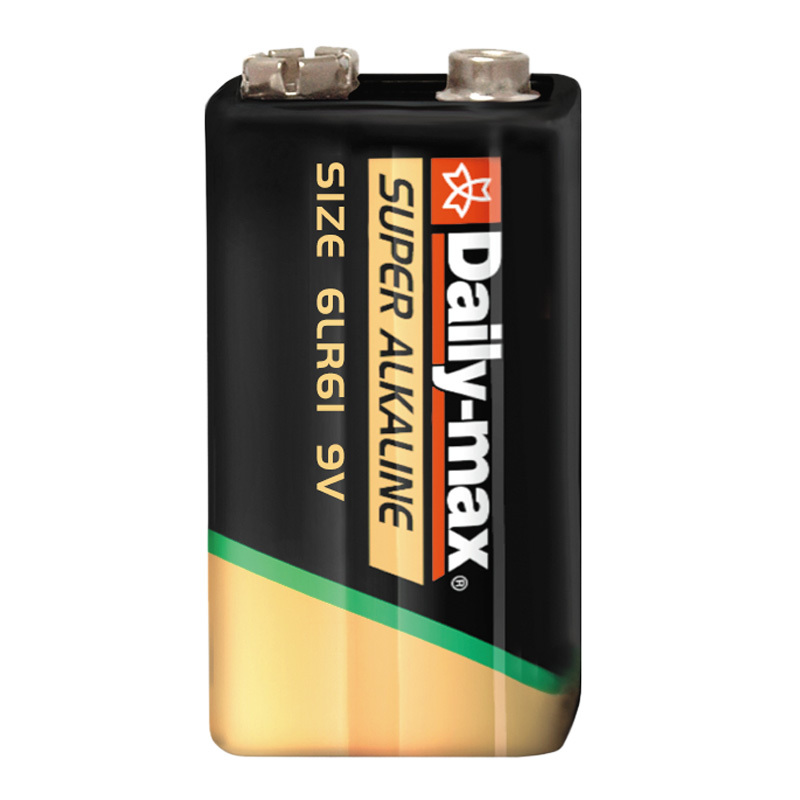
Changzhou Strengh (Anyida) Power Technology Co., Ltd., based in Changzhou, Jiangsu, China, states that it has manufactured primary batteries since 1956 and reports a plant of more than 50,000 square meters with an annual capacity figure of 120,000, exporting to more than 30 countries. Its catalogue covers alkaline cells in AA, AAA, C, D and 9V formats, carbon zinc cells, and button-type lithium manganese cells from CR1616 through CR2450. Compliance documentation listed by the company includes ISO9001, ISO14001, UL, CE, RoHS, SGS and REACH.
One factory, two chemistries, one compliance file: alkaline and carbon zinc for retail and industrial packing, CR-series lithium manganese for compact 3.0 V designs.
Packing structure matters as much as chemistry for importers. The company splits both its alkaline and carbon zinc lines into a business outfit for carded and hanging-card retail packs and an industrial outfit for shrink-wrapped and black-gold bulk packs, the formats equipment makers and distributors usually specify. Because the two paths share the same production base, a mixed order can be consolidated into a single shipment and a single document set.
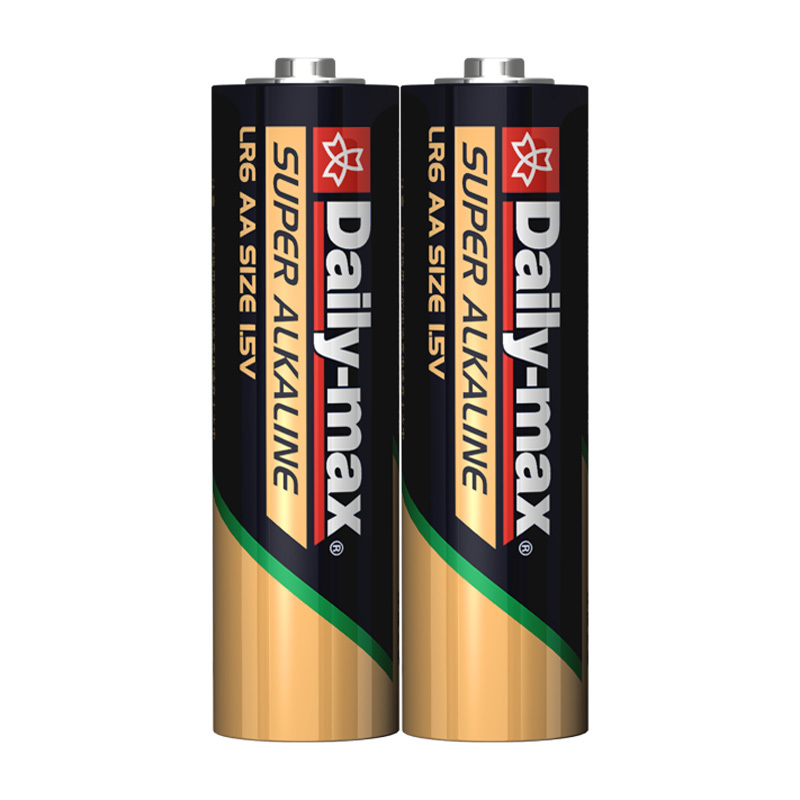 LR6 Black Gold-2S Industrial Outfit AA Alkaline BatteryBulk-oriented AA alkaline battery for high-drain industrial and business devices, with 1.5 V output and 65-hour minimum duration at 43Ω.View Product →
Frequently Asked Questions About Lithium vs Alkaline
Is lithium always better than alkaline?
No. Below roughly 50 mA of average drain, alkaline cells deliver a lower cost per hour and handle ordinary retail devices well. Lithium chemistry earns its premium only when the load is heavy, the temperature is low, or the device must sit unused for years.
Can I drop a lithium AA into a device designed for alkaline?
Lithium-iron disulfide cells are specified at 1.5 V and are built as drop-in replacements for AA and AAA holders, and most devices accept them. The open-circuit voltage of a fresh lithium AA is higher, around 1.7 to 1.8 V, so unregulated devices that compare battery voltage against a fixed threshold may report a full battery for longer than expected. Never substitute a 3.0 V button cell for a 1.5 V cell, and never attempt to charge a primary cell.
Which chemistry has the longer shelf life?
Lithium. Alkaline cells self-discharge at roughly 2 to 3 percent per year, while lithium cells typically lose under 1 percent per year. That difference is why lithium button cells carry ten-year storage ratings in memory backup and medical applications, while alkaline cells are usually specified for five years or less.
Why does a lithium cell cost more at the counter?
The anode material, the dry-room handling that lithium metal requires, and the sealing needed to keep a reactive chemistry stable all add cost. The gap narrows considerably in industrial packing and at larger order quantities, which is why any comparison should be run on landed cost per usable hour rather than on pack price.