

 English
 中文简体
中文简体 русский
 Español
 عربى
عربىTwo AA cells can print the same 1.5 V on the label and still differ by roughly 40 percent in landed cost. That gap is why buyers keep asking what is a carbon zinc battery before they sign a purchase order. The short answer: it is the oldest dry-cell chemistry still in mass production, built from a zinc anode, a manganese dioxide and carbon cathode, and a chloride-based paste, delivering 1.5 V nominal and roughly 400 to 600 mAh of service in an AA size.
Changzhou Strengh (Anyida) Power Technology Co., Ltd. has manufactured primary batteries in Changzhou, Jiangsu since 1956, and this guide combines that production experience with published cell data to show where the chemistry still earns its place in a bill of materials.
A carbon zinc battery is a primary, non-rechargeable dry cell in which zinc acts as the negative electrode, a manganese dioxide and carbon mixture acts as the positive electrode, and an ammonium chloride or zinc chloride paste carries ions between them. Nominal voltage is 1.5 V and practical cut-off sits near 0.9 V per cell.
Inside a Carbon Zinc Cell: Four Materials, One Working Pair
A carbon zinc cell contains four materials, and only two of them store energy. Knowing which is which is the fastest way to read a specification sheet.
- Zinc can. Both the negative electrode and the outer container, dissolving as the cell discharges.
- Manganese dioxide and carbon powder. The positive electrode mix; manganese dioxide accepts electrons while carbon powder raises conductivity.
- Carbon rod. A current collector, not an active material, running from the cathode mix to the positive terminal.
- Electrolyte paste and separator. Ammonium chloride or zinc chloride paste fills the gap between rod and mix, with a separator holding the electrodes apart.
Discharge follows a fixed sequence. Zinc oxidizes and releases electrons to the external circuit, ions travel through the paste toward the cathode, and manganese dioxide absorbs the electrons and is reduced. In simplified form the Leclanche reaction reads: Zn + 2 MnO2 + 2 NH4Cl produces Zn(NH3)2Cl2 + Mn2O3 + H2O.
Carbon Zinc vs Alkaline: The Measured Differences That Change a Specification
Carbon zinc loses to alkaline on capacity, shelf life and leak resistance, and it wins on unit cost, stable low-drain voltage and simpler disposal. A buyer who compares only unit price will over-specify; a buyer who compares only capacity will under-specify.
| Parameter | Carbon zinc R6P | Zinc chloride | Alkaline LR6 |
| Service capacity at 10 mA | 400-600 mAh | 700-900 mAh | 2,500-2,900 mAh |
| Shelf life at 20 C | 2-3 years | 3-4 years | 7-10 years |
| Leak resistance | Moderate | Good | Best |
| Relative unit cost | 1.0 | 1.2-1.4 | 2.5-4.0 |
| Typical fit | Intermittent, low drain | Mixed drain, longer storage | High drain, long storage |
Capacity is not a fixed number. A carbon zinc AA cell that gives 500 mAh at 10 mA can fall toward 250 mAh at 100 mA, because the zinc can passivates and internal resistance climbs. Alkaline cells lose capacity at high drain too, but they start from a far larger reserve.
Rule of thumb: below roughly 25 mA of average draw, carbon zinc gives a defensible cost per hour of service. Above 100 mA, alkaline becomes cheaper per hour of use even at three times the unit price, because the carbon zinc cell is replaced three to five times as often.
Leclanche vs Zinc Chloride: Which Carbon Zinc Chemistry to Specify
Zinc chloride is the safer default for most modern products. It holds voltage better under continuous drain, corrodes the zinc can more slowly, and therefore leaks later at end of life. Plain Leclanche chemistry stays relevant where the load is genuinely intermittent.
- Leclanche, ammonium chloride. The classic 1866 design: lowest material cost, highest internal resistance, and capacity that falls away under continuous load.
- Zinc chloride, normally labelled heavy duty. Lower internal resistance, roughly 40 to 70 percent more service at moderate drain, and better storage behaviour.
Carbon Zinc Battery Sizes, IEC Codes and Packaging Formats
Almost all carbon zinc volume sits in five formats, and the IEC code printed on the cell tells you which chemistry you are buying before the pack is opened.
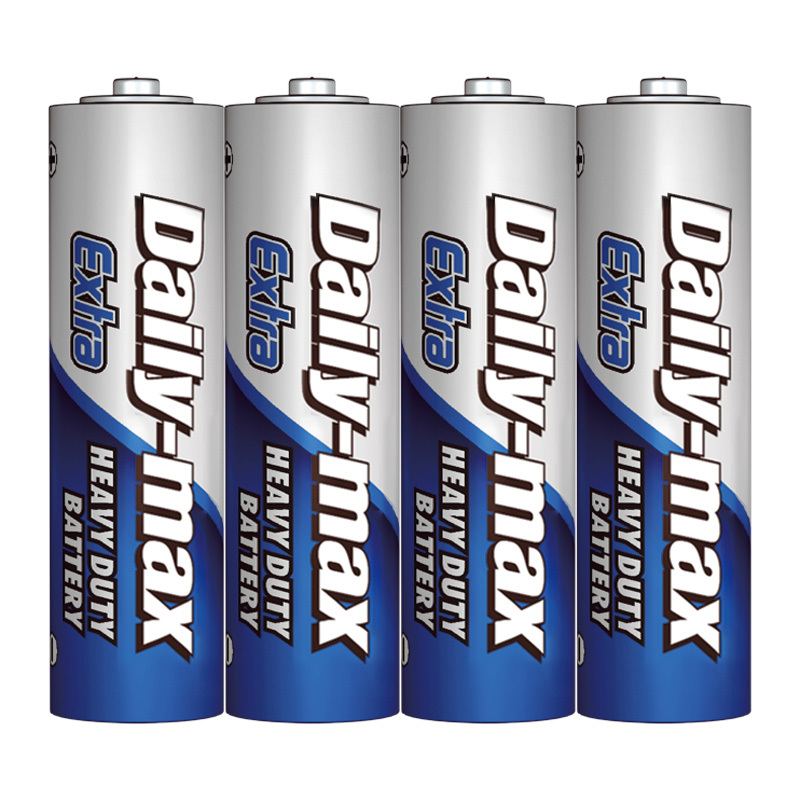
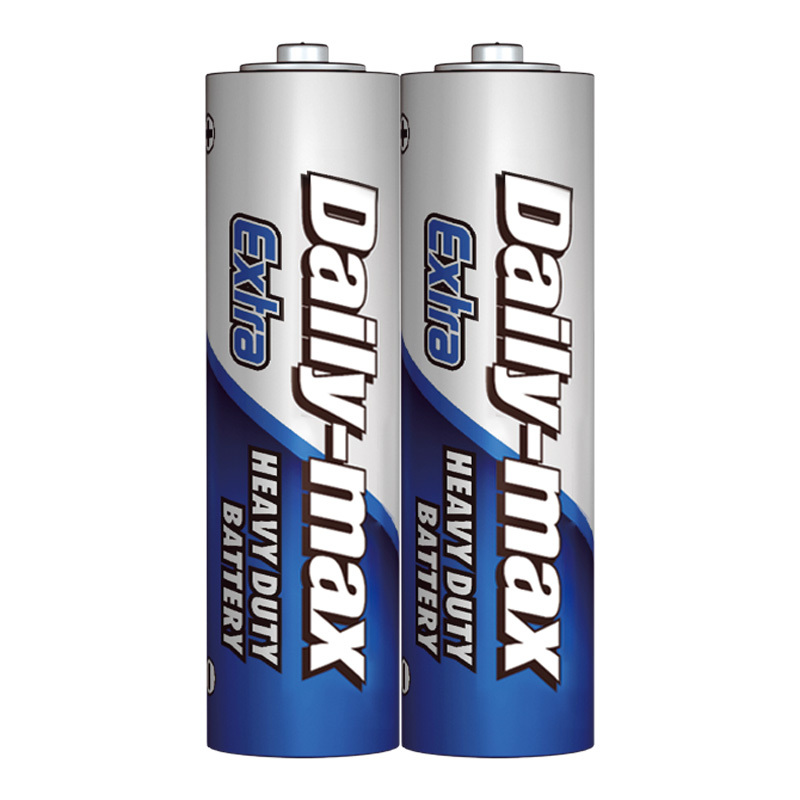
- R6P and R6S, AA. 14.5 mm by 50.5 mm. The trailing letter marks performance grade; LR6 is the alkaline equivalent.
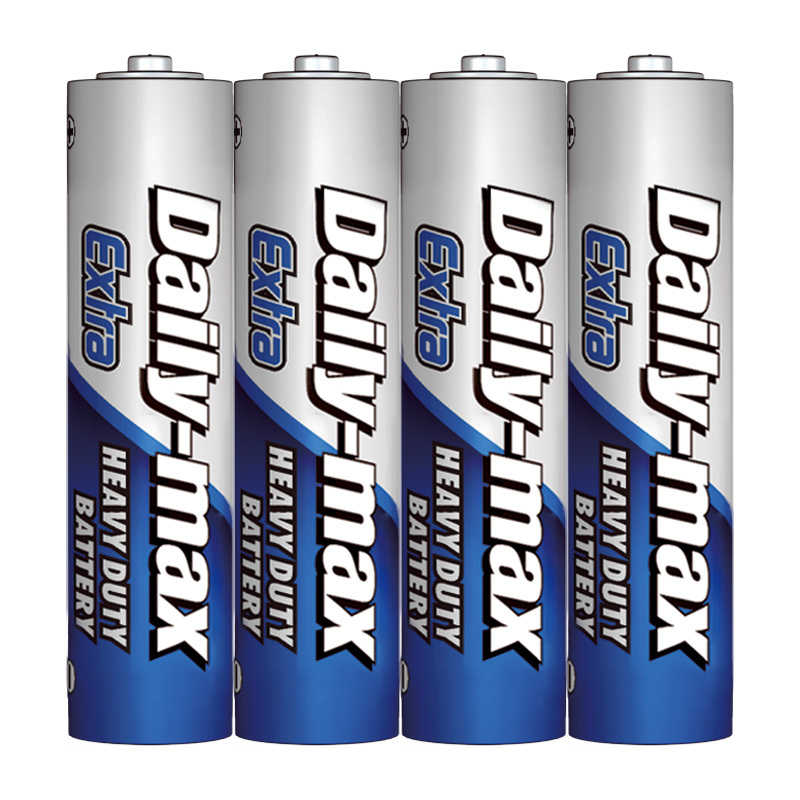
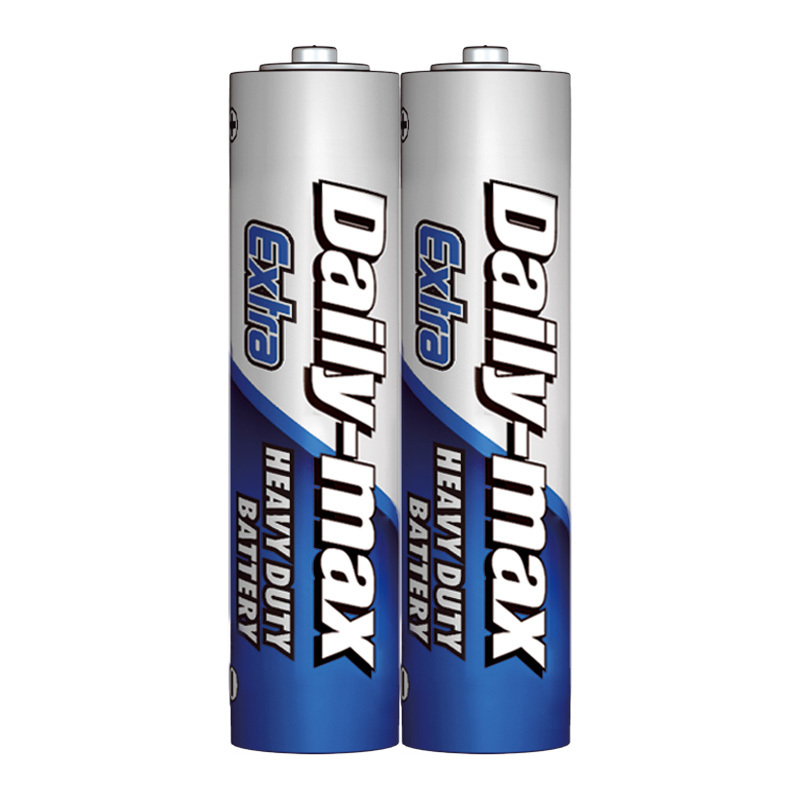
- R03P, AAA. 10.5 mm by 44.5 mm, the highest-volume format in remote controls and small toys.
- R14P, C. 26.2 mm by 50 mm, common in torches and mid-size appliances.
- R20P, D. 34.2 mm by 61.5 mm, the largest format in the family and mostly an industrial-channel item.
- 6F22, 9 V. Six stacked cells in a rectangular case, used in smoke alarms, multimeters and pedals.
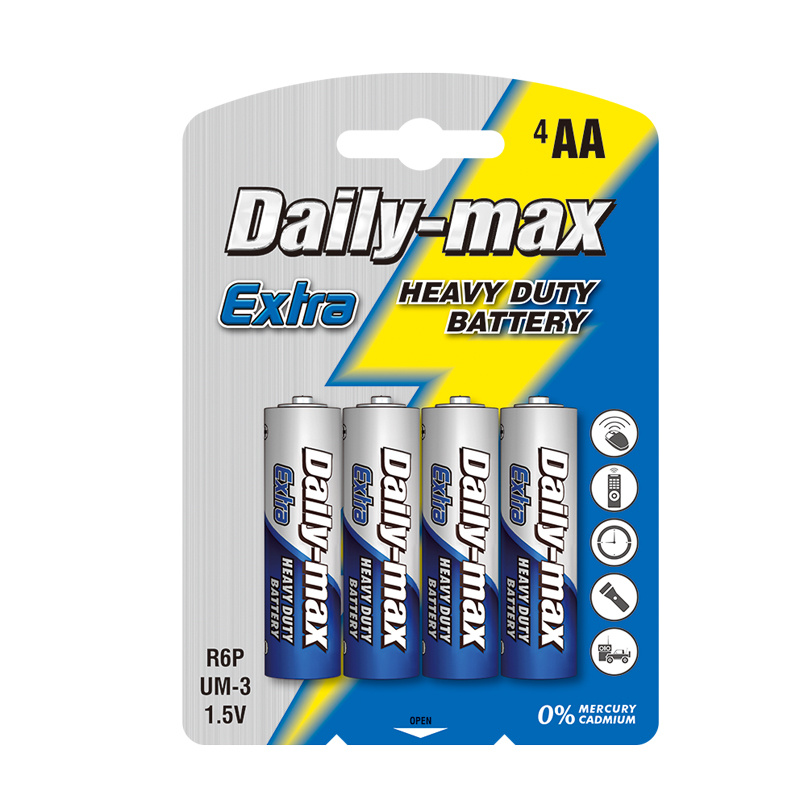 Custom ODM/OEM AA R6P 4-Pack Carbon Zinc Battery on CardA 1.5V mercury-free AA carbon-zinc battery in a carded 4-pack, positioned for remote controls, toys, and portable electronics.View Product →
Packaging decides more deals than chemistry does. Retail buyers need carded or hanging-card formats that survive a shelf, while industrial and OEM buyers need shrink-wrapped trays that cut handling cost. One AA size can therefore exist in three or four pack counts, and the pack count moves unit price more than the cell inside it.
The same logic applies to the 9 V block, which serves retail blister packs and sealed industrial trays from a single cell construction. Buyers forecasting both channels should confirm the supplier can hold one construction across two pack formats, so the performance a retailer advertises still matches the performance an industrial account tests.
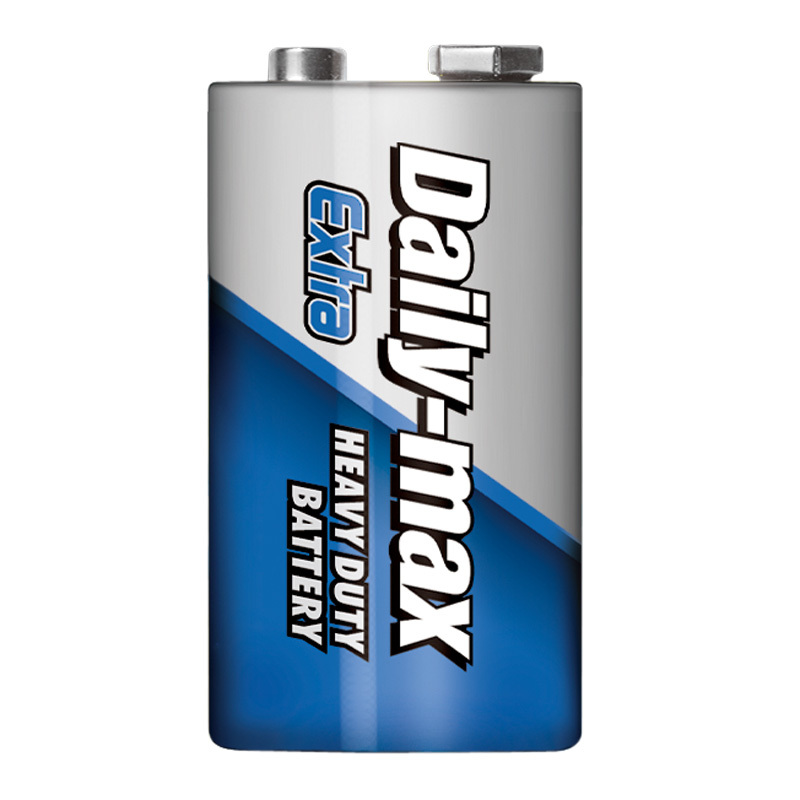 Custom ODM/OEM 6F22 9V Industrial Carbon BatteryA mercury-free 9V carbon-zinc block for alarms, wireless communication devices, and electronic gadgets, available in shrink or hanging-card packaging.View Product →
Shelf Life, Leakage and Storage Rules for Carbon Zinc Cells
Carbon zinc cells self-discharge slowly but leak before they die, and leakage is what damages a private-label program. Three storage rules prevent most field failures.
- Never ship a device with the cell installed unless the device has a switch that physically breaks the circuit.
- Store cells between 10 C and 25 C at low humidity; every 10 C above 25 C roughly doubles the self-discharge rate.
- Keep cartons off concrete floors and away from metal racks, since condensation and stray currents accelerate zinc corrosion.
Leakage risk climbs as a cell discharges, not simply as it ages. A fully discharged carbon zinc cell can leak within weeks, while an unused cell of the same age usually survives a year or more in a dry store.
Where Carbon Zinc Still Wins: Retail and Industrial Use Cases
Carbon zinc remains the correct choice in three situations: very low average drain, long idle periods between use, and cost-driven retail programs where the battery is a giveaway rather than a feature. It is the wrong choice for cameras, motorised toys and anything drawing hundreds of milliamps.
Industrial demand follows a different pattern. Buyers who maintain smoke detectors, meter test rigs and remote sensors order in shrink-wrapped trays and care about the discharge curve rather than the pack art, which is why the industrial carbon battery specifications for R20P, R14P and R6P matter more in tender documents than capacity claims printed on a retail card.
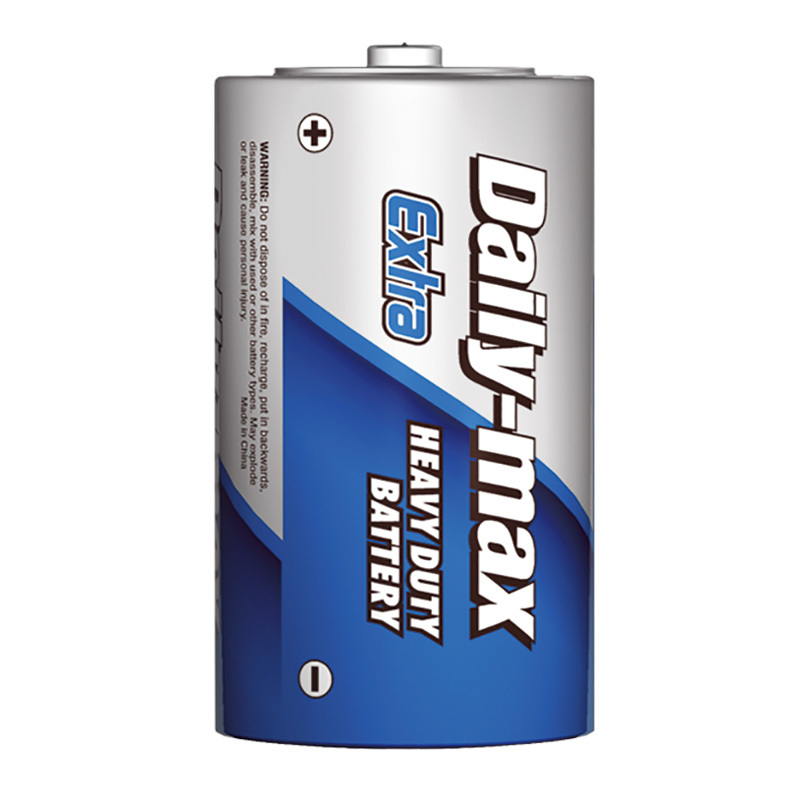 R20P Industrial Carbon Battery for Heavy-Duty and OEM UseA 1.5V mercury-free D-size carbon-zinc cell with 4700mAh at 10Ω, suited to industrial tools, lighting, and logistics applications.View Product →
Carbon Zinc Battery Questions Buyers Ask Most
Is a carbon zinc battery rechargeable?
No. Carbon zinc cells are primary cells and the zinc can is consumed during discharge. Charge current restores nothing useful and usually makes the can dissolve faster, so the cell leaks or vents instead of recovering.
Do carbon zinc batteries leak more than alkaline batteries?
Yes, in general. The zinc can is both container and electrode, so it thins as the cell discharges, while alkaline cells use a steel can with a separate zinc gel. Removing exhausted cells and storing them below 25 C closes most of that gap.
Can an alkaline battery be replaced with a carbon zinc battery?
Only when the average draw is low. A clock drawing a few hundred microamps runs for months on one carbon zinc cell, while a digital camera or motorised toy will fail early and may show weak performance well before reaching the cut-off voltage.
What is the shelf life of a carbon zinc battery?
Two to three years for general-purpose cells and three to four years for zinc chloride heavy-duty cells stored at 20 C. Storage above 25 C shortens both ranges, and heat affects carbon zinc faster than it affects alkaline.