

 English
 中文简体
 русский
 Español
 عربى
What Business-Grade Alkaline Batteries Actually Are
A business-grade alkaline battery is a zinc-manganese dioxide primary cell manufactured to IEC 60086-2 dimensional and discharge tolerances and released in one of two commercial formats: retail-ready carded packs or bulk industrial packs.
Business-grade alkaline: an LR6, LR03, LR14, LR20 or 6LR61 cell produced under a certified quality management system, tested against an IEC 60086-2 discharge schedule, date-coded at batch level and shipped with a declared storage claim.
The electrochemistry is the same one on any supermarket shelf: zinc powder anode, manganese dioxide cathode, potassium hydroxide electrolyte, 1.5 V nominal on the cylindrical sizes and a 9 V stack on the 6LR61. What changes at business grade is the control around it, including capacity grading limits, seal inspection frequency, date-code discipline and the documentation that travels with each carton.
Changzhou Strengh (Anyida) Power Technology Co., Ltd. structures its alkaline range along exactly this split, with a business outfit line in 2B and 4B cards and an industrial outfit line in 1S, 2S and 4S shrink and black-gold multipacks. The catalogue separates alkaline, carbon zinc and button lithium manganese families first, then separates packing formats inside each family.
Business Outfit versus Industrial Outfit: Which Packing Route Fits Your Channel
The packing route decides your unit of sale, not the electrochemistry: business outfit ships in blister and hanging cards sized for shelf hooks, while industrial outfit ships in shrink and black-gold multipacks sized for kitting lines, maintenance stores and OEM cabinets.
| Decision factor | Business outfit | Industrial outfit |
| Packaging form | 2B and 4B blister cards, hanging cards | 1S, 2S and 4S shrink wrap, black-gold packs |
| Retail readiness | Barcode-ready with hang tab | Bulk carton, minimal shelf graphics |
| Typical buyer | Retail chains, e-commerce sellers, private-label brands | OEM lines, maintenance stores, distributors |
| Order unit | Inner box of cards | Outer carton of multipacks |
| Handling cost per unit | Higher | Lower at volume |
| Best fit | Consumer replacement market | Industrial and institutional replacement |
Buyers who serve both channels usually split the order instead of compromising, because a carded pack that reaches an industrial storeroom wastes printing cost, and a shrink pack on a retail hook loses the barcode and hang tab the shelf requires.
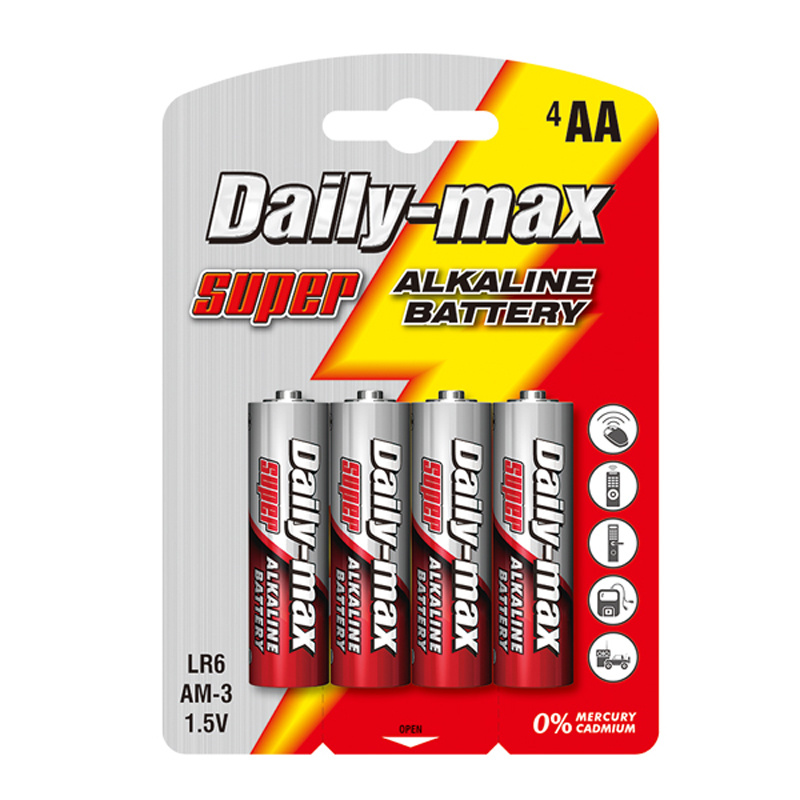 LR6-4B Business Alkaline Battery with Carded PackagingThis 1.5V AA alkaline battery comes in shrink or hang-card packaging, making it relevant for retail shelves that need barcode and hang-tab presentation.View Product →
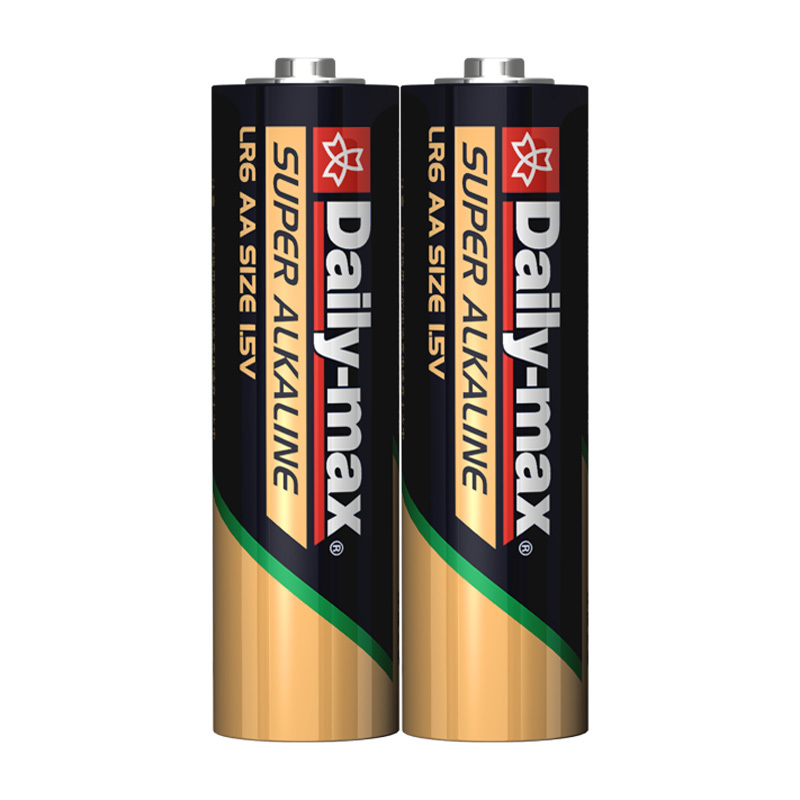 LR6 Black Gold-2S Industrial Alkaline Battery PackA 1.5V AA alkaline battery in shrink or hang-card packaging, positioned for industrial buyers who need a robust cell for commercial equipment.View Product →
One naming note: black-gold and shrink describe packaging, not performance grade. An LR6 black-gold 2S industrial pack and an LR6 4B business card hold the same cell, so the choice between them is a channel decision, never an electrical one.
Shelf Life, Leakage and the Storage Claim Behind the Label
A credible shelf-life claim is anchored to a storage temperature: premium alkaline cells typically declare 7 to 10 years of retention at 20 °C plus or minus 2 °C, and a claim below 5 years points to a commodity seal system.
IEC 60086-2 fixes dimensions and discharge schedules. It does not fix a shelf-life number, so manufacturers derive that figure from accelerated storage data and then declare it. When you evaluate the claim, ask three things: the storage temperature it assumes, the retained-capacity threshold, and whether the figure was measured on finished goods or on laboratory cells.
Leakage follows a different path. Alkaline cells generate hydrogen as the zinc anode corrodes, and the seal must vent pressure without letting electrolyte escape. The accelerated regime most suppliers run is 20 days at 45 °C and 90 percent relative humidity, followed by a visual check of the seal and both terminals.
For a purchase contract that means two separate clauses: a retained-capacity specification at a defined temperature, and a leakage acceptance criterion after accelerated storage. Bundling them into one line reading "long shelf life" leaves you without recourse when the first container lands.
Matching Cell Size to Drain Profile
Cell size dominates runtime before chemistry does: an LR20 carries roughly six times the capacity of an LR6, and an LR6 carries roughly twice the capacity of an LR03 at the same discharge rate.
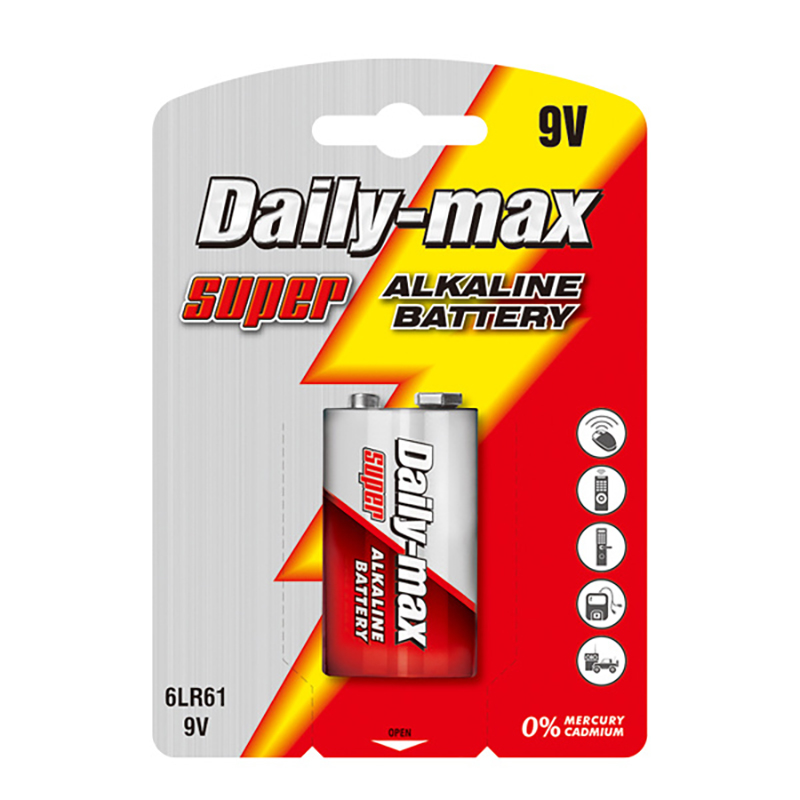
The 6LR61 catches buyers out. A 9 V alkaline block delivers roughly 600 mAh, about a fifth of an LR6, because it is built from six small stacked cells. Devices designed around that form factor accept the trade-off for shape, not for endurance.
Two rules follow. First, never substitute a smaller size to save cost in a device that idles for months, because the self-discharge curve catches up. Second, check the drain your device actually draws: a continuous 250 mA load cuts usable LR6 capacity far below the headline figure.
A Six-Step Procurement Check Before You Sign the PO
Six checks close the gap between a quotation and a shippable order: standard, packing route, date-code policy, certification scope, a sample discharge curve and the shipping terms.
- Confirm the release standard. IEC 60086-2 covers dimensions and discharge; ANSI C18.1M applies if your market is North America.
- Fix the packing route. Decide 2B, 4B, 1S, 2S or 4S before pricing, because changing card format after quotation usually changes tooling cost.
- Set the date-code policy. Ask for maximum age at shipment, commonly 3 months from production, and write it into the contract.
- Verify certification scope. A certificate number without a scope statement says nothing about the cell in the carton.
- Request a discharge curve. Ask for the test curve at your device's drain rate, not a headline capacity number.
- Lock the shipping terms. Incoterms, carton dimensions and pallet configuration move landed cost more than unit price.
Steps three and five catch the majority of disputes, because both are invisible in a quotation and both are measurable in a warehouse.
Documentation to Request With the Quotation
Five document sets belong in every first order: quality management certification, product safety certification, material compliance declarations, third-party test reports and a dated batch record.
- ISO 9001:2015 certificate with a scope naming primary battery manufacture.
- ISO 14001:2015 certificate if your own supply chain reporting requires it.
- RoHS 2011/65/EU declaration plus a REACH SVHC statement against the current candidate list.
- SGS or equivalent third-party reports covering capacity, leakage and heavy metal content.
- UL recognition files where the cell sits inside a listed end product.
CE marking deserves its own question. EU Battery Directive 2006/66/EC governs battery marking, collection and substance limits, so confirm what a supplier's CE declaration actually covers before accepting it as a substitute. A practical sourcing guide to evaluating alkaline battery manufacturers walks through the same document trail from the buyer's side.
Sizes Beyond the Retail Shelf
Standard AA and AAA cover most devices, but two families sit outside them: AAAA cells for slim styluses and medical pens, and the LR8D190, LR8D250 and LR8D425 formats for equipment with a fixed, non-standard battery well.
These formats reveal whether a supplier manufactures or only trades. A catalogue that lists AAAA and the LR8D family next to LR6 and LR03 carries production breadth that a single-line reseller cannot match, and the special alkaline battery range is where those sizes are grouped.
Buyer Questions That Decide the Order
What separates a business-grade alkaline battery from a retail AA cell?
Release discipline rather than chemistry. Both use the same zinc-manganese dioxide system and the same IEC 60086-2 dimensions, but business grade adds capacity grading, batch-level date coding, higher seal inspection frequency and a declared storage claim. Request the discharge curve and the date-code policy, and the gap appears immediately.
What shelf life should a purchase contract specify?
Specify a condition and a retention figure together. A defensible premium target is 90 percent of initial capacity after 60 months at 20 °C plus or minus 2 °C; below 36 months at the same condition, assume a commodity seal system.
Do industrial outfit cells perform differently from business outfit cells?
No. Performance is identical and only the packaging and unit of sale change. An LR6 black-gold 2S industrial pack and an LR6 4B card contain the same cell, so the choice rests on channel economics.
Which certifications should a first order include?
Start with ISO 9001:2015, then RoHS 2011/65/EU and a current REACH SVHC declaration. Add UL recognition or a CE file only where your destination market or end product requires them, and always request the scope statement alongside the certificate number.
The pattern that holds across every order: business-grade alkaline batteries are specified by condition, not by adjective. Temperature, drain rate, retention threshold and date code are the four numbers that decide whether a shipment passes inspection, and they are the four numbers a quotation rarely volunteers.